

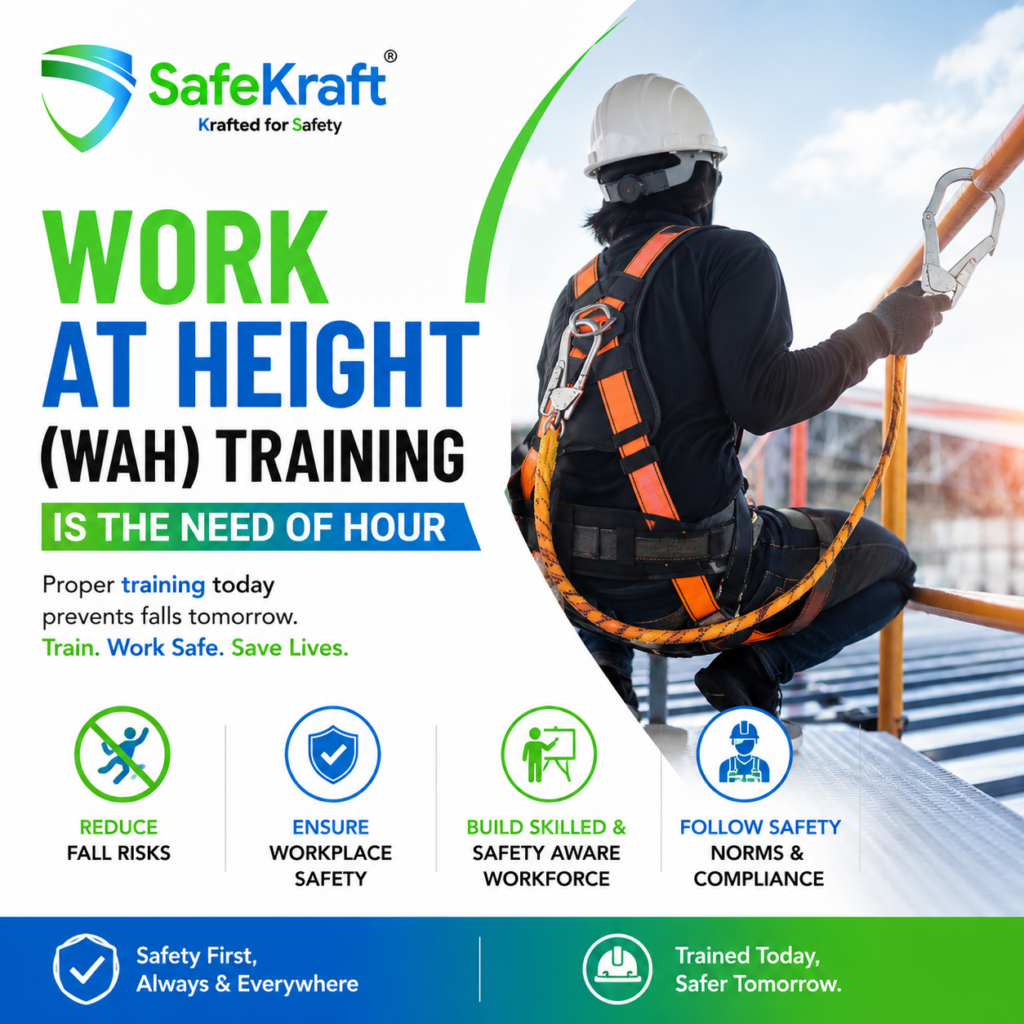
Work at Height (WAH) Training: Prevent Falls and Improve Workplace Safety
Working at height is one of the leading causes of workplace injuries across construction sites, industrial facilities, warehouses, and maintenance projects. Proper Work at Height (WAH) Training helps workers understand safety procedures, use fall protection equipment correctly, and reduce the risk of accidents.
Why Work at Height Training Is Important
Employees working on rooftops, scaffolding, ladders, elevated platforms, or confined structures face significant risks. Effective Work at Height Training provides the knowledge and practical skills needed to identify hazards and work safely at elevated locations.
Proper training helps organizations:
- Reduce fall-related accidents
- Improve workplace safety awareness
- Meet safety compliance requirements
- Increase worker confidence and productivity
- Promote a strong safety culture
Key Topics Covered in WAH Training
A professional Work at Height Training program typically includes:
- Inspection of height safety equipment
- Safe use of ladders and scaffolding
- Fall arrest systems and safety harnesses
- Anchor points and lifeline systems
- Emergency rescue procedures
- Inspection of height safety equipment
These topics help workers understand how to prevent falls and respond effectively in emergency situations.

Benefits of Work at Height Training
Organizations that invest in Work at Height Training can significantly improve workplace safety performance. Trained workers are better prepared to use personal protective equipment (PPE), follow safety procedures, and identify unsafe conditions before incidents occur.
As a result, businesses can reduce downtime, minimize injuries, and create safer working environments.
Conclusion
Workplace safety begins with proper training. Work at Height (WAH) Training plays a critical role in preventing falls, protecting workers, and ensuring compliance with safety standards. Investing in training today helps build a safer and more productive workforce for tomorrow.