
Workplace safety is an important responsibility for every organization. Whether it is a manufacturing plant, construction site, warehouse, engineering facility, or industrial workplace, employees can face different types of hazards during their daily activities. Therefore, selecting the right workplace safety equipment is an important part of an effective safety program.
However, choosing safety equipment should not be based only on appearance or price. Product quality, applicable safety standards, testing, certification, durability, and suitability for the intended application are equally important.
This is why quality standards play such an important role in personal protective equipment (PPE) and industrial safety products.
What Are Quality Standards in Safety Equipment?
Quality standards provide guidelines and requirements that safety equipment may need to meet for a particular application. These standards help manufacturers evaluate product performance, material quality, design, and protection characteristics.
Depending on the product and market, safety equipment may be associated with standards such as:
- BIS standards
- ISI marking requirements
- EN standards
- CE requirements
- ANSI standards
- ISO quality-management standards
It is important to understand that these standards do not all mean the same thing. For example, ISO 9001:2015 relates to a quality management system, while a product-specific EN or BIS standard may address particular safety or performance requirements.
Why Testing Is Important for PPE
Personal Protective Equipment is designed to help protect workers from specific workplace hazards. However, different PPE products are designed for different risks.
For example, a worker may require:
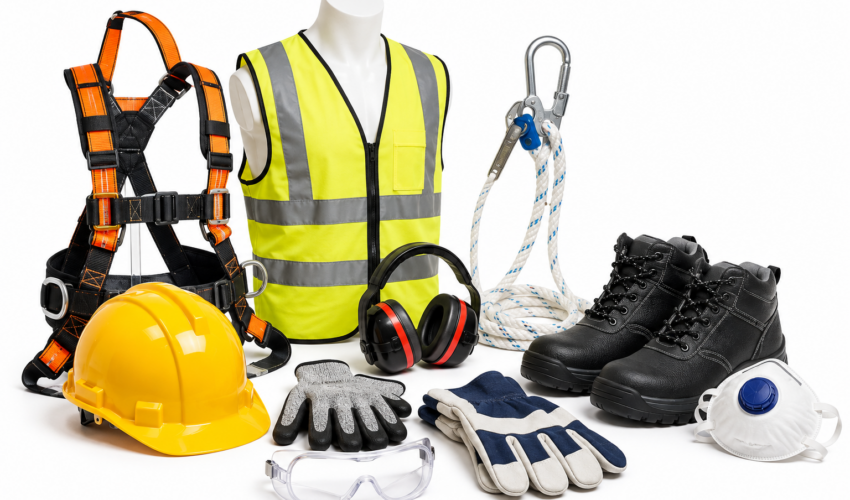
- Head protection against falling objects
- Hand protection against cuts or abrasion
- Eye protection against impact or particles
- Hearing protection against excessive noise
- Fall protection when working at height
- Protective clothing against heat or other hazards
- Respiratory protection against harmful airborne contaminants
Therefore, PPE should be selected according to the actual workplace hazard and the applicable product requirements.
Testing can help determine whether a product meets the relevant performance criteria.
Understanding ISO 9001:2015
ISO 9001:2015 is a quality management system standard. It focuses on how an organization manages processes related to consistent quality and continual improvement.
For a safety equipment manufacturer, a structured quality-management system can support:
- Consistent manufacturing processes
- Quality monitoring
- Documentation
- Process control
- Customer-focused quality management
- Corrective actions
- Continuous improvement
SafeKraft India Private Limited states that it is an ISO 9001:2015 certified company and operates according to a quality management system.
BIS and ISI Standards in India
For Indian businesses, Bureau of Indian Standards (BIS) requirements are particularly relevant when selecting products that fall under applicable Indian standards.
The ISI Mark may be applicable to products covered by relevant Indian standards and certification requirements.
Businesses should therefore check the specific product, applicable standard, certification details, and marking requirements rather than assuming that every safety product carries the same certification.
What Does CE Mean for PPE?
The CE marking is associated with European Union regulatory requirements for applicable products.
For PPE intended for markets where CE requirements apply, manufacturers need to follow the relevant regulatory framework and conformity requirements.
Similarly, EN standards can define specific performance requirements for different categories of protective equipment.
Therefore, buyers should check the actual standard and certification information applicable to the particular PPE product.
Why Businesses Should Not Choose Safety Equipment Only by Price
Price is naturally an important consideration when purchasing safety equipment, especially for large organizations purchasing PPE in bulk.
However, the cheapest product is not necessarily the most suitable product.
A better purchasing decision considers:
Hazard → Protection requirement → Applicable standard → Product quality → Fit → Comfort → Durability → Cost
This approach can help organizations select PPE that is appropriate for the actual working environment.
How to Select Quality Workplace Safety Equipment
Before purchasing industrial safety equipment, organizations should consider the following factors.
1. Identify the Workplace Hazard
First determine what workers need protection from.
2. Select the Correct PPE Category
Choose equipment specifically designed for the identified hazard.
3. Check Applicable Standards
Review the relevant BIS, EN, ANSI, CE, or other applicable requirements.
4. Check Product Information
Review specifications, markings, certification information, materials, size, and intended application.
5. Consider Worker Comfort
PPE that is uncomfortable or poorly fitted may discourage consistent use.
6. Purchase From a Reliable Supplier
A reliable safety equipment manufacturer or supplier can provide product information and help businesses identify suitable safety solutions.
The Importance of Regular PPE Inspection
Buying quality PPE is only one part of workplace safety.
Equipment should also be inspected regularly for:
- Visible damage
- Wear and tear
- Broken components
- Contamination
- Expired or deteriorated materials
- Incorrect fit
- Missing parts
Damaged PPE should not continue to be used when it can no longer provide the required protection.
Quality Should Be a Long-Term Safety Priority
Workplace safety equipment is an important investment in worker protection. Therefore, organizations should look beyond short-term purchasing costs and consider quality, standards, testing, application, comfort, durability, and maintenance.
A strong PPE program combines appropriate equipment with employee training, hazard assessment, regular inspection, correct usage, and proper replacement procedures.
Conclusion
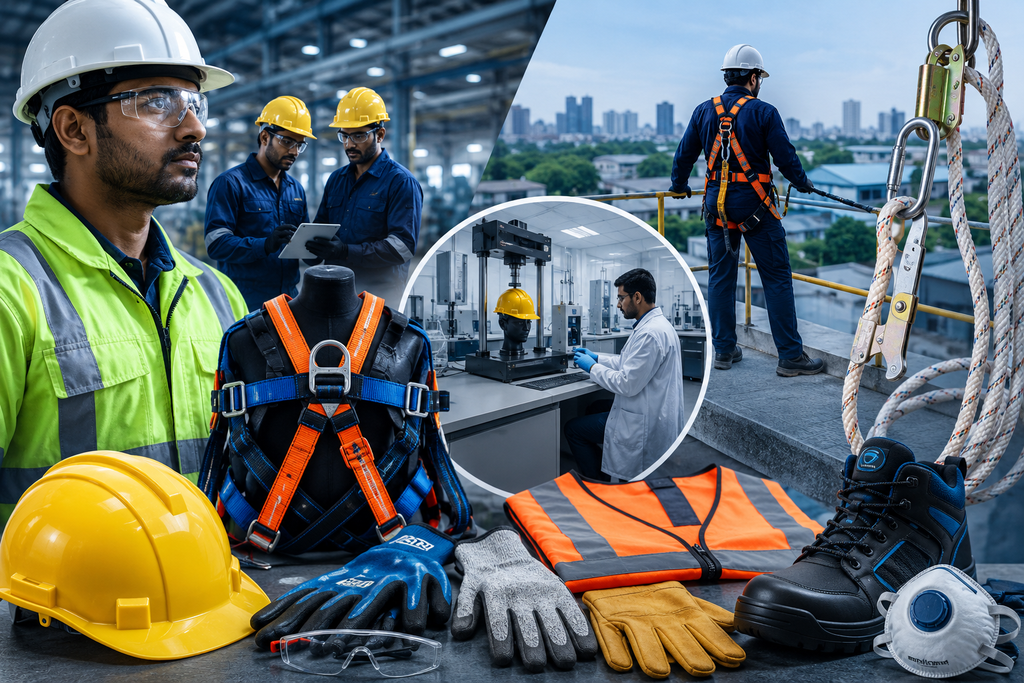
Quality standards are an important part of workplace safety. ISO 9001:2015 quality-management systems, applicable BIS/ISI requirements, EN standards, CE requirements, product testing, and laboratory evaluation can all play different roles in the safety-equipment ecosystem.
Most importantly, organizations should select PPE according to the actual workplace hazard and applicable product requirements.
By combining proper hazard assessment, suitable PPE, quality-focused purchasing, employee training, and regular inspection, businesses can build a stronger and more effective workplace safety program.
Frequently Asked Questions
1. Why are quality standards important for safety equipment?
Quality standards help establish requirements for manufacturing processes or product performance, depending on the specific standard. They can help organizations evaluate safety equipment more systematically.
2. What is ISO 9001:2015?
ISO 9001:2015 is a standard for quality management systems. It focuses on consistent processes, customer satisfaction, and continual improvement.
3. What is BIS in safety equipment?
BIS stands for the Bureau of Indian Standards. It develops and manages standards and conformity-assessment activities for applicable products in India.
4. What is the ISI Mark?
The ISI Mark indicates conformity with applicable Indian Standards under the relevant BIS certification scheme. The specific requirements depend on the product and standard.
5. What is CE marking?
CE marking indicates that an applicable product conforms to relevant European Union requirements. The exact conformity requirements depend on the product category and legislation.
6. Why is PPE testing important?
Testing helps evaluate whether a PPE product meets specified performance requirements under applicable standards.
7. Should businesses choose PPE based only on price?
No. Businesses should consider the workplace hazard, required protection, applicable standards, product quality, fit, comfort, durability, and supplier reliability.
8. Where can I learn about different workplace safety equipment categories?
You can explore SafeKraft’s Workplace Safety Equipment & Protective Gear page for different safety equipment categories and products.