
A safety helmet is one of the most important pieces of Personal Protective Equipment (PPE) used across industries. Whether on construction sites, manufacturing facilities, warehouses, power plants, or industrial workplaces, safety helmets help protect workers from falling objects, impacts, and other head injury hazards.
However, many workers and employers overlook a critical question: When should you replace a safety helmet?
Even the highest-quality safety helmet does not last forever. Exposure to sunlight, heat, chemicals, impacts, and daily wear can gradually weaken the helmet’s protective performance. Using an old or damaged helmet may reduce worker safety and increase the risk of serious injury.
This guide explains when a safety helmet should be replaced, how to inspect it properly, and why regular replacement is essential for workplace safety.
Why Safety Helmet Replacement Matters
Safety helmets are designed to absorb impact energy and reduce the force transferred to the wearer’s head during an accident.
Over time, factors such as:
- UV exposure
- Extreme temperatures
- Chemical contact
- Physical impacts
- General wear and tear
can weaken the helmet shell and suspension system.
A damaged or aged helmet may appear normal from the outside but may no longer provide the protection it was originally designed to deliver.
How Long Does a Safety Helmet Last?
The lifespan of a safety helmet depends on several factors, including:
- Material quality
- Work environment
- Frequency of use
- Exposure conditions
- Manufacturer recommendations
Most industrial safety helmets typically have a service life of several years under normal working conditions. However, employers should always follow the manufacturer’s guidelines rather than relying solely on age.
Regular inspection is just as important as knowing the recommended replacement period.
Signs That a Safety Helmet Should Be Replaced
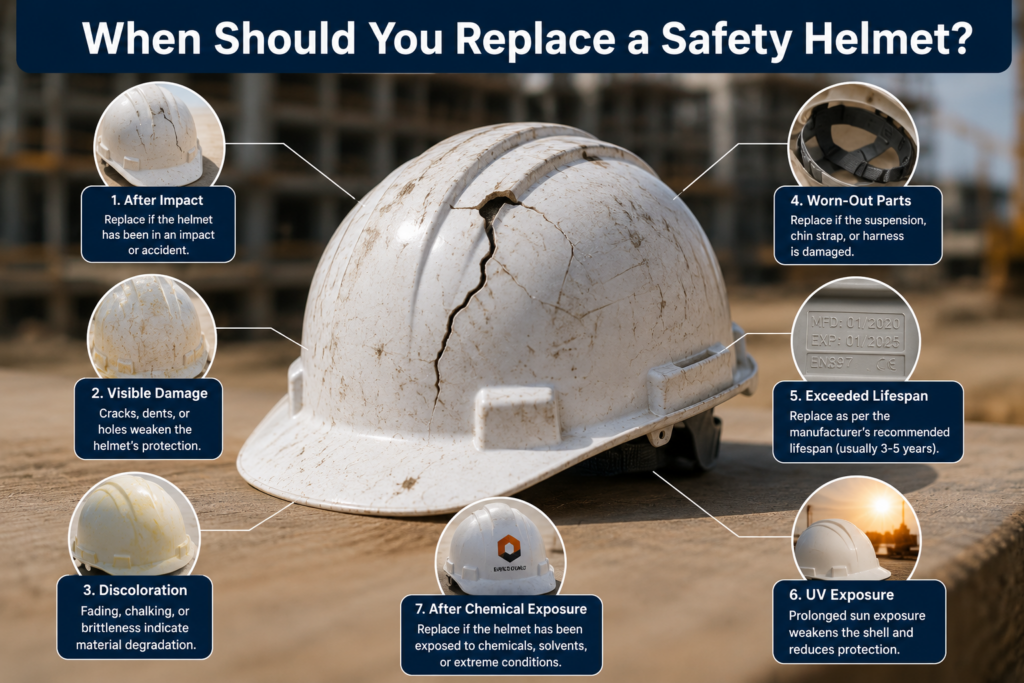
1. Cracks in the Helmet Shell
Cracks are one of the most obvious signs of damage.
Even small cracks can significantly reduce impact protection.
Replace the helmet immediately if you notice:
- Surface cracks
- Deep fractures
- Stress marks
- Visible shell damage
A cracked helmet should never be used.
2. Helmet Has Experienced an Impact
Many workers believe a helmet can continue to be used after being struck by a falling object.
This is a dangerous misconception.
Even if damage is not visible, the helmet’s internal structure may have absorbed impact energy and become compromised.
Replace a helmet immediately after a significant impact.
3. Fading, Discoloration, or Brittleness
Continuous exposure to sunlight and UV radiation can weaken helmet materials.
Common warning signs include:
- Faded color
- Chalky appearance
- Brittle texture
- Surface degradation
These changes indicate aging and reduced protective performance.
4. Damaged Suspension System
The suspension system plays a critical role in absorbing impact energy.
Inspect for:
- Broken straps
- Torn headbands
- Worn suspension components
- Loose adjustment mechanisms
If the suspension system is damaged, replace the affected components or the entire helmet if necessary.
5. Chemical Exposure
Certain chemicals can weaken helmet materials and reduce structural integrity.
Workers in manufacturing plants, chemical facilities, and industrial environments should inspect helmets regularly for signs of chemical damage.
Replace the helmet if contamination or deterioration is suspected.
6. Excessive Wear and Tear
Daily use eventually affects all PPE.
Replace helmets showing:
- Deep scratches
- Dents
- Deformation
- Missing parts
- Poor fit
A helmet that no longer fits properly may not provide effective protection.
7. Manufacturer’s Replacement Period Has Been Reached
Manufacturers provide recommended service life guidelines based on testing and material performance.
Employers should maintain records and replace helmets according to the manufacturer’s recommendations, even if no visible damage exists.
How to Inspect a Safety Helmet
Regular inspections help identify problems before they become safety hazards.
Check the Outer Shell
Look for:
- Cracks
- Dents
- Scratches
- Discoloration
- Deformation
Inspect the Suspension
Verify that:
- Straps are intact
- Clips are secure
- Adjustments function correctly
- Components are not excessively worn
Examine Accessories
Check attached:
- Face shields
- Chin straps
- Hearing protection
- Mounting accessories
Damaged accessories should be replaced immediately.
Common Mistakes That Reduce Helmet Lifespan
Many workers unintentionally damage their helmets through improper use.
Avoid:
Storing Helmets in Direct Sunlight
Excessive UV exposure accelerates material degradation.
Using Harsh Chemicals for Cleaning
Strong solvents may weaken the helmet shell.
Drilling Holes or Modifying the Helmet
Unauthorized modifications can compromise protective performance.
Placing Heavy Objects on Helmets
Compression can weaken structural integrity.
Ignoring Inspection Procedures
Regular inspections help identify hidden damage before accidents occur.
Workplace Best Practices for Safety Helmet Management
Employers should establish a helmet management program that includes:
- Regular inspections
- Employee training
- Replacement schedules
- Damage reporting procedures
- Proper storage practices
These measures help ensure helmets remain effective throughout their service life.
Why High-Quality Safety Helmets Matter
A safety helmet is only effective when it is properly maintained and replaced when necessary.
SafeKraft India Pvt Ltd provides industrial safety solutions designed to support workplace protection across manufacturing, construction, engineering, logistics, power, and industrial sectors.
Quality head protection helps organizations:
- Reduce workplace injuries
- Improve PPE compliance
- Strengthen safety culture
- Enhance worker confidence
- Support regulatory compliance
Investing in reliable PPE is an investment in worker safety.
Conclusion
Understanding when you should replace a safety helmet is essential for maintaining workplace safety. Helmets that have experienced impacts, developed cracks, suffered chemical exposure, or exceeded their recommended service life should be replaced immediately.
Regular inspections, proper storage, employee training, and proactive replacement policies help ensure workers receive the protection they need every day. A safety helmet is one of the most important pieces of PPE, and maintaining it properly can make a significant difference in accident prevention and worker protection.
Frequently Asked Questions (FAQs)
1. When should a safety helmet be replaced?
A safety helmet should be replaced after a significant impact, visible damage, chemical exposure, or when it reaches the manufacturer’s recommended replacement period.
2. Can I continue using a helmet after it has been hit?
No. Helmets should generally be replaced after a major impact because internal damage may not be visible.
3. How often should safety helmets be inspected?
Safety helmets should be inspected before use and during regular workplace safety inspections.
4. Does sunlight affect safety helmets?
Yes. Long-term UV exposure can weaken helmet materials and reduce protective performance.
5. What are the signs of a damaged safety helmet?
Common signs include cracks, fading, brittleness, dents, damaged suspension systems, and poor fit.
6. Can helmet accessories be replaced separately?
In many cases, suspension systems and accessories can be replaced according to manufacturer guidelines.
7. Why is replacing old safety helmets important?
Replacing old helmets ensures workers receive the intended level of protection and reduces the risk of injury during workplace incidents.