
Ropes play a critical role in work-at-height operations, rescue activities, rope access applications, and industrial safety systems. They are designed to withstand significant loads and provide reliable protection for workers operating in challenging environments. However, one important factor that is often overlooked is the effect of knots on rope strength.
At SafeKraft India Pvt Ltd, we emphasize the importance of proper rope handling and safety practices to help organizations maintain the highest standards of workplace safety.
Why Do Knots Reduce Rope Strength?
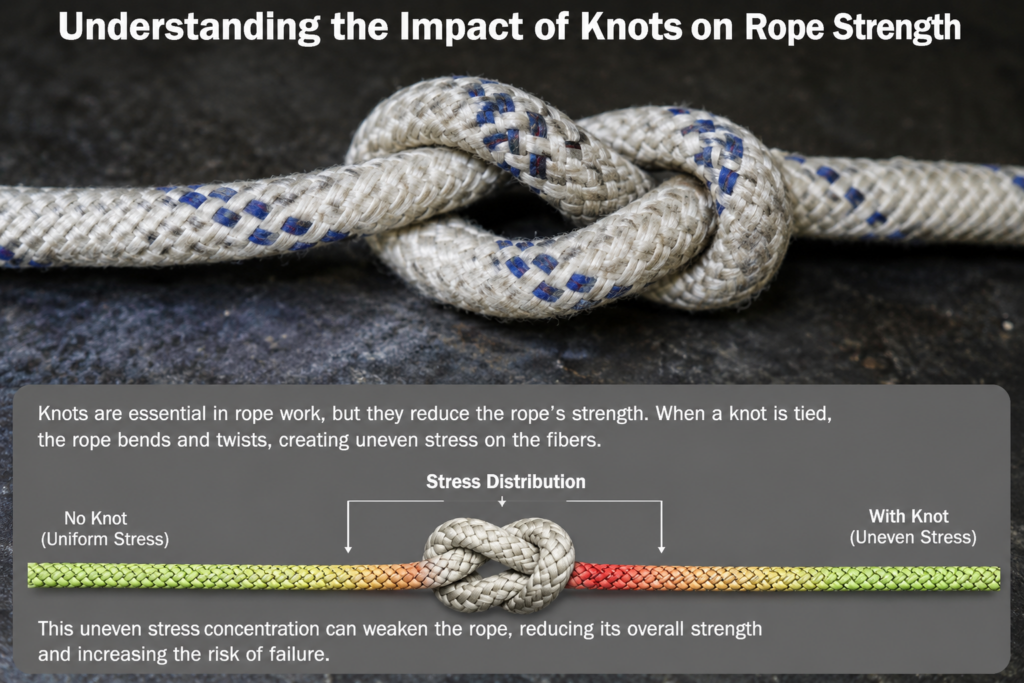
A rope is engineered to distribute loads evenly across its fibers. When a knot is tied, the rope bends sharply and creates areas of concentrated stress. These bends force certain fibers to carry a greater portion of the load while others remain less engaged.
As tension increases, these stress concentrations can weaken the rope at the knot location. Consequently, the rope may no longer achieve its original rated breaking strength.
For this reason, every knot should be considered a potential reduction point in the rope’s overall performance.
Strength Reduction Caused by Knots
The amount of strength reduction depends on several factors, including:
- Type of knot used
- Quality of knot tying and dressing
- Rope construction and material
- Applied load conditions
Depending on these factors, knots can reduce rope strength by anywhere from 4% to 50%.
Some knots are designed to retain more strength than others. Selecting the appropriate knot for a specific application is therefore an essential part of safe rope work.
Importance of Proper Knot Dressing
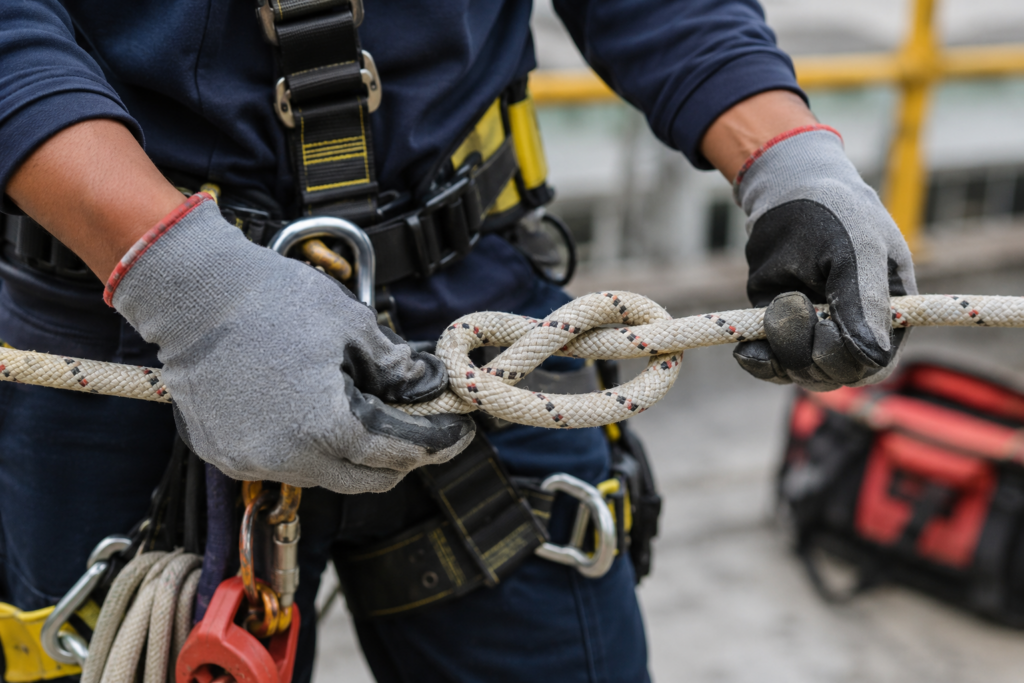
A properly dressed knot is one in which all rope segments are arranged neatly and tightened correctly. Poorly dressed knots may shift, loosen, or create additional stress points during use.
Before placing any rope system into service:
- Inspect the knot carefully.
- Ensure all loops and turns are aligned correctly.
- Tighten the knot fully.
- Verify adequate tail length remains beyond the knot.
Proper knot dressing helps improve reliability and minimizes the risk of unexpected movement under load.
Recommended Rope Handling Practices
To maintain rope integrity and maximize service life, follow these industry-recommended practices:
Inspect Before Every Use
Check ropes for signs of abrasion, cuts, glazing, contamination, or excessive wear. Damaged ropes should be removed from service immediately.
Protect Against Sharp Edges
Sharp edges can quickly damage rope fibers. Always use rope protectors, edge guards, or suitable padding where contact may occur.
Avoid Unnecessary Friction
Dragging ropes across rough surfaces can accelerate wear and reduce performance. Handle ropes carefully during transportation and operation.
Minimize UV Exposure
Extended exposure to sunlight can degrade rope materials over time. Store ropes in a cool, dry, and shaded environment when not in use.
Prevent Twists and Kinks
Incorrect storage methods can create twists and kinks that affect handling and performance. Use proper coiling or rope bags for storage.
Remove Knots After Use
Leaving knots tied for extended periods can create permanent stress on rope fibers. Untie knots once work is completed.
Maintain Adequate Safety Margins
Always leave sufficient rope tail lengths and use stopper knots where required to prevent accidental slippage during operations.
The Role of Training in Rope Safety
Even high-quality ropes can perform poorly if used incorrectly. Proper training ensures that workers understand knot selection, load management, rope inspection procedures, and safe operating practices.
Organizations that invest in rope safety training are better positioned to reduce incidents, improve operational efficiency, and protect their workforce.
Conclusion
Knots are an essential part of rope systems, but they inevitably affect rope strength. Understanding how knots influence load distribution and selecting the correct knot for the task are fundamental aspects of safe rope operations.
By following proper knot-tying techniques, conducting regular inspections, and implementing effective rope care practices, organizations can improve safety and extend the service life of their equipment.
SafeKraft India Pvt Ltd remains committed to promoting workplace safety through quality safety solutions, technical awareness, and industry best practices for work-at-height applications.