
Introduction
Construction sites, manufacturing plants, warehouses, and industrial facilities expose workers to different foot hazards. Falling materials, sharp objects, slippery floors, hot surfaces, and electrical risks can cause serious injuries when workers use unsuitable footwear.
Choosing the right industrial safety shoes helps protect workers against specific workplace hazards while supporting comfort and stability during long shifts. However, not all safety shoes provide the same level of protection. Features such as protective toe caps, slip-resistant soles, puncture resistance, and electrical properties vary by product.
In India, construction companies, factories, engineering businesses, logistics operators, and procurement teams should select safety footwear according to their workplace risk assessment and the applicable product standards.
This guide explains the main types of industrial safety shoes, their applications, and how to choose suitable footwear for construction and factory workers.
What Are Industrial Safety Shoes?
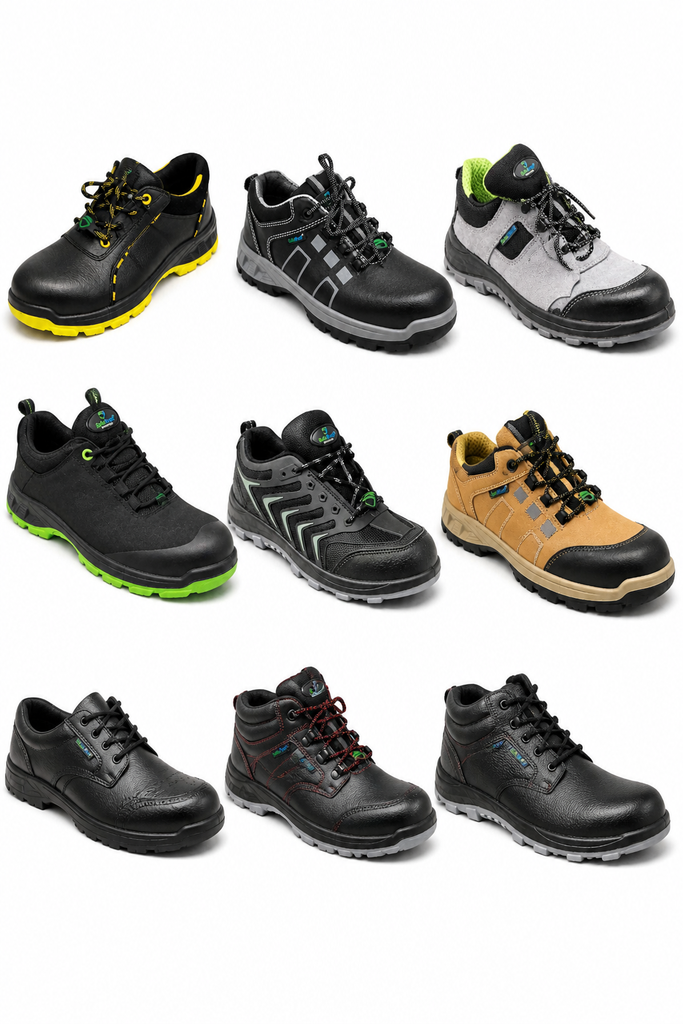
Industrial safety shoes are protective footwear designed to reduce the risk of foot injuries in workplaces. Depending on their design and certification, they may provide protection against impact, compression, punctures, slipping, heat, or certain workplace electrical hazards.
They are commonly used in:
- Construction and infrastructure projects
- Manufacturing and engineering plants
- Warehouses and logistics facilities
- Automotive and automobile component factories
- Steel, metalworking, and fabrication units
- Electrical maintenance and industrial services
- Cement, chemical, and other process industries
The correct footwear depends on the hazards present. A shoe suitable for a warehouse may not provide adequate protection for a foundry, a construction site, or a chemical-processing facility.
1. Steel Toe Safety Shoes
Steel toe safety shoes contain a protective steel toe cap designed to help protect the toes against specified impacts and compression.
They are commonly considered for work involving heavy materials, tools, machinery, and industrial handling.
Common applications:
- Construction sites
- Manufacturing plants
- Metalworking and fabrication
- Automotive workshops
- Warehouses and material handling
Key features to check:
- Certified or tested toe protection appropriate for the intended use
- Sole grip suitable for the working surface
- Correct fit and adequate toe clearance
- Resistance to oils, abrasion, or other substances where required
Steel toe footwear is not automatically suitable for every environment. Select the product according to its specifications, workplace conditions, and applicable standards.
2. Composite Toe Safety Shoes
Composite toe safety shoes use non-metallic protective materials, which may include reinforced polymers or other engineered composites, instead of steel toe caps.
These shoes can be useful where a non-metallic toe cap is preferred.
Potential advantages:
- Non-metallic construction
- Often lighter than some comparable steel-toe models, depending on design
- May be suitable for workplaces with metal-detection requirements
- Do not conduct heat or cold in the same way as steel, although overall thermal performance depends on the shoe
Composite toe shoes still need to meet the required protective performance. Do not assume that every composite toe shoe is lighter, electrically safe, or more protective than every steel toe model.
3. Anti-Slip Safety Shoes
Slips and falls can occur on wet floors, oily surfaces, smooth concrete, and areas contaminated by industrial materials. Anti-slip or slip-resistant safety shoes are designed to improve traction under specified test conditions.
Common applications:
- Food and beverage manufacturing
- Warehouses and distribution centres
- Factory floors
- Maintenance areas
- Construction sites with slippery surfaces
How to choose them:
- Consider the actual surface and contaminants.
- Check the manufacturer’s slip-resistance claims and applicable test results.
- Select a sole design suitable for the working environment.
- Keep footwear and floors clean according to site procedures.
Slip-resistant footwear can reduce risk, but it cannot eliminate slipping in every condition. Good housekeeping, drainage, spill control, and suitable walking surfaces remain essential.
4. Electrical Hazard Safety Shoes
Workers involved in electrical maintenance or working around electrical equipment may require footwear with specific electrical properties. The right type depends on the hazard and the protection required.
It is important to distinguish between different footwear claims:
- Electrical hazard footwear: Certain products are tested to provide a defined level of secondary protection under specified conditions.
- Electrically insulating footwear: Specially designed and tested footwear may be required for particular electrical work.
- Antistatic footwear: Helps dissipate static charge within specified limits.
- ESD footwear: Used as part of a controlled electrostatic discharge system.
These categories are not interchangeable. Antistatic and ESD footwear should not be assumed to protect against electric shock. Always follow the electrical safety assessment, applicable standards, and manufacturer instructions.
5. Puncture-Resistant Safety Shoes
Construction sites and industrial facilities may contain nails, metal fragments, sharp scrap, and other objects that can penetrate the sole.
Puncture-resistant safety shoes incorporate a protective layer designed to resist penetration under specified test conditions.
Suitable applications may include:
- Construction and demolition
- Scrap and recycling operations
- Woodworking and manufacturing
- Metal fabrication
- Industrial maintenance
Check the footwear specifications to confirm whether the protective layer is included and what level of puncture resistance it provides. The protective insert may be metallic or non-metallic, depending on the design.
6. Heat-Resistant Safety Shoes
Some workers face hot surfaces, heated materials, sparks, or elevated ambient temperatures. Suitable heat-resistant footwear can help protect against specified thermal hazards.
Industries that may need heat-resistant footwear:
- Foundries and steel plants
- Welding and fabrication
- Metal processing
- Glass manufacturing
- Certain high-temperature industrial operations
Check the temperature rating and whether it applies to contact heat, radiant heat, or another specific condition. Heat-resistant soles do not automatically make the entire shoe suitable for every high-temperature environment.
Where molten metal, heavy sparks, or extreme heat are present, workers may require specialised footwear and additional protective equipment selected through a risk assessment.
7. Chemical-Resistant Safety Shoes
Workers handling chemicals, oils, cleaning agents, or corrosive substances may need footwear made from materials compatible with those exposures.
Chemical resistance depends on the footwear material, chemical type, concentration, temperature, and contact duration.
Potential applications:
- Chemical-processing facilities
- Industrial cleaning
- Selected laboratory and maintenance operations
- Manufacturing environments with chemical exposure
Before purchasing, confirm the chemical compatibility data supplied by the manufacturer. No single safety shoe material is resistant to every chemical.
If chemical splashes or immersion are possible, assess whether dedicated boots or additional protective clothing are needed.
8. Waterproof Safety Shoes and Boots
Outdoor construction work, wet processing areas, and certain industrial operations may require footwear that limits water penetration.
Water-resistant and waterproof footwear are not necessarily the same. Water resistance may provide protection against limited exposure, while waterproof designs are intended for more demanding conditions within their specified limits.
Common applications:
- Outdoor construction
- Wet industrial environments
- Utilities and maintenance
- Selected agricultural and processing operations
Choose footwear based on the expected water exposure, sole grip, durability, and other hazards. Waterproof footwear should also provide suitable breathability and comfort for the working conditions.
9. Lightweight Safety Shoes
Workers who walk or stand for long periods may benefit from safety footwear designed to reduce unnecessary weight while maintaining the required protection.
Lightweight designs may use composite toe caps, engineered sole materials, or other construction techniques.
Potential benefits:
- Comfort during extended shifts
- Easier movement around large facilities
- Reduced footwear fatigue for some workers
However, lightweight footwear is not automatically suitable for heavy construction or high-impact environments. Confirm that the toe protection, sole construction, grip, and other safety features meet the job requirements.
10. High-Ankle Safety Shoes
High-ankle safety shoes extend above the ankle and may provide additional coverage and support, depending on their design and fit.
They are often considered for:
- Construction and infrastructure work
- Rough or uneven terrain
- Outdoor industrial operations
- Selected heavy-duty material-handling tasks
Ankle height alone does not guarantee protection against ankle sprains or other injuries. Choose footwear based on fit, stability, sole grip, and the hazards identified for the job.
Comparison of Industrial Safety Shoe Types
| Safety shoe type | Main feature | Common applications |
|---|---|---|
| Steel toe | Protective steel toe cap | Construction, factories, warehouses |
| Composite toe | Non-metallic protective toe cap | Manufacturing, selected inspection areas |
| Anti-slip | Improved traction under specified conditions | Factory floors, wet areas, warehouses |
| Electrical protection | Specific electrical properties | Electrical work, depending on product rating |
| Puncture-resistant | Sole penetration resistance | Construction, demolition, metalworking |
| Heat-resistant | Protection against specified thermal hazards | Foundries, fabrication, metal processing |
| Chemical-resistant | Material compatibility with specified chemicals | Chemical handling, selected industrial work |
| Waterproof | Protection against water ingress within product limits | Outdoor work and wet environments |
| Lightweight | Reduced footwear weight with specified protection | Warehousing, manufacturing, long shifts |
| High-ankle | Higher upper coverage | Construction and uneven terrain |
How to Choose the Right Industrial Safety Shoes
Selecting suitable footwear starts with understanding the workplace rather than choosing a product based only on appearance or price.
1. Assess workplace hazards
Identify the risks from falling objects, sharp materials, slippery floors, electricity, heat, chemicals, and water. Different tasks in the same factory may require different footwear.
2. Check the applicable standards
Review the relevant Indian Standards and product compliance documentation. Verify markings, protective ratings, and test information rather than relying only on general supplier descriptions.
3. Select the right sole
Choose sole properties according to the working surface, contaminants, temperature, and exposure to oils or chemicals. Slip resistance should be relevant to the actual site conditions.
4. Prioritise fit and comfort
Safety shoes should fit securely without causing painful pressure or restricting movement. Consider sizing, toe clearance, weight, ventilation, and the length of the work shift.
5. Consider durability and maintenance
Look for appropriate stitching, upper materials, sole construction, and product care instructions. Establish inspection and replacement procedures for worn or damaged footwear.
6. Evaluate total cost
The cheapest option may not provide the required protection or service life. Compare suitability, documentation, comfort, durability, and replacement frequency when evaluating the total cost.
7. Buy from a reliable supplier
Choose a supplier that can provide accurate specifications, relevant compliance documents, and assistance in matching footwear to the work environment.
Industrial Safety Shoes for Different Industries
Construction industry
Construction workers may need toe protection, puncture resistance, slip resistance, and suitable ankle coverage depending on the task and site conditions.
Manufacturing and engineering
Factory workers may need toe protection, slip-resistant soles, and resistance to oils or other contaminants. Additional features depend on machinery and production processes.
Warehousing and logistics
Workers who frequently walk and handle materials may benefit from suitable toe protection, comfortable fit, and traction matched to the warehouse floor.
Steel and fabrication
Metalworking environments may require footwear selected for impact, sharp materials, sparks, and heat exposure. Specialised thermal protection may be necessary for certain operations.
Electrical and electronics industries
Footwear should be selected according to the electrical or electrostatic hazard. ESD footwear, antistatic footwear, and electrically insulating footwear serve different purposes and must not be substituted without assessment.
Common Mistakes When Buying Safety Shoes
Avoid these common purchasing mistakes:
- Choosing footwear based only on price.
- Assuming every safety shoe has a steel toe cap.
- Treating antistatic or ESD footwear as electrical shock protection.
- Buying chemical-resistant footwear without checking chemical compatibility.
- Ignoring the floor surface and slip hazards.
- Choosing the wrong size or an uncomfortable design.
- Failing to inspect footwear for damage and wear.
- Assuming one shoe type is suitable for every department.
The correct purchasing process should combine hazard assessment, product verification, proper fitting, worker training, and routine inspection.
Where to Buy Industrial Safety Shoes in India
Construction companies, factories, warehouses, engineering businesses, and industrial procurement teams should source safety footwear from suppliers that provide clear specifications and relevant product documentation.
SafeKraft India supplies industrial safety products for workplace applications. Buyers can explore the available product range and contact the company to discuss suitable options for their workforce.
Visit SafeKraft India: https://safekraft.co.in/
Before requesting a quotation, specify the intended industry, workplace hazards, required features, sizes, quantity, and any applicable compliance requirements. This helps the supplier recommend appropriate products.
Conclusion
Industrial safety shoes play an important role in reducing foot-injury risks in construction, manufacturing, warehousing, and other industrial environments. Steel toe, composite toe, anti-slip, puncture-resistant, heat-resistant, chemical-resistant, and electrical-property footwear serve different purposes.
The best choice depends on the actual workplace hazards, applicable standards, product specifications, fit, and comfort. Employers should assess each task carefully, verify product documentation, train workers, and replace footwear when it becomes damaged or unsuitable.
By choosing the right industrial safety shoes, businesses can strengthen their workplace safety programme and make more informed PPE purchasing decisions.
Frequently Asked Questions
1. What are the different types of industrial safety shoes?
Common types include steel toe, composite toe, anti-slip, puncture-resistant, heat-resistant, chemical-resistant, waterproof, lightweight, high-ankle, and footwear designed for specific electrical or electrostatic properties.
2. Which safety shoes are best for construction workers?
The right footwear depends on site hazards. Construction workers may need protective toe caps, puncture-resistant soles, slip resistance, and suitable ankle coverage. Check the product specifications before purchasing.
3. Are steel toe safety shoes better than composite toe shoes?
Neither type is universally better. Steel and composite toe caps offer specified impact and compression protection when appropriately tested. The choice depends on the workplace, product rating, weight, temperature, and other requirements.
4. Which safety shoes are suitable for factory workers?
Factory workers should choose footwear according to their tasks. Toe protection and slip resistance are common requirements, while chemical, heat, puncture, or electrical properties may be necessary in specific departments.
5. Are ESD safety shoes the same as electrical safety shoes?
No. ESD footwear helps control electrostatic discharge in suitable environments. Electrical hazard or insulating footwear is designed for different electrical risks. Always verify the specific product rating and intended use.
6. How often should industrial safety shoes be replaced?
Replacement depends on the product, workplace conditions, damage, wear, and manufacturer guidance. Inspect footwear regularly and remove it from service when its protective features are compromised.
7. How do I select the correct safety shoe size?
Use the manufacturer’s sizing guide and try the shoes with the socks normally worn at work. Check toe clearance, heel fit, width, and comfort while standing and walking.
8. Where can I buy industrial safety shoes in India?
Look for a supplier that provides suitable product specifications, relevant compliance documentation, and options matched to your workplace hazards. Visit https://safekraft.co.in/ to explore SafeKraft’s industrial safety product range.