
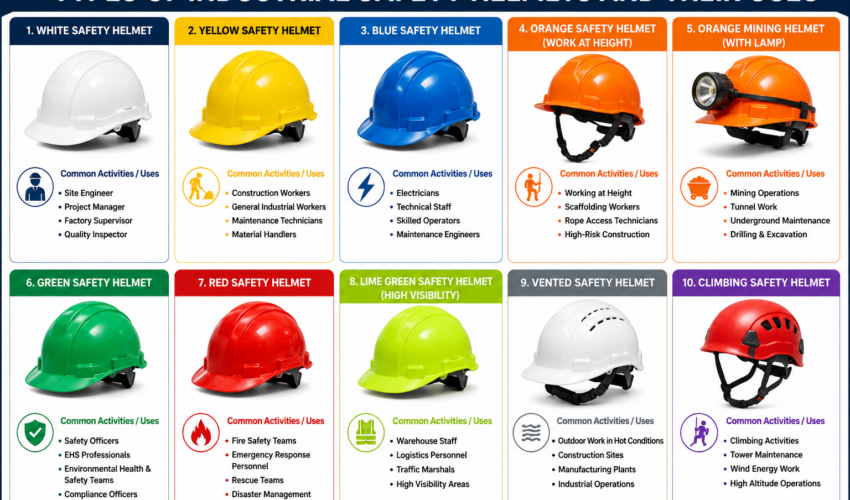
Head injuries remain one of the most serious workplace hazards across industries. Falling objects, accidental impacts, electrical hazards, and work-at-height activities can result in severe injuries if proper head protection is not used.
This is why industrial safety helmets are considered one of the most important pieces of Personal Protective Equipment (PPE). However, many workers and employers are unaware that different work environments require different types of helmets.
Understanding the types of industrial safety helmets and their uses helps organizations improve worker protection, reduce workplace accidents, and comply with safety standards.
In this guide, we explain the major types of industrial safety helmets, their applications, and how to choose the right helmet for your workplace.
Why Industrial Safety Helmets Are Important
Industrial safety helmets are designed to protect workers from:
- Falling objects
- Impact injuries
- Electrical hazards
- Flying debris
- Workplace collisions
- Work-at-height risks
A properly selected helmet can significantly reduce the severity of head injuries and improve overall workplace safety.
Main Types of Industrial Safety Helmets
1. General Purpose Safety Helmets
General purpose safety helmets are the most commonly used industrial helmets.
They are designed to provide protection against:
- Falling tools
- Minor impacts
- Construction hazards
- Material handling risks
Common Applications
- Manufacturing plants
- Warehouses
- Construction sites
- Logistics facilities
- Maintenance operations
These helmets are ideal for general industrial environments where impact protection is the primary requirement.
2. Electrical Safety Helmets
Electrical safety helmets are specifically designed for workers exposed to electrical hazards.
These helmets are manufactured using non-conductive materials that help reduce electrical risk.
Common Applications
- Electrical maintenance
- Utility services
- Power plants
- Electrical installations
- Industrial electrical systems
Electrical workers should always use helmets designed for electrical protection when working near energized equipment.
3. Construction Safety Helmets
Construction environments often present multiple hazards including falling objects, moving equipment, and work-at-height risks.
Construction safety helmets provide enhanced protection for demanding job sites.
Common Applications
- Building construction
- Infrastructure projects
- Road construction
- Industrial construction
- Heavy engineering projects
These helmets are widely used by site supervisors, engineers, contractors, and workers.
4. Vented Safety Helmets
Vented helmets include specially designed airflow openings that improve ventilation and worker comfort.
They are particularly useful in hot environments where heat stress can become a concern.
Benefits
- Improved airflow
- Better comfort
- Reduced heat buildup
- Increased worker productivity
Common Applications
- Outdoor construction
- Mining operations
- Manufacturing facilities
- Hot weather work environments
Vented helmets should not be used where electrical protection is required unless specifically approved for that purpose.
5. Climbing and Work-at-Height Helmets
Workers performing tasks at height require helmets that remain secure during movement and climbing activities.
These helmets often include:
- Chin straps
- Enhanced retention systems
- Improved side-impact protection
Common Applications
- Rope access work
- Tower maintenance
- Wind energy projects
- Telecommunications work
- Industrial maintenance
These helmets help protect workers during elevated operations.
6. Mining Safety Helmets
Mining environments present unique risks that require specialized head protection.
Mining helmets are often designed to accommodate:
- Helmet-mounted lamps
- Communication equipment
- Additional impact protection
Common Applications
- Underground mining
- Surface mining
- Quarry operations
- Extraction industries
Mining helmets are built to withstand harsh operating conditions.
7. High-Visibility Safety Helmets
High-visibility helmets improve worker visibility in busy work environments.
These helmets are commonly available in bright colors such as:
- Yellow
- Orange
- Green
- Red
Common Applications
- Road construction
- Traffic management
- Warehousing
- Logistics operations
- Industrial facilities
Improved visibility helps reduce collision-related incidents.
Common Safety Helmet Colors and Their Meanings
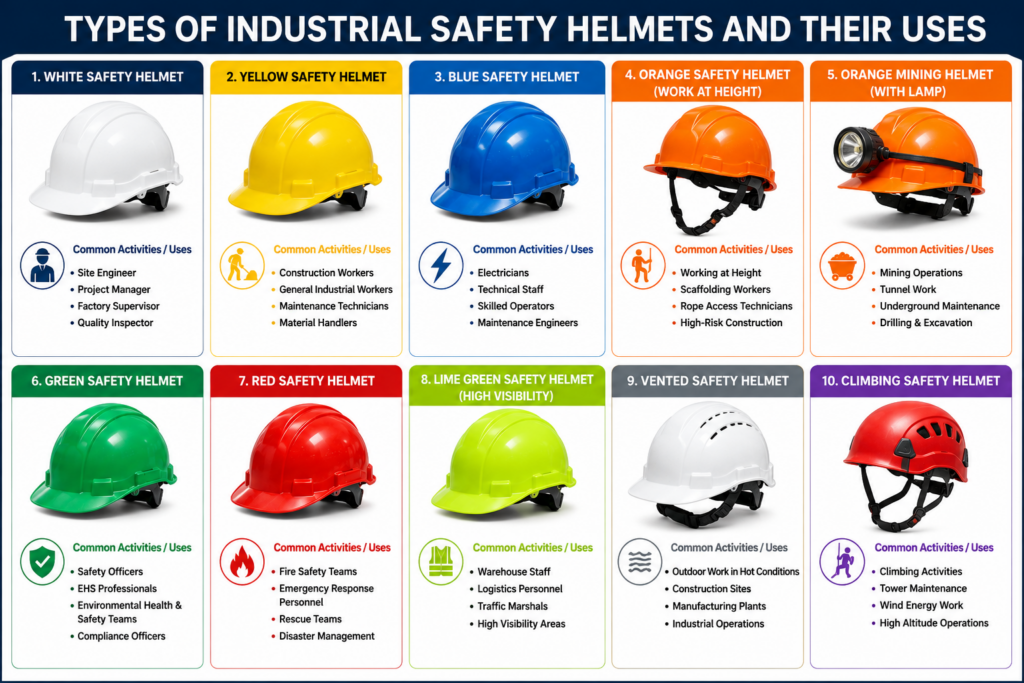
Many organizations use helmet colors to identify personnel roles.
White Helmets
Commonly worn by:
- Engineers
- Supervisors
- Managers
- Site inspectors
Yellow Helmets
Often assigned to:
- General workers
- Laborers
- Operators
Blue Helmets
Typically used by:
- Technical personnel
- Electricians
- Skilled workers
Green Helmets
Commonly worn by:
- Safety officers
- Environmental personnel
Red Helmets
Often designated for:
- Emergency response teams
- Fire safety personnel
Color assignments may vary between organizations.
How to Choose the Right Industrial Safety Helmet
Selecting the correct helmet requires a workplace hazard assessment.
Consider Workplace Risks
Evaluate exposure to:
- Falling objects
- Electrical hazards
- Elevated work
- Heat
- Flying debris
Verify Safety Standards
Choose helmets that meet applicable industrial safety standards and workplace requirements.
Ensure Proper Fit
A properly fitted helmet provides better protection and improves worker comfort.
Check Compatibility
Ensure the helmet can accommodate required accessories such as:
- Face shields
- Ear protection
- Headlamps
- Communication systems
Common Mistakes When Using Safety Helmets
Avoid these workplace safety mistakes:
- Wearing damaged helmets
- Using expired helmets
- Ignoring inspection procedures
- Removing suspension components
- Modifying helmet shells
- Wearing improperly fitted helmets
These practices can significantly reduce protection levels.
Why High-Quality Safety Helmets Matter
A safety helmet is often the first line of defense against workplace head injuries.
SafeKraft India Pvt Ltd provides workplace safety solutions designed to support industrial safety programs across:
- Manufacturing
- Construction
- Engineering
- Warehousing
- Logistics
- Power generation
- Industrial maintenance
High-quality safety helmets help improve worker protection, compliance, and operational safety.
Conclusion
Understanding the types of industrial safety helmets and their uses is essential for maintaining a safe workplace. Different industries and job roles require specific helmet designs to address unique hazards.
Whether workers face falling objects, electrical risks, work-at-height challenges, or demanding industrial environments, selecting the right safety helmet significantly improves protection and reduces injury risks.
Employers should combine proper helmet selection with regular inspections, employee training, and proactive safety management to create a safer and more productive workplace.
Frequently Asked Questions (FAQs)
1. What are the main types of industrial safety helmets?
Common types include general purpose helmets, electrical safety helmets, vented helmets, construction helmets, climbing helmets, mining helmets, and high-visibility helmets.
2. Which helmet is best for electrical workers?
Electrical safety helmets made from non-conductive materials are generally recommended for electrical work environments.
3. What is the purpose of a vented safety helmet?
Vented helmets improve airflow and comfort in hot working conditions.
4. Why are different helmet colors used on job sites?
Helmet colors help identify job roles, responsibilities, and personnel categories.
5. How often should safety helmets be inspected?
Safety helmets should be inspected before each use and during regular workplace safety inspections.
6. Can a safety helmet be used after an impact?
No. Helmets that experience significant impacts should be replaced immediately.
7. Why is proper helmet fit important?
A properly fitted helmet provides better protection, comfort, and stability during work activities.