
Industrial safety shoes are one of the most important pieces of Personal Protective Equipment (PPE) used across manufacturing plants, construction sites, warehouses, engineering facilities, logistics operations, and industrial workplaces. The right safety shoes do much more than protect your feet. They improve comfort, reduce fatigue, enhance productivity, and help prevent workplace injuries.
However, with so many options available, choosing the right pair can be challenging. Understanding the top 10 features to look for in industrial safety shoes can help employers and workers make informed decisions while ensuring maximum workplace protection.
In this guide, we explore the key features that define high-quality industrial safety footwear and explain why they matter in demanding work environments.
Why Choosing the Right Safety Shoes Matters
Workers spend long hours on their feet, often in hazardous conditions. Poor-quality footwear can lead to discomfort, injuries, and reduced productivity.
The right industrial safety shoes help protect against:
- Falling objects
- Sharp materials
- Slippery surfaces
- Electrical hazards
- Chemical exposure
- Workplace fatigue
Investing in quality footwear is an investment in worker safety and operational efficiency.
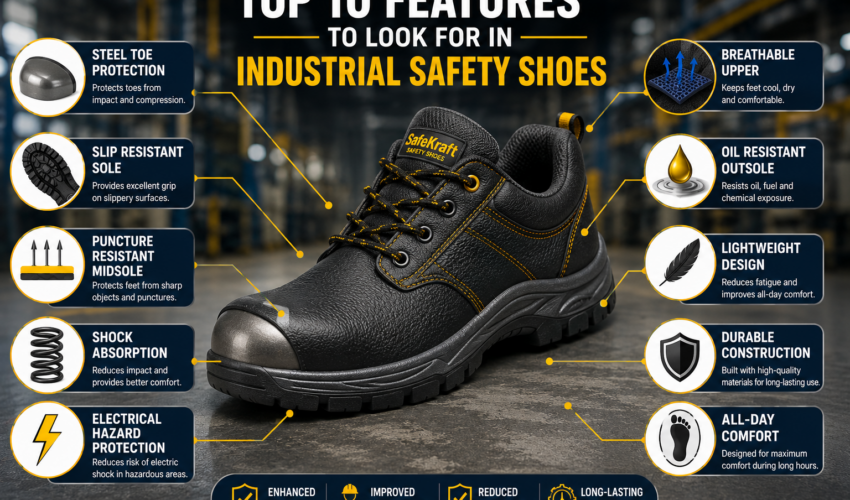
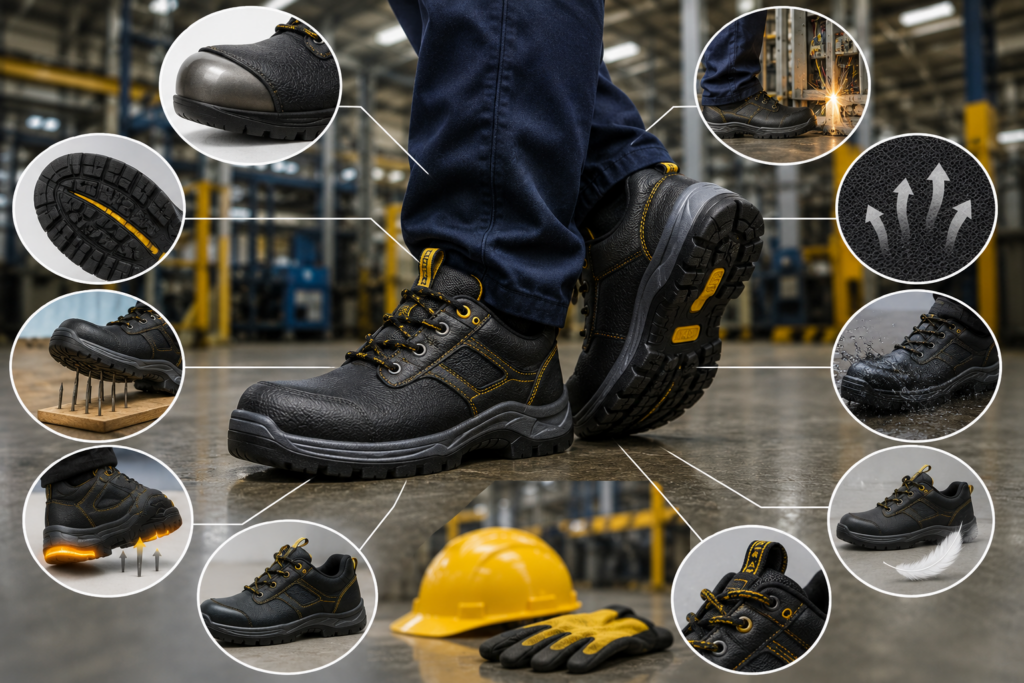
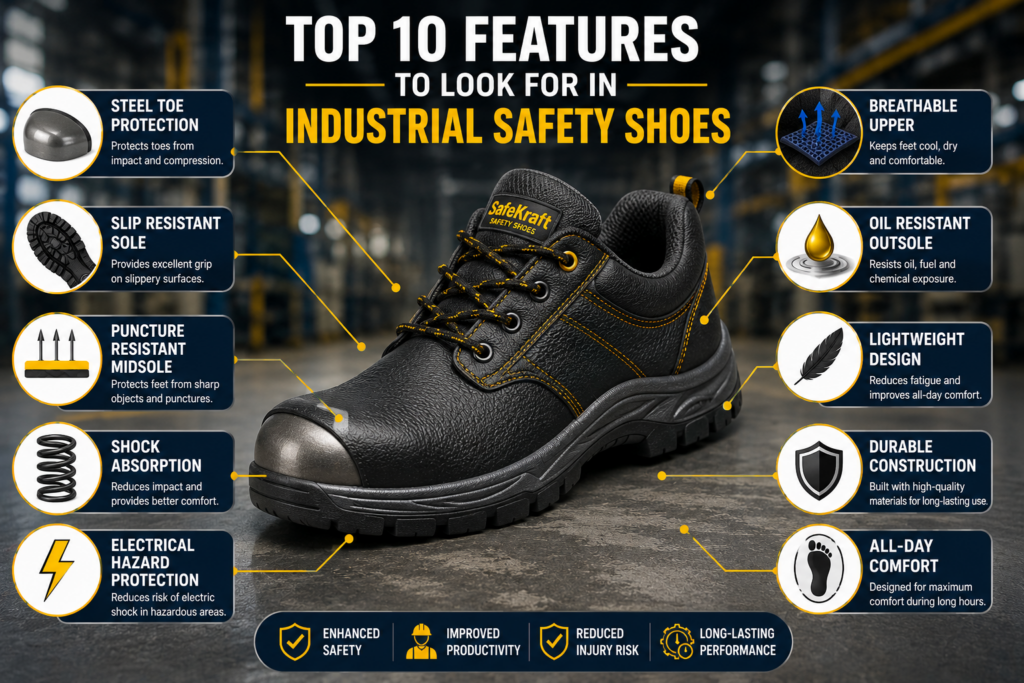
1. Impact-Resistant Toe Protection
Toe protection is one of the most critical features of industrial safety shoes.
Safety shoes typically include:
- Steel Toe Caps
- Composite Toe Caps
These protective caps help safeguard workers from falling tools, heavy materials, and accidental impacts.
Best For
- Manufacturing
- Construction
- Warehousing
- Engineering
Without adequate toe protection, foot injuries can become severe and costly.
2. Slip-Resistant Outsole
Slips, trips, and falls are among the most common workplace accidents.
A slip-resistant outsole provides better grip on:
- Wet floors
- Oily surfaces
- Industrial workspaces
- Uneven terrain
High-quality outsole designs improve traction and worker confidence in hazardous environments.
3. Puncture Resistance
Many industrial workplaces contain nails, metal scraps, sharp tools, and debris that can penetrate ordinary footwear.
Puncture-resistant midsoles help protect workers from injuries caused by sharp objects underfoot.
Common Industries
- Construction
- Manufacturing
- Maintenance
- Warehousing
This feature is particularly valuable for workers operating in environments with floor hazards.
4. Comfortable Cushioning and Shock Absorption
Comfort is often overlooked when selecting safety footwear.
Workers who stand or walk for long hours benefit from:
- Cushioned insoles
- Shock-absorbing midsoles
- Ergonomic foot support
Proper cushioning reduces fatigue and supports long-term foot health.
5. Durable Sole Construction
The sole is subjected to constant wear and tear.
Common industrial sole materials include:
PU Sole (Polyurethane)
- Lightweight
- Comfortable
- Flexible
- Good shock absorption
Rubber Sole
- Excellent durability
- Heat resistance
- Slip resistance
- Suitable for harsh environments
Choosing the appropriate sole depends on workplace conditions.
6. Electrical Hazard Protection
Workers exposed to electrical systems require footwear that provides protection against electrical risks.
Electrical hazard safety shoes help reduce the possibility of electrical current passing through the body during accidental contact.
Common Applications
- Electrical maintenance
- Utilities
- Manufacturing
- Industrial facilities
This feature is essential for electricians and maintenance personnel.
7. Breathable Upper Material
Safety footwear should provide protection without sacrificing comfort.
Breathable materials help:
- Improve airflow
- Reduce heat buildup
- Minimize moisture accumulation
- Enhance worker comfort
Comfortable footwear encourages consistent usage and improves productivity.
8. Water and Oil Resistance
Industrial environments frequently expose workers to liquids and chemicals.
Water-resistant and oil-resistant footwear helps:
- Maintain grip
- Improve durability
- Keep feet comfortable
- Reduce slip risks
This feature is especially useful in manufacturing plants, workshops, and maintenance facilities.
9. Lightweight Design
Heavy footwear can increase fatigue during long shifts.
Modern industrial safety shoes are designed to provide protection while remaining lightweight.
Benefits include:
- Greater mobility
- Reduced strain
- Improved comfort
- Enhanced productivity
Lightweight safety shoes are increasingly preferred across industries.
10. Compliance with Safety Standards
One of the most important features to look for is compliance with recognized safety standards.
Common standards include:
ISI Standard
Recognized in India for quality and safety compliance.
EN ISO Standard
Internationally recognized safety footwear certification.
ASTM Standard
Widely used in North America and industrial workplaces globally.
Certified footwear provides confidence that the product has been tested for performance and safety.
Additional Features Worth Considering
Depending on workplace requirements, additional features may include:
- Anti-static properties
- Heat resistance
- Chemical resistance
- Reflective elements
- Metatarsal protection
- Ankle support
A workplace hazard assessment helps determine which features are necessary.
Common Mistakes When Buying Safety Shoes
Many buyers focus only on price rather than protection and comfort.
Avoid these mistakes:
- Choosing the wrong size
- Ignoring workplace hazards
- Overlooking certification
- Selecting style over safety
- Delaying replacement of worn footwear
Proper footwear selection can significantly improve workplace safety outcomes.
Why SafeKraft Safety Shoes Are a Reliable Choice
SafeKraft India Pvt Ltd provides industrial safety footwear designed for demanding work environments.
Worker-Focused Protection
SafeKraft safety shoes are developed to support workplace safety across multiple industries.
Comfort for Long Working Hours
Designed with worker comfort in mind, helping reduce fatigue during extended shifts.
Durable Construction
Built to withstand challenging industrial conditions.
Industry Versatility
Suitable for:
- Manufacturing
- Construction
- Logistics
- Warehousing
- Engineering
- Maintenance Operations
SafeKraft continues to support organizations with reliable workplace safety solutions.
Conclusion
Understanding the Top 10 Features to Look for in Industrial Safety Shoes helps employers and workers choose footwear that provides the right balance of protection, comfort, and durability.
Features such as toe protection, slip resistance, puncture resistance, electrical hazard protection, breathable materials, and safety certification all contribute to safer working environments. Investing in quality safety footwear is one of the simplest and most effective ways to reduce workplace injuries and improve worker confidence.
For industries where safety is a priority, choosing the right safety shoes is not just a purchase decision. It is a commitment to worker protection and operational excellence.
Frequently Asked Questions (FAQs)
1. What is the most important feature in industrial safety shoes?
Impact-resistant toe protection is one of the most important features because it protects workers from falling objects and compression injuries.
2. Why are slip-resistant soles important?
Slip-resistant soles help prevent workplace slips, trips, and falls on wet or oily surfaces.
3. What is the difference between PU sole and rubber sole safety shoes?
PU soles are lightweight and comfortable, while rubber soles offer superior durability and heat resistance.
4. Do industrial safety shoes protect against electrical hazards?
Certain safety shoes are specifically designed to provide electrical hazard protection for workers exposed to electrical risks.
5. How often should safety shoes be replaced?
Safety shoes should be replaced when they show signs of wear, sole damage, reduced grip, or compromised protection.
6. Are certified safety shoes better?
Certified safety shoes provide assurance that they meet recognized safety and performance standards.
7. Why choose SafeKraft safety shoes?
SafeKraft safety shoes combine protection, comfort, durability, and workplace safety compliance, making them suitable for a wide range of industrial applications.