
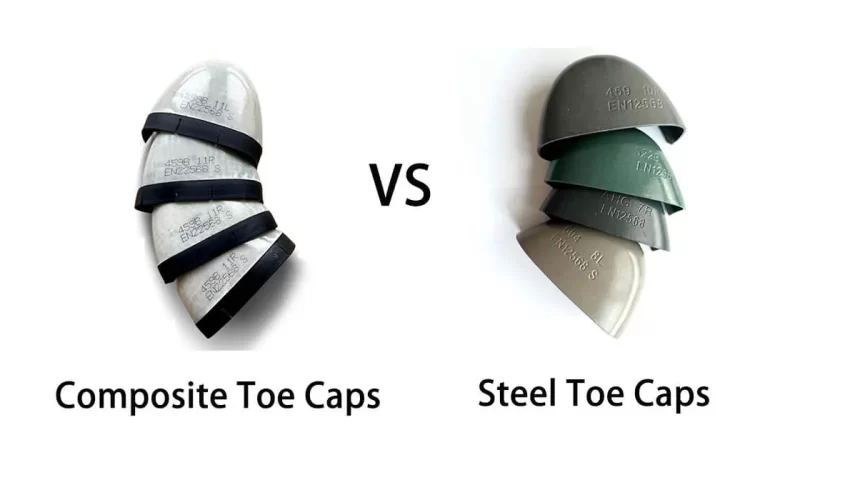
The toe cap and midsole are two of the most important protective components in safety footwear. They help protect workers from different workplace hazards, including impact, compression and penetration from sharp objects.
The right combination of toe protection and penetration-resistant midsole can make a major difference in industrial environments such as construction, manufacturing, engineering, warehouses, workshops and other workplaces.
This guide explains the different safety shoe toe caps and midsoles shown in the SafeKraft catalogue, including steel toe caps, fibre composite toe caps, steel plates and anti-penetration textile midsoles.
What Are Toe Caps and Midsoles?
A toe cap is a protective component positioned inside the front portion of a safety shoe. It is designed to help protect the toes against specified impact and compression hazards.
A protective midsole, on the other hand, is positioned between the insole and outsole. Its primary purpose is to help protect the bottom of the foot from penetration by sharp objects.
Therefore, toe protection and penetration protection address different hazards.
A safety shoe can use one or both types of protection depending on the intended application.
Steel Toe Cap
The SafeKraft catalogue describes the Steel Toe Cap as:
“Ultra lightweight Metal Toe Cap.”
The catalogue also specifies:
EN 12568:2010
and displays a 200 J toe cap marking.
Steel toe caps have traditionally been widely used in industrial safety shoes because steel provides strong protection against impact and compression hazards when incorporated into footwear designed and tested for the applicable requirements.
Benefits of Steel Toe Caps
Depending on the footwear design, steel toe caps can provide:
- Strong toe protection
- Impact resistance
- Compression protection
- Durable construction
- Proven use in industrial footwear
- Reliable protection for demanding workplaces
Steel toe safety shoes can be suitable for applications where workers may encounter falling or rolling objects.
However, the complete shoe should always be evaluated rather than judging protection based only on the toe-cap material.
Fibre Composite Toe Cap
The catalogue also features a Fibre Composite Toe Cap.
It is described as:
“Ultra lightweight non-magnetic Fibre Reinforced Polymer Composite Toe Cap.”
The catalogue specifies:
EN 12568:2010
and displays a 200 J toe cap marking.
Composite toe caps are an alternative to traditional steel toe caps. They are made from non-metallic materials and can be useful in workplaces where metal-free footwear is preferred or required.
Advantages of Composite Toe Caps
A composite toe cap can offer several practical benefits depending on the footwear design:
- Lightweight construction
- Non-metallic design
- Non-magnetic characteristics
- Impact protection
- Comfortable everyday wear
- Suitable for selected metal-free environments
For workers who spend long hours walking or standing, lightweight protective footwear can be particularly attractive.
Steel Plate for Anti-Penetration Protection
The SafeKraft catalogue also shows a Steel Plate designed to provide protection against penetration.
The catalogue describes it as:
“The most effective protection against perforation.”
It also specifies:
EN 12568:2010
and displays a 1,100 N metal midsole marking.
A steel protective plate can help prevent sharp objects from penetrating through the bottom of the footwear.
This can be particularly relevant in workplaces where workers may encounter:
- Nails
- Screws
- Sharp metal pieces
- Construction debris
- Industrial scrap
- Other sharp objects
For construction and industrial workers, penetration protection can be an important part of overall workplace safety footwear.
Anti-Penetration Textile Midsole
The catalogue also presents an Anti Penetration Textile Midsole.
It is described as:
“Lighter and more comfortable than the traditional steel mid sole – Flexible – 100% protection over the entire surface of the sole.”
The catalogue further describes it as:
“100% metal free zero Penetration Antistatic EN 12568:2010.”
A textile penetration-resistant midsole provides an alternative to a traditional steel midsole.
Benefits of Textile Midsoles
Depending on the construction and certification of the finished footwear, textile midsoles can provide:
- Lightweight construction
- Flexibility
- Comfort
- Metal-free design
- Protection across the sole area
- Reduced weight compared with traditional steel alternatives
This type of construction can be useful for workers who need penetration protection while also preferring lightweight and flexible footwear.
Steel Toe Cap vs Composite Toe Cap
Both steel and composite toe caps can provide impact protection when used in appropriately designed and tested safety footwear.
| Feature | Steel Toe Cap | Fibre Composite Toe Cap |
|---|---|---|
| Material | Steel | Fibre-reinforced polymer composite |
| Metal | Yes | No |
| Weight | Generally heavier | Generally lighter |
| Magnetic properties | Metal | Non-magnetic |
| Impact protection | Yes, when certified | Yes, when certified |
| Suitable for metal-free environments | No | Yes |
| Common application | Industrial work | Industrial and metal-sensitive workplaces |
The best option depends on the workplace hazards, required certification, comfort requirements and employer specifications.
Steel Midsole vs Textile Midsole
Penetration-resistant midsoles can also be compared according to their construction.
Steel Midsole
A steel midsole provides a traditional metal-based penetration barrier. It can offer strong protection against sharp objects when incorporated into compliant safety footwear.
Textile Midsole
A textile midsole uses engineered fibres instead of steel. It can provide a lighter and more flexible alternative while maintaining the required penetration resistance when properly designed and tested.
Therefore, workers who need lightweight safety shoes may prefer a textile-based solution where it meets the requirements of their application.
Why Penetration Protection Matters
Many industrial workplaces contain sharp objects that can create serious foot hazards.
For example, construction workers may encounter nails, screws, metal fragments and other debris. Similarly, manufacturing and engineering environments may contain sharp components or scrap material.
A penetration-resistant midsole can help create a protective barrier between the worker’s foot and the ground.
However, users should always select footwear according to the actual workplace risk assessment and the manufacturer’s certified specifications.
Choosing the Right Safety Shoe Protection
When selecting safety shoes, consider more than just the toe cap.
1. Identify the Workplace Hazards
Determine whether workers face:
- Falling objects
- Compression hazards
- Sharp objects
- Electrical risks
- Slippery surfaces
- Oil or chemical exposure
- Heat
- Long periods of standing or walking
2. Select Appropriate Toe Protection
Steel and composite toe caps have different characteristics. Choose the option that matches the workplace requirements.
3. Consider Penetration Protection
If sharp objects are present, consider footwear with an appropriate penetration-resistant midsole.
4. Consider Weight and Flexibility
For workers who walk extensively, lighter and flexible footwear may improve comfort.
5. Check Applicable Standards
Always verify the standards and certification applicable to the finished footwear and intended use.
6. Choose the Correct Fit
Even technically advanced safety footwear should fit correctly. A suitable fit can improve comfort during extended working hours.
Applications of Safety Toe Cap and Midsole Footwear
Safety footwear incorporating protective toe caps and penetration-resistant midsoles can be used across various industries, depending on the specific product certification.
Construction
Construction workers can face falling objects and sharp debris. Toe and penetration protection can therefore be important.
Manufacturing
Factories may contain machinery, components and materials that create impact and penetration hazards.
Engineering
Engineering environments can involve metal components, tools and industrial equipment.
Warehousing
Warehouse workers may encounter heavy packages, pallets and equipment. Toe protection can help address relevant impact hazards.
Automotive Industry
Automotive workshops can involve metal components, tools, machinery and other workplace hazards.
Industrial Maintenance
Maintenance personnel may work around machinery, structures, sharp components and industrial equipment.
SafeKraft Safety Footwear Materials and Protection
The performance of safety footwear depends on the complete construction.
For example, SafeKraft’s catalogue also describes different upper and lining materials, including leather, Cordura, Cambrella, Rice Mesh and Spacer Fabric.
These materials can contribute to different aspects of footwear performance, including durability, breathability, moisture management and comfort.
Therefore, a well-designed industrial safety shoe combines suitable upper materials, lining materials, toe protection, midsole protection and outsole construction.
Explore SafeKraft Workplace Safety Equipment
Safety footwear is only one part of a complete PPE program. Depending on the workplace hazards, employees may also need hand protection, eye protection, head protection, respiratory protection, hearing protection, protective clothing and fall-protection equipment.
For more information about SafeKraft’s wider range of workplace PPE and protective gear, visit:
Workplace Safety Equipment & Protective Gear – SafeKraft
This is a relevant internal link because it connects safety footwear with other workplace protection products available from SafeKraft.
Frequently Asked Questions
What is a toe cap in safety footwear?
A toe cap is a protective component inside the front of a safety shoe. It is designed to protect the toes against specified impact and compression hazards.
What is a steel toe cap?
A steel toe cap is a metal protective component used in safety footwear. The supplied SafeKraft catalogue describes its steel toe cap as an ultra-lightweight metal toe cap and references EN 12568:2010.
What is a composite toe cap?
A composite toe cap is a non-metallic protective toe component. The SafeKraft catalogue describes its fibre composite toe cap as a fibre-reinforced polymer composite and non-magnetic.
Are composite toe caps lighter than steel toe caps?
Composite toe caps are generally designed as a lightweight alternative to steel. However, actual footwear weight depends on the complete shoe construction.
What is a safety shoe midsole?
A safety shoe midsole is a protective layer incorporated into the footwear to provide specific protection, such as resistance to penetration from sharp objects.
What is an anti-penetration textile midsole?
It is a penetration-resistant midsole made using textile materials rather than traditional steel. The SafeKraft catalogue describes it as lighter, flexible and metal-free.
Why is a steel plate used in safety shoes?
A steel plate can provide a protective barrier against penetration from sharp objects underneath the footwear.
Are steel and composite toe caps the same?
No. Both can provide toe protection when used in compliant footwear, but their materials and characteristics are different. Steel is metallic, while composite toe caps are non-metallic.
Which safety shoe is better: steel toe or composite toe?
Neither is universally better. The appropriate choice depends on workplace hazards, required protection, weight, metal-free requirements, comfort and applicable certification.
Conclusion
Toe caps and midsoles play an important role in the protective construction of safety footwear. Steel toe caps provide a traditional metallic solution, while fibre composite toe caps offer a lightweight, non-magnetic alternative.
For underfoot protection, steel plates can provide penetration resistance, while textile midsoles offer a lighter and flexible metal-free option when the footwear is appropriately designed and certified.
When choosing industrial safety shoes, businesses should consider the complete footwear construction rather than focusing on one component. Workplace hazards, required protection, comfort, fit, applicable standards and manufacturer’s specifications should all be considered.
For a wider range of workplace safety equipment and protective gear, explore SafeKraft: