
Safety shoes are among the most important pieces of Personal Protective Equipment (PPE) used across industries. Whether workers are employed in construction, manufacturing, logistics, warehousing, engineering, or oil and gas operations, proper safety footwear helps protect against workplace hazards such as falling objects, punctures, slips, and electrical risks.
However, not all safety shoes offer the same level of protection. This is where internationally recognized safety standards become important. Certifications such as ISI, EN ISO, and ASTM help employers and workers identify footwear that has been tested for safety, durability, and performance.
Understanding these standards can help businesses make informed purchasing decisions and improve workplace safety compliance.
Why Safety Shoe Standards Matter
Safety shoe standards are designed to ensure that footwear meets specific performance requirements before being used in industrial environments.
Certified safety shoes help provide protection against:
- Impact injuries
- Compression hazards
- Slips and falls
- Sharp object penetration
- Electrical hazards
- Chemical exposure
- Workplace fatigue
By choosing footwear that complies with recognized standards, employers can improve worker protection and reduce accident risks.
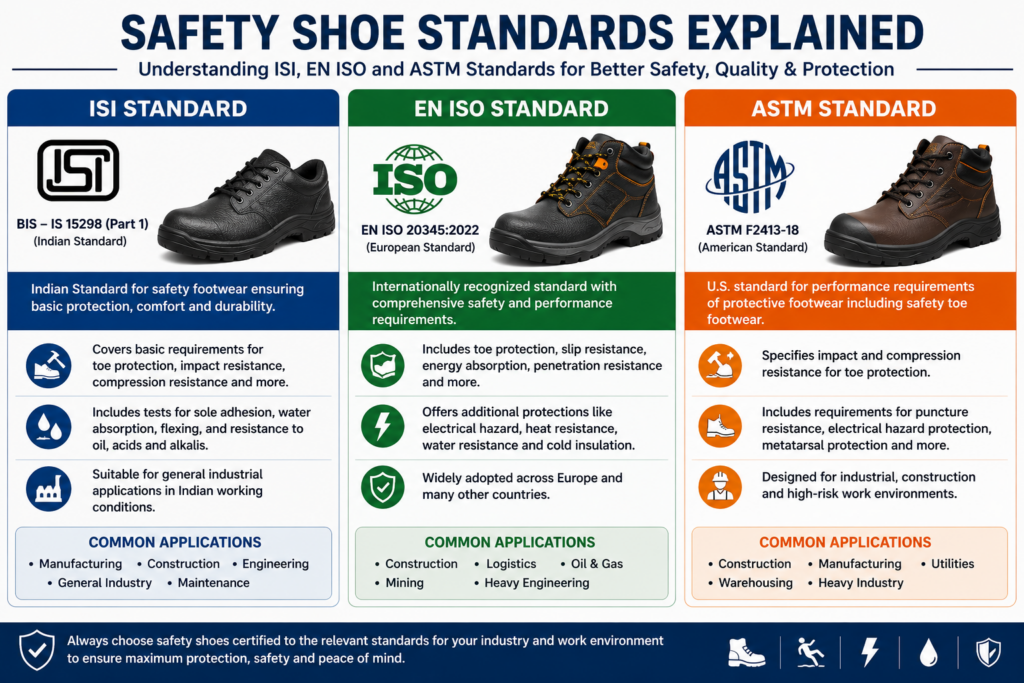
What Is the ISI Standard for Safety Shoes?
The ISI Standard is one of India’s most recognized quality certifications.
The ISI mark indicates that a product complies with standards established by the Bureau of Indian Standards (BIS).
For industrial safety footwear, ISI certification verifies that the product has undergone testing for safety and quality requirements.
Key Benefits of ISI-Certified Safety Shoes
- Compliance with Indian quality standards
- Reliable workplace protection
- Consistent manufacturing quality
- Greater buyer confidence
- Suitable for Indian industrial environments
Industries Using ISI Safety Shoes
- Manufacturing
- Construction
- Warehousing
- Engineering
- Logistics
- Infrastructure projects
For organizations operating in India, ISI certification is often an important consideration when selecting safety footwear.
What Is the EN ISO Standard?
The EN ISO Standard is widely recognized across Europe and many international markets.
The most commonly referenced safety footwear standard is EN ISO 20345, which specifies requirements for occupational safety shoes.
Safety footwear certified under EN ISO standards is tested for multiple workplace hazards.
Key Protection Features
Depending on the safety category, EN ISO-certified shoes may provide:
- Toe impact protection
- Compression resistance
- Slip resistance
- Water resistance
- Anti-static properties
- Puncture resistance
- Energy absorption
Common EN ISO Safety Categories
SB
Basic safety footwear with toe protection.
S1
Includes:
- Toe protection
- Anti-static properties
- Energy absorption in the heel
S1P
Adds puncture-resistant midsoles to S1 protection.
S2
Provides additional water-resistant properties.
S3
One of the most widely used industrial categories.
Includes:
- Toe protection
- Slip resistance
- Water resistance
- Puncture resistance
- Enhanced outsole protection
Many industrial workplaces prefer S3-rated footwear because it offers comprehensive protection.
What Is the ASTM Standard?
The ASTM Standard is widely used in the United States and is developed by ASTM International.
ASTM standards establish performance requirements for occupational footwear used across various industries.
Key ASTM Safety Footwear Tests
ASTM-certified footwear may be tested for:
- Impact resistance
- Compression resistance
- Electrical hazard protection
- Static dissipation
- Puncture resistance
- Conductive properties
- Metatarsal protection
Industries Using ASTM Safety Shoes
- Manufacturing
- Construction
- Utilities
- Oil and gas
- Heavy industry
- Electrical maintenance
ASTM certification is often required for industrial operations in North America.
Comparison of ISI, EN ISO, and ASTM Standards
| Feature | ISI | EN ISO | ASTM |
|---|---|---|---|
| Primary Region | India | Europe & Global | USA & Global |
| Quality Certification | Yes | Yes | Yes |
| Impact Protection | Yes | Yes | Yes |
| Compression Protection | Yes | Yes | Yes |
| Slip Resistance | Varies | Commonly Included | Available |
| Electrical Protection | Available | Available | Available |
| Industrial Usage | High | Very High | Very High |
Although each standard uses different testing methods and classification systems, all aim to improve workplace safety and footwear reliability.
How to Choose Safety Shoes Based on Standards
Consider Workplace Hazards
Identify risks such as:
- Falling objects
- Electrical exposure
- Slippery surfaces
- Sharp materials
- Wet environments
Review Employer Requirements
Many organizations specify safety footwear standards for compliance purposes.
Verify Certification
Always check that the footwear carries legitimate certification markings and documentation.
Prioritize Comfort and Durability
Certified footwear should also provide:
- Proper fit
- Breathability
- Long-term comfort
- Durable construction
Why Safety Shoe Certification Is Important
Certified safety footwear provides confidence that the product has been tested against recognized performance criteria.
Benefits include:
- Improved worker safety
- Reduced injury risk
- Better compliance
- Increased durability
- Greater workplace confidence
Certification helps employers ensure they are providing appropriate protection for their workforce.
Why SafeKraft Safety Shoes Support Workplace Safety
SafeKraft India Pvt Ltd is committed to providing high-quality workplace safety solutions for industrial environments.
SafeKraft safety shoes are designed to support workers across industries such as:
- Manufacturing
- Construction
- Engineering
- Logistics
- Warehousing
- Industrial maintenance
By focusing on durability, comfort, and protection, SafeKraft helps organizations create safer workplaces and improve employee well-being.
Conclusion
Understanding Safety Shoe Standards Explained: ISI, EN ISO and ASTM helps employers and workers make informed decisions when selecting protective footwear.
Each certification system serves an important role in verifying safety performance and quality. Whether choosing ISI-certified footwear for Indian industries, EN ISO-compliant shoes for international applications, or ASTM-certified footwear for North American operations, selecting certified safety shoes is a critical step toward workplace safety.
Investing in high-quality, standards-compliant safety footwear helps reduce injuries, improve compliance, and support a strong workplace safety culture.
Frequently Asked Questions (FAQs)
1. What does ISI certification mean for safety shoes?
ISI certification indicates that the footwear complies with Indian quality and safety requirements established by BIS.
2. What is EN ISO 20345?
EN ISO 20345 is a widely recognized international standard that specifies safety requirements for occupational footwear.
3. What is ASTM certification for safety shoes?
ASTM certification verifies that footwear meets performance requirements for workplace safety in areas such as impact resistance, compression resistance, and electrical protection.
4. Which safety shoe standard is best?
The best standard depends on workplace requirements, industry regulations, and geographic location.
5. Are certified safety shoes safer?
Certified safety shoes provide assurance that the footwear has been tested according to recognized safety standards.
6. What does S3 mean in EN ISO safety footwear?
S3 safety shoes typically include toe protection, puncture resistance, water resistance, and slip-resistant features.
7. Why should employers choose certified safety shoes?
Certified footwear helps improve worker protection, regulatory compliance, and workplace safety performance.