
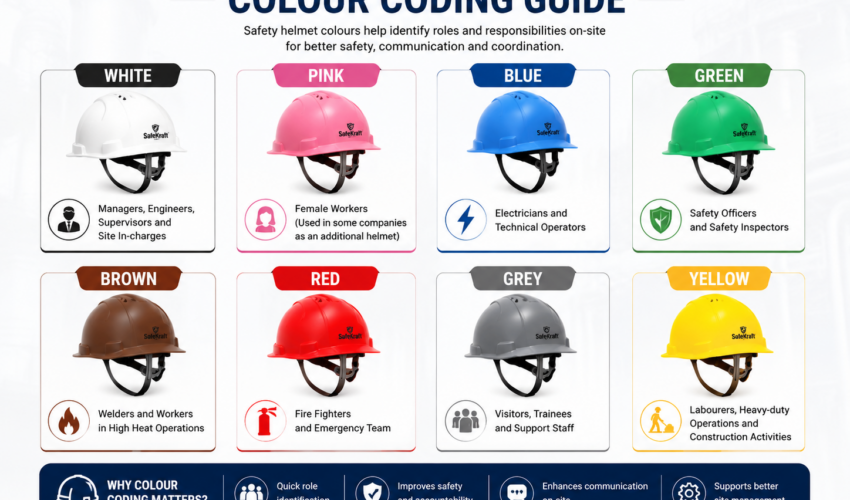
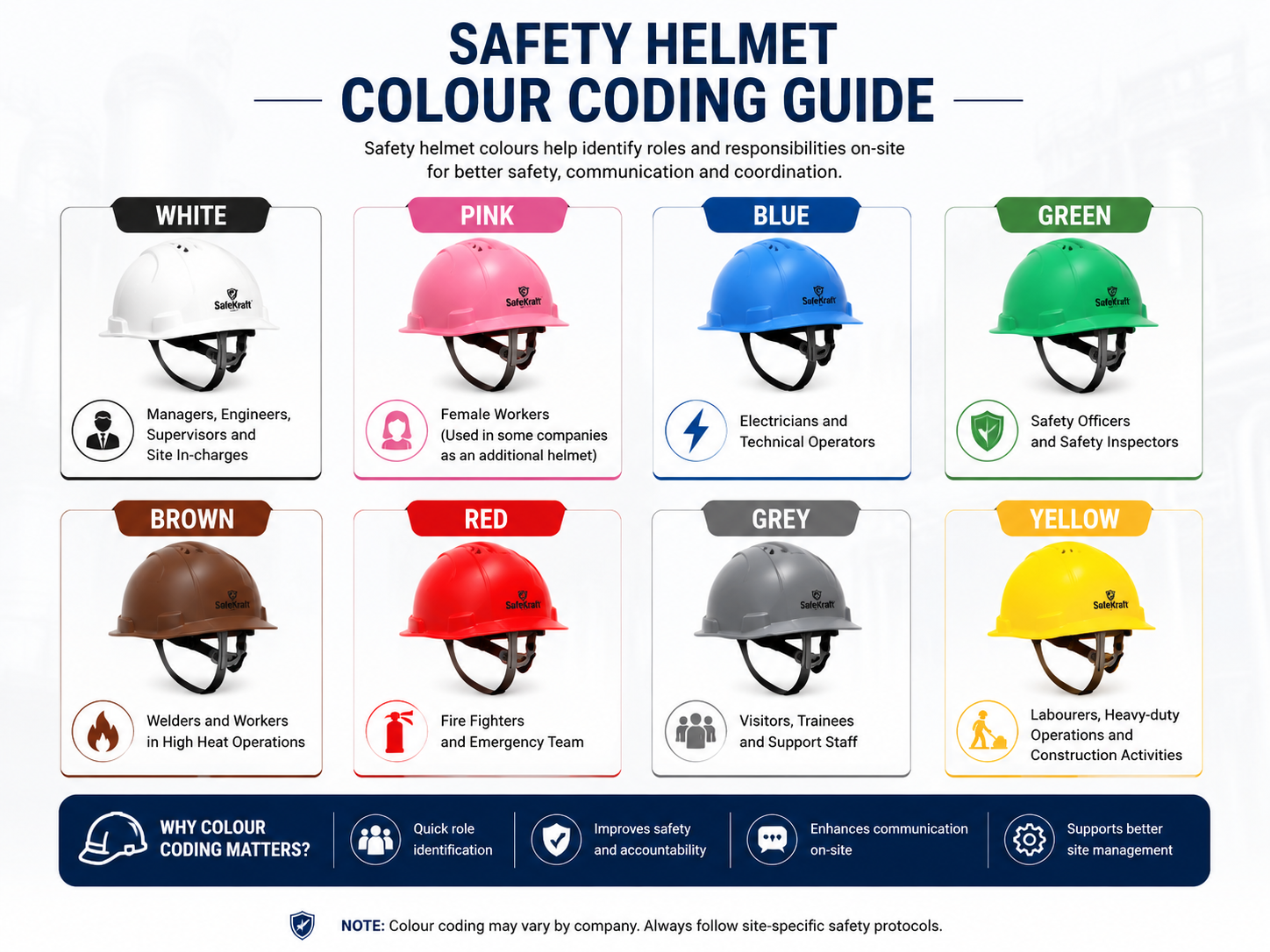
Safety helmets are among the most important personal protective equipment (PPE) used across construction sites, manufacturing facilities, industrial plants, and infrastructure projects. Beyond protecting workers from head injuries, helmet colors play a crucial role in identifying personnel, improving communication, and maintaining workplace safety.
In India, many organizations follow a safety helmet color coding system to distinguish workers based on their roles and responsibilities. Understanding these color codes helps create a safer, more organized, and efficient work environment.
This guide explains the meaning of safety helmet colors in India, their common applications, and best practices for workplace safety.
Why Safety Helmet Color Coding Matters
On busy construction and industrial sites, quick identification of personnel is essential.
Safety helmet color coding helps:
- Identify workers based on job roles
- Improve communication on-site
- Enhance emergency response efficiency
- Strengthen workplace safety management
- Reduce confusion in high-risk areas
- Support compliance with safety protocols
A clear helmet identification system enables workers and supervisors to recognize responsibilities instantly.
Common Safety Helmet Color Codes in India
Although color codes may vary slightly between organizations, the following system is widely used across Indian industries.
White Safety Helmet
Commonly Worn By:
- Site managers
- Engineers
- Supervisors
- Foremen
- Project heads
White helmets are generally reserved for senior personnel responsible for planning, supervision, and site management.
Yellow Safety Helmet
Commonly Worn By:
- General laborers
- Construction workers
- Earthmoving operators
- Heavy-duty task workers
Yellow helmets are among the most commonly seen helmets on construction sites and are typically associated with frontline workers.
Blue Safety Helmet
Commonly Worn By:
- Electricians
- Technical operators
- Skilled workers
- Maintenance personnel
Blue helmets help identify workers performing technical and specialized tasks.
Green Safety Helmet
Commonly Worn By:
- Safety officers
- HSE professionals
- Safety inspectors
Green helmets often indicate personnel responsible for monitoring and enforcing workplace safety standards.
Red Safety Helmet
Commonly Worn By:
- Fire safety teams
- Emergency response personnel
- Firefighters
Red helmets allow quick identification of emergency responders during incidents and evacuation procedures.
Grey Safety Helmet
Commonly Worn By:
- Site visitors
- Trainees
- Temporary staff
Grey helmets help distinguish visitors and individuals who may require additional supervision on-site.
Brown Safety Helmet
Commonly Worn By:
- Welders
- Workers involved in high-temperature operations
- Specialized industrial operators
Brown helmets are often assigned to personnel working in environments involving heat and welding activities.
Pink Safety Helmet
Commonly Worn By:
- Visitor replacements
- Temporary allocation purposes
- Site-specific identification programs
Some organizations use pink helmets as temporary PPE or for additional worker identification.
Benefits of Safety Helmet Color Coding
Improved Site Organization
Workers can quickly identify supervisors, engineers, safety officers, and emergency personnel without confusion.
Faster Emergency Response
In emergencies, identifying responsible personnel becomes easier, improving coordination and response times.
Enhanced Communication
Color coding supports effective communication among teams, contractors, and visitors.
Better Safety Compliance
Clearly defined helmet colors encourage adherence to workplace safety policies and procedures.
Increased Operational Efficiency
Quick role identification reduces delays and improves workflow management on busy sites.
Best Practices for Safety Helmet Use
Always Wear an Approved Helmet
Use helmets that comply with relevant safety standards and workplace requirements.
Inspect Helmets Regularly
Check for:
- Cracks
- Dents
- UV damage
- Broken suspension systems
- Excessive wear
Replace damaged helmets immediately.
Ensure Proper Fit
A properly fitted helmet provides maximum protection and comfort throughout the workday.
Replace Helmets When Necessary
Safety helmets should be replaced according to manufacturer recommendations or after any significant impact.
Maintain Helmet Visibility
Keep helmet colors clean and visible to ensure effective identification.
Are Helmet Color Codes Mandatory in India?
There is no single nationwide law that mandates specific helmet colors for every role across all industries. However, many organizations adopt standardized color coding systems as part of their occupational health and safety programs.
Companies should establish clear site-specific helmet color policies and communicate them to all workers and visitors.
Choosing the Right Safety Helmet
When selecting industrial safety helmets, consider:
- Impact protection
- Electrical insulation requirements
- Comfort and fit
- Ventilation features
- Industry safety standards
- Workplace hazards
The right helmet should provide reliable protection while supporting workplace safety procedures.
Conclusion
Safety helmet color coding is an effective workplace safety practice that helps identify personnel, improve communication, and enhance overall site management. While color assignments may vary between organizations, understanding the commonly used helmet colors in India can contribute to a safer and more organized work environment.
By combining proper helmet usage, regular inspections, and clear identification systems, employers can strengthen safety culture and reduce workplace risks.
A well-managed safety program starts with proper personal protective equipment—and safety helmets remain one of the most important tools for protecting workers every day.
FAQs
1. What do different safety helmet colors mean in India?
Different helmet colors are used to identify roles such as managers, engineers, laborers, electricians, safety officers, visitors, and emergency personnel.
2. Who usually wears a white safety helmet?
White helmets are commonly worn by managers, engineers, supervisors, and site foremen.
3. What is the purpose of safety helmet color coding?
Color coding helps improve role identification, communication, site organization, and emergency response.
4. Which helmet color is used for safety officers?
Green helmets are commonly assigned to safety officers and HSE professionals.
5. Are safety helmet colors standardized across all industries in India?
No. While many organizations follow similar practices, color assignments may vary depending on company policies.
6. How often should safety helmets be inspected?
Helmets should be inspected regularly before use and replaced if damaged, cracked, or impacted.
7. Why are yellow helmets common on construction sites?
Yellow helmets are typically worn by laborers and general construction workers, making them one of the most widely used helmet colors.