
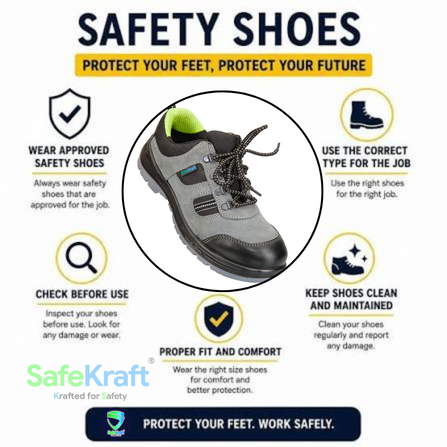
Choosing the right safety footwear is essential for workers who spend long hours standing, walking, or working in demanding industrial environments. While safety shoes are often selected for their toe protection and overall durability, the sole and footbed are equally important. They influence comfort, stability, shock absorption, flexibility, and everyday performance.
A well-designed safety shoe combines protective components with comfortable materials to support the worker throughout the working day. SafeKraft safety footwear is designed with different sole constructions and anatomical footbed options to meet the needs of various workplace applications.
Why the Sole Matters in Safety Footwear
The sole is one of the most important components of a safety shoe. It comes into direct contact with the working surface and helps provide grip, stability, flexibility, and protection.
Industrial workers may encounter concrete floors, oily surfaces, uneven ground, sharp objects, and other workplace hazards. Therefore, a suitable safety footwear sole should provide a balance between durability and comfort.
Depending on the application, safety footwear can use different sole constructions, including:
- Single-density PU soles
- Double-density PU/PU soles
- Anti-slip PU soles
- Shock-absorbing soles
- Protective and flexible sole constructions
The right sole can also help reduce foot fatigue when workers remain active for extended periods.
Single Density PU Safety Shoe Sole
Single density PU is a commonly used sole construction in safety footwear. It offers a lightweight design while providing useful durability and flexibility for workplace applications.
The SafeKraft footwear specifications shown in the product information include:
Size 39–46 – Single Density PU
Standard: EN ISO 20345:2011 / IS 15298:2016
Another single-density PU option is available in:
Size 37–42 – Single Density PU
Standard: EN ISO 20345:2011 / IS 15298:2016
This type of sole can be suitable for workers who require comfortable and practical footwear for regular industrial use.
Double Density PU/PU Sole
A double density PU/PU sole combines two layers of polyurethane to provide a balanced combination of comfort, durability, and performance.
The SafeKraft specifications include:
Size 39–46 – Double Density PU/PU
Standard: EN ISO 20345:2011 / IS 15298:2016
The two-density construction can help create a supportive base while maintaining comfort during movement. As a result, double-density safety footwear can be a useful choice for demanding workplace environments.
Anatomical Footbed for Better Comfort
Safety footwear should not only protect the feet; it should also provide comfortable support throughout the working day.
An anatomical footbed made from comfortable and soft PU foam can help improve the overall wearing experience. The footbed is designed to follow the natural shape of the foot while providing cushioning and support.
The SafeKraft footbed features highlighted in the product information include:
- Antibacterial properties
- Helps keep feet dry and conditioned
- Better arch support
- Shock-absorbing anti-slip PU
- Breathable special textile
- Comfortable PU foam construction
- Comfy-Cushion Technology
A breathable textile layer can help manage moisture inside the footwear. This is particularly useful for workers who wear safety shoes for several hours at a time.
Breathable Textile for a Drier Foot Environment
Heat and moisture can build up inside footwear during extended use. A breathable textile footbed can help improve air circulation and moisture management.
The SafeKraft design highlights breathable textile that helps keep the foot sweat free. This can contribute to a more comfortable environment inside the shoe.
Furthermore, moisture management can support better hygiene and everyday comfort when the footwear is used regularly.
Antibacterial Footbed for Workplace Comfort
Another important feature is antibacterial protection. Safety shoes are often worn for long working shifts, making foot hygiene an important consideration.
An antibacterial safety footwear footbed can help maintain a cleaner and more comfortable internal environment. When combined with breathable textile and suitable moisture management, it can contribute to improved day-to-day footwear comfort.
Better Arch Support for Long Working Hours
Workers who spend many hours standing or walking can benefit from footwear that provides appropriate arch support.
The SafeKraft anatomical footbed is designed to provide better arch support and cushioning. Properly designed footwear can help distribute pressure more effectively across the foot.
However, footwear comfort varies between individuals, so workers should select the correct size and fit for their particular requirements.
Shock Absorption and Anti-Slip Performance
Workplace footwear needs to provide stability as well as comfort. A shock-absorbing anti-slip PU sole can help improve underfoot comfort while providing grip during movement.
Anti-slip performance is particularly important in industrial environments where workers may encounter smooth or potentially slippery surfaces.
For complete workplace protection, footwear should be selected according to the hazards present in the specific work environment and the applicable safety requirements.
Safety Footwear Testing and Performance
Safety footwear undergoes various tests to evaluate important performance characteristics. These tests can include:
- Lining abrasion testing
- Steel toe impact testing
- Compression resistance testing
- Sole flexing testing
- Sole durability evaluation
For example, a steel toe impact test evaluates the protective performance of the toe cap against impact hazards. A compression resistance test evaluates protection against compression loads.
Sole flexing tests are also important because footwear needs to withstand repeated movement during normal use.
These testing procedures demonstrate why safety footwear should be selected based on more than appearance alone.
How to Choose the Right Safety Footwear
When selecting industrial safety footwear, consider the following factors:
1. Workplace Hazards
Identify the hazards workers may encounter, such as falling objects, slippery surfaces, sharp materials, heat, or demanding industrial conditions.
2. Toe Protection
Choose an appropriate toe protection system based on the workplace requirements. Options can include steel and composite toe caps.
3. Sole Construction
Consider whether single-density PU, double-density PU/PU, or another sole construction is suitable for the working environment.
4. Comfort and Footbed
Look for an anatomical footbed, cushioning, arch support, and breathable materials when workers wear footwear for extended periods.
5. Size and Fit
Correct sizing is essential. A safety shoe that is too tight or too loose can reduce comfort and affect the worker’s overall experience.
6. Applicable Standards
Always check the applicable product standards and certification information for the specific footwear model.
Explore Workplace Safety Equipment
Safety footwear is only one part of a complete workplace protection program. Depending on the working environment, businesses may also require protective gloves, helmets, eye protection, fall protection equipment, respiratory protection, and other PPE.
For a broader range of workplace protection solutions, explore SafeKraft’s Workplace Safety Equipment & Protective Gear.
This internal link is useful here because businesses looking for safety footwear may also need additional industrial PPE and workplace safety equipment.
Frequently Asked Questions
What is single-density PU safety footwear?
Single-density PU safety footwear uses polyurethane as the sole material. It can provide a combination of lightweight construction, flexibility, and durability for suitable workplace applications.
What is double-density PU/PU footwear?
Double-density PU/PU footwear uses two polyurethane densities within the sole construction. This design can provide a balance of support, durability, cushioning, and comfort.
Why is an anatomical footbed important?
An anatomical footbed is designed to provide better support around the natural shape of the foot. It can improve cushioning and comfort, particularly during long working hours.
What are the benefits of a breathable safety shoe footbed?
A breathable footbed can help manage moisture and improve ventilation inside the shoe. This may help create a more comfortable foot environment during extended use.
Why is arch support important in safety footwear?
Arch support can help provide a more supportive base for the foot. It may be particularly useful for workers who spend considerable time standing or walking.
What does a steel toe impact test evaluate?
A steel toe impact test evaluates the protective performance of the toe cap against impact from falling or striking objects, according to the applicable testing requirements.
How should I choose industrial safety footwear?
Start by identifying workplace hazards, then consider toe protection, sole construction, slip resistance, comfort, footbed design, correct sizing, and applicable safety standards.
Conclusion
The performance of safety footwear depends on much more than the outer appearance of the shoe. The sole, footbed, toe protection, materials, comfort features, and testing requirements all contribute to the overall footwear design.
Single-density PU and double-density PU/PU soles can provide different performance characteristics, while an anatomical PU foam footbed can add cushioning, breathability, antibacterial features, and arch support. Therefore, businesses should select safety footwear according to the actual requirements of their workplace.
For companies looking for a broader range of industrial safety equipment and protective gear, SafeKraft provides workplace protection solutions across multiple PPE categories. Explore the SafeKraft Workplace Safety Equipment & Protective Gear range to learn more.
To know more about the Foot protection range please click here