
Safety footwear is more than just a workplace requirement—it is a critical piece of personal protective equipment (PPE) that protects workers from impact injuries, slips, punctures, electrical hazards, and other workplace risks. Proper safety footwear care and maintenance not only extends the lifespan of your shoes but also ensures they continue to provide maximum protection throughout their service life.
In this guide, we’ll explore the best practices for cleaning and maintaining safety shoes, along with common mistakes that can reduce their effectiveness.
Why Safety Footwear Maintenance Matters
Regular maintenance of safety footwear helps:
- Maintain workplace safety standards
- Improve shoe durability and performance
- Prevent premature wear and tear
- Enhance comfort and hygiene
- Reduce replacement costs
- Ensure compliance with occupational safety requirements
Neglecting safety shoe care can lead to damaged soles, weakened toe caps, reduced slip resistance, and compromised protection.
How to Clean Safety Footwear Properly
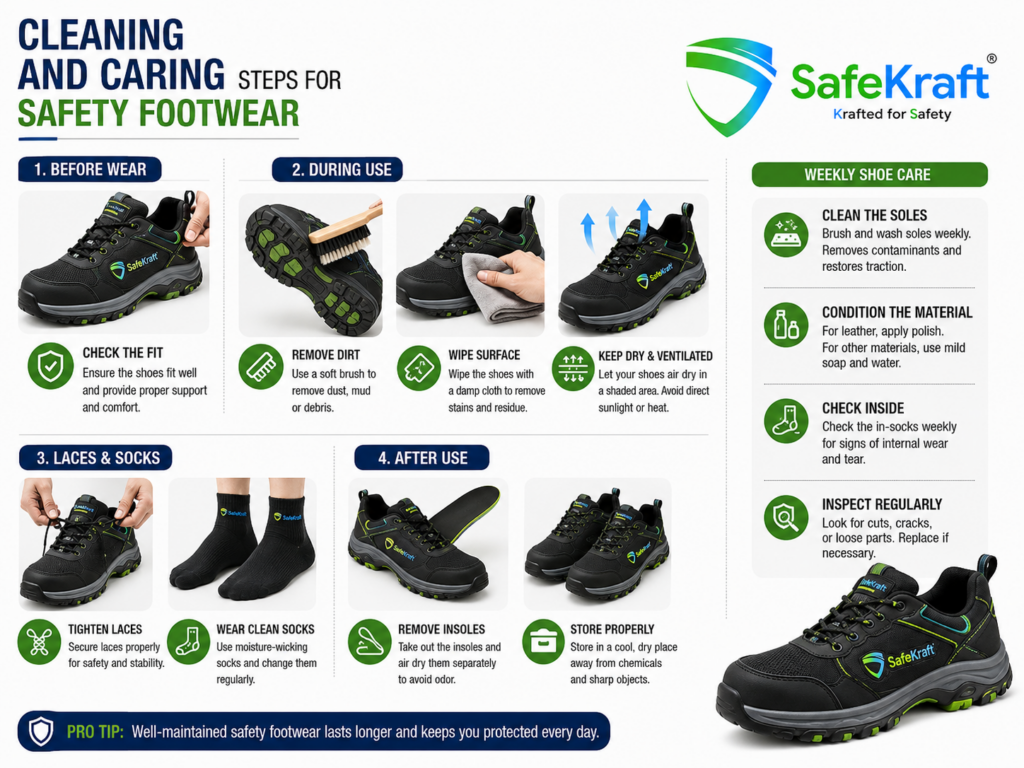
1. Remove Dirt and Debris Daily
After every work shift:
- Use a soft brush to remove dust, mud, and debris.
- Pay special attention to the sole grooves.
- Clean hard-to-reach areas around the toe and heel.
Regular cleaning prevents dirt buildup that can damage materials over time.
2. Wipe the Surface
Use:
- A damp cloth for everyday cleaning
- Mild soap solution for stubborn stains
Avoid harsh chemicals that can weaken shoe materials and affect protective features.
3. Clean the Soles
The outsole provides grip and slip resistance.
- Remove trapped stones and debris.
- Wash the sole periodically.
- Inspect tread patterns for excessive wear.
Proper sole maintenance improves traction and workplace safety.
4. Dry Shoes Correctly
If shoes become wet:
- Remove insoles.
- Allow shoes to air dry naturally.
- Place them in a well-ventilated area.
Never dry safety shoes using direct heat sources.
Essential Safety Footwear Maintenance Tips
Check for Wear and Damage
Inspect your footwear regularly for:
- Cracked soles
- Loose stitching
- Damaged eyelets
- Worn tread patterns
- Torn lining
Replace footwear if safety features are compromised.
Maintain Insoles
Insoles play a vital role in comfort and hygiene.
- Remove and air them out regularly.
- Replace worn-out insoles.
- Keep them clean and odor-free.
Store Properly
Store safety footwear:
- In a cool, dry place
- Away from direct sunlight
- Away from chemicals and oils
- In a well-ventilated environment
Proper storage helps maintain material integrity.
Use Appropriate Socks
Moisture-wicking socks help:
- Reduce odor
- Improve comfort
- Prevent moisture buildup
- Extend footwear life
Common Safety Footwear Care Mistakes to Avoid
❌ Using Harsh Chemicals
Strong cleaning agents can:
- Damage leather and fabric
- Reduce water resistance
- Affect material strength
Always use mild cleaning solutions.
❌ Drying Shoes Under Direct Heat
Avoid:
- Heaters
- Blow dryers
- Direct sunlight
Excessive heat can crack, shrink, or deform safety footwear.
❌ Ignoring Sole Wear
Worn soles reduce:
- Slip resistance
- Grip performance
- Workplace safety
Replace shoes when tread patterns become significantly worn.
❌ Wearing Damaged Footwear
Continuing to use damaged safety shoes can increase the risk of workplace injuries.
Inspect footwear frequently and replace when necessary.
❌ Skipping Regular Cleaning
Accumulated dirt and contaminants can:
- Accelerate material deterioration
- Cause odors
- Reduce shoe lifespan
A simple daily cleaning routine can prevent these issues.
❌ Improper Storage
Leaving shoes in damp or poorly ventilated areas encourages:
- Mold growth
- Material breakdown
- Unpleasant odors
Store footwear properly after each use.
When Should You Replace Safety Footwear?
Consider replacement if you notice:
- Significant sole wear
- Damaged toe protection
- Cracked midsoles
- Reduced comfort
- Structural damage
- Loss of slip resistance
Even high-quality safety shoes require replacement after prolonged use and exposure to harsh working conditions.
Final Thoughts
Proper safety footwear cleaning and maintenance is essential for ensuring long-term protection, comfort, and performance. By following a simple care routine and avoiding common mistakes, workers can maximize the lifespan of their safety shoes while maintaining workplace safety standards.
Investing a few minutes in regular maintenance today can help prevent costly replacements and workplace injuries tomorrow.
Frequently Asked Questions (FAQs)
1. How often should I clean my safety footwear?
Safety footwear should be cleaned after each work shift to remove dirt, dust, mud, and contaminants. Regular cleaning helps maintain durability and performance.
2. Can I wash safety shoes in a washing machine?
No. Washing machines can damage the shoe’s structure, adhesives, protective toe cap, and sole. Always clean safety footwear manually using a soft brush, mild soap, and water.
3. What is the best way to dry wet safety shoes?
Remove the insoles and allow the shoes to air dry naturally in a well-ventilated area. Avoid direct sunlight, heaters, or other heat sources that may damage the materials.
4. How do I know when it’s time to replace my safety footwear?
Replace safety footwear if you notice worn-out soles, damaged toe caps, cracks, loose stitching, reduced slip resistance, or any structural damage that affects protection.
5. Does regular maintenance improve the lifespan of safety shoes?
Yes. Proper cleaning, drying, storage, and regular inspections can significantly extend the lifespan of safety footwear while maintaining safety and comfort.
6. What cleaning products are safe to use on safety footwear?
Use a soft brush, damp cloth, mild soap, and clean water. Avoid harsh chemicals, bleach, solvents, or abrasive cleaners that can weaken shoe materials and protective features.
7. Why is sole maintenance important for safety footwear?
The sole provides grip, traction, and slip resistance. Keeping the outsole clean and checking for wear helps reduce the risk of slips, trips, and falls in the workplace.