
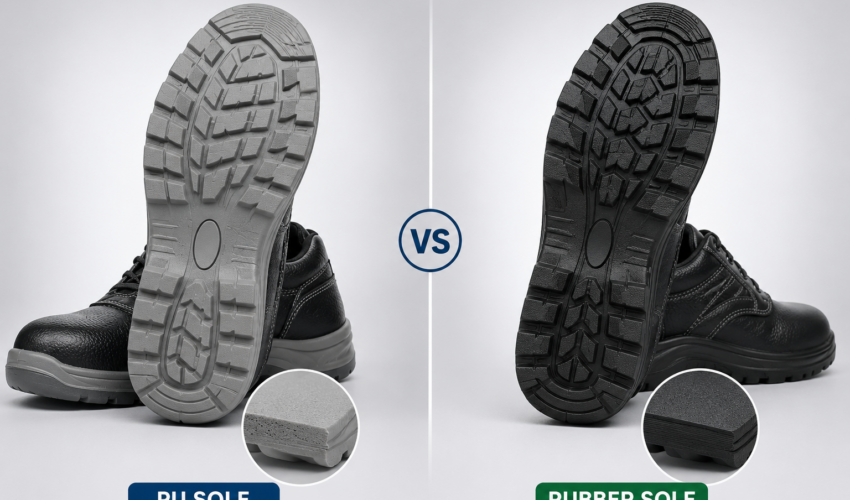
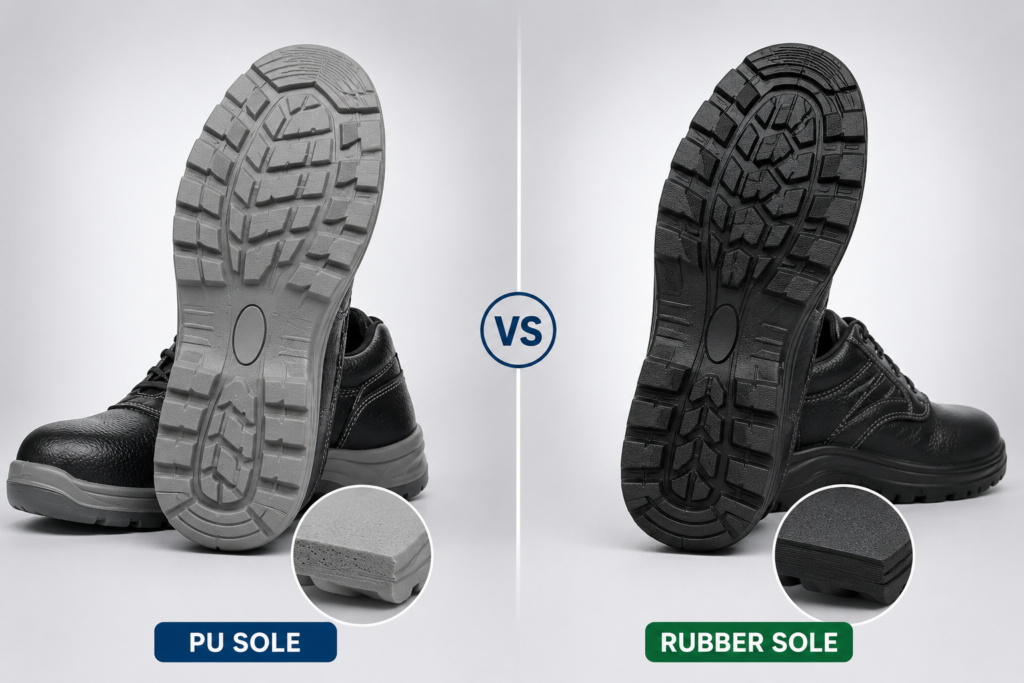
Choosing the right safety shoes is essential for workplace safety, comfort, and productivity. One of the most common questions industrial buyers, safety officers, and workers ask is whether they should choose PU sole safety shoes or rubber sole safety shoes.
Both sole materials offer unique advantages and are designed for different working environments. However, selecting the wrong sole can affect worker comfort, durability, grip, and overall safety performance.
In this guide, we compare PU Sole vs Rubber Sole Safety Shoes to help you make the right decision for your workplace.
Why the Sole Matters in Safety Shoes
The sole is one of the most important components of a safety shoe. It directly impacts:
- Slip resistance
- Comfort
- Shock absorption
- Durability
- Heat resistance
- Chemical resistance
- Worker fatigue
A well-designed sole can significantly improve workplace safety while reducing strain during long working hours.
What is a PU Sole?
PU stands for Polyurethane, a lightweight and flexible material widely used in industrial safety footwear.
PU soles are popular because they provide excellent comfort, cushioning, and shock absorption.
Key Features of PU Sole Safety Shoes
- Lightweight construction
- Excellent shock absorption
- Flexible design
- Comfortable for long shifts
- Good slip resistance
- Reduced worker fatigue
PU sole safety shoes are commonly used in:
- Manufacturing plants
- Warehouses
- Logistics facilities
- Assembly lines
- Engineering workshops
Advantages of PU Sole Safety Shoes
Lightweight and Comfortable
Workers who spend long hours standing or walking benefit from the lightweight nature of PU soles. The reduced weight helps minimize fatigue throughout the workday.
Better Cushioning
PU material provides excellent shock absorption, making it ideal for environments where workers walk on hard surfaces.
Improved Productivity
Comfortable footwear allows employees to focus on their tasks without discomfort caused by heavy or rigid shoes.
Cost-Effective Solution
PU sole safety shoes often provide an excellent balance between performance and affordability.
What is a Rubber Sole?
Rubber soles are known for their toughness and superior resistance to harsh working conditions. They are commonly used in demanding industrial environments where durability is a top priority.
Key Features of Rubber Sole Safety Shoes
- Exceptional durability
- High heat resistance
- Excellent grip
- Strong abrasion resistance
- Better chemical resistance
- Suitable for rugged environments
Rubber sole safety shoes are frequently used in:
- Construction sites
- Oil and gas industries
- Mining operations
- Heavy engineering facilities
- Metal fabrication units
Advantages of Rubber Sole Safety Shoes
Superior Durability
Rubber soles typically last longer in harsh industrial environments where exposure to rough surfaces is common.
High Heat Resistance
Rubber performs better than PU when exposed to elevated temperatures, making it suitable for foundries, welding operations, and hot work environments.
Excellent Grip
Rubber soles provide outstanding traction on challenging surfaces, helping reduce slip and fall incidents.
Better Chemical Resistance
Many rubber compounds offer increased resistance to oils, chemicals, and industrial contaminants.
PU Sole vs Rubber Sole Safety Shoes: Comparison
| Feature | PU Sole Safety Shoes | Rubber Sole Safety Shoes |
|---|---|---|
| Weight | Lightweight | Heavier |
| Comfort | Excellent | Good |
| Shock Absorption | Excellent | Good |
| Durability | Good | Excellent |
| Heat Resistance | Moderate | Excellent |
| Slip Resistance | Good | Excellent |
| Abrasion Resistance | Good | Excellent |
| Chemical Resistance | Moderate | Good to Excellent |
| Worker Fatigue | Lower | Slightly Higher |
| Ideal Use | Factories & Warehouses | Construction & Heavy Industry |
Which Sole is Best for Factory Workers?
For most factory environments, PU sole safety shoes are often preferred because they provide:
- Lightweight comfort
- Excellent cushioning
- Reduced fatigue
- Good grip
- Better mobility
Workers in manufacturing plants and warehouses typically spend many hours walking and standing. Therefore, comfort becomes a major factor.
Which Sole is Best for Harsh Industrial Conditions?
If workers are exposed to:
- Extreme heat
- Rough terrain
- Heavy-duty applications
- Oil-contaminated surfaces
- Heavy abrasion
Then rubber sole safety shoes may be the better choice due to their durability and heat resistance.
Why SafeKraft India Pvt Ltd Safety Shoes Are Trusted Across Industries
When selecting workplace footwear, choosing a trusted manufacturer is equally important.
SafeKraft India Pvt Ltd offers industrial safety shoes designed to provide:
Superior Workplace Protection
SafeKraft safety shoes are engineered to help protect workers from common industrial hazards including impacts, slips, punctures, and workplace accidents.
Comfortable All-Day Wear
The footwear is designed with worker comfort in mind, helping reduce fatigue during extended working hours.
Durable Industrial Construction
High-quality materials and manufacturing standards ensure long-lasting performance in demanding environments.
Industry-Specific Solutions
SafeKraft provides safety footwear suitable for:
- Manufacturing
- Warehousing
- Construction
- Logistics
- Engineering
- Automotive industries
Reliable Quality
SafeKraft India Pvt Ltd focuses on delivering safety products that support workplace compliance and worker protection.
How to Choose the Right Sole for Your Workplace
Before purchasing safety shoes, consider:
Workplace Conditions
Assess heat, chemicals, moisture, rough surfaces, and slip hazards.
Worker Comfort Requirements
Long working hours often require lightweight footwear with excellent cushioning.
Industry Standards
Ensure footwear meets applicable safety requirements and workplace specifications.
Environmental Exposure
Select sole materials based on the hazards workers encounter daily.
Conclusion
The debate between PU Sole vs Rubber Sole Safety Shoes does not have a one-size-fits-all answer. Both materials offer valuable benefits depending on the work environment.
PU sole safety shoes are ideal for workers seeking comfort, flexibility, and reduced fatigue during long shifts. Rubber sole safety shoes excel in harsh industrial conditions where durability, heat resistance, and rugged performance are essential.
Understanding workplace hazards and worker requirements will help you select the right safety footwear for maximum protection and productivity.
Frequently Asked Questions
1. Which is better, PU sole or rubber sole safety shoes?
Both are excellent options. PU soles offer greater comfort and lighter weight, while rubber soles provide superior durability and heat resistance.
2. Are PU sole safety shoes durable?
Yes. PU sole safety shoes are durable for most factory, warehouse, and industrial applications when used in suitable environments.
3. Are rubber sole safety shoes slip resistant?
Yes. Rubber soles generally provide excellent traction and grip on industrial surfaces.
4. Which sole is best for factory workers?
PU sole safety shoes are often preferred for factory workers because they are lightweight, comfortable, and reduce fatigue.
5. Which sole is better for high-temperature environments?
Rubber sole safety shoes typically perform better in high-heat industrial environments.
6. Do SafeKraft safety shoes offer PU and rubber sole options?
SafeKraft India Pvt Ltd offers safety footwear solutions designed for different workplace requirements and industrial applications.
7. How often should safety shoes be replaced?
Safety shoes should be inspected regularly and replaced when signs of wear, sole damage, reduced grip, or compromised protection are observed.