
Description
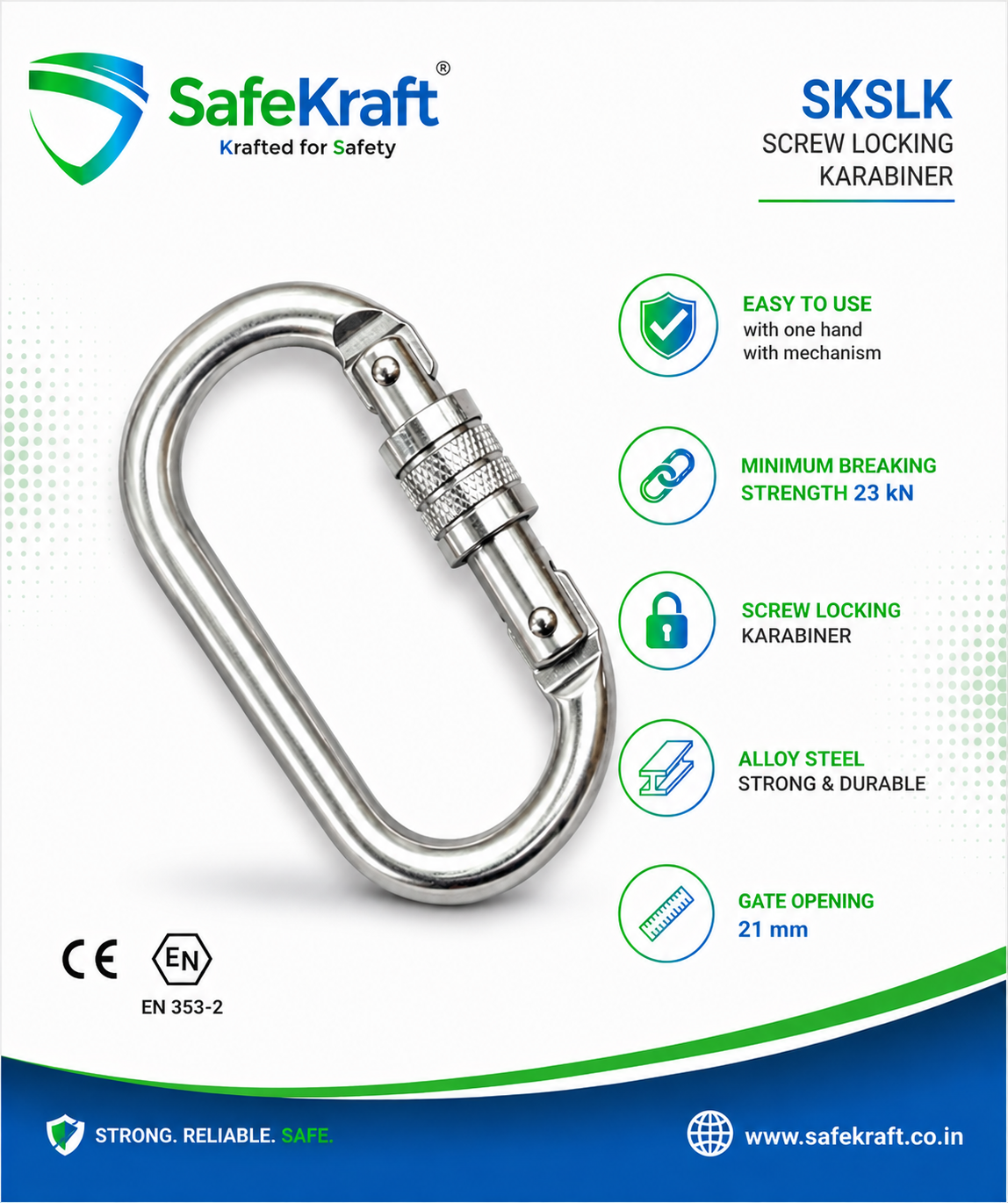
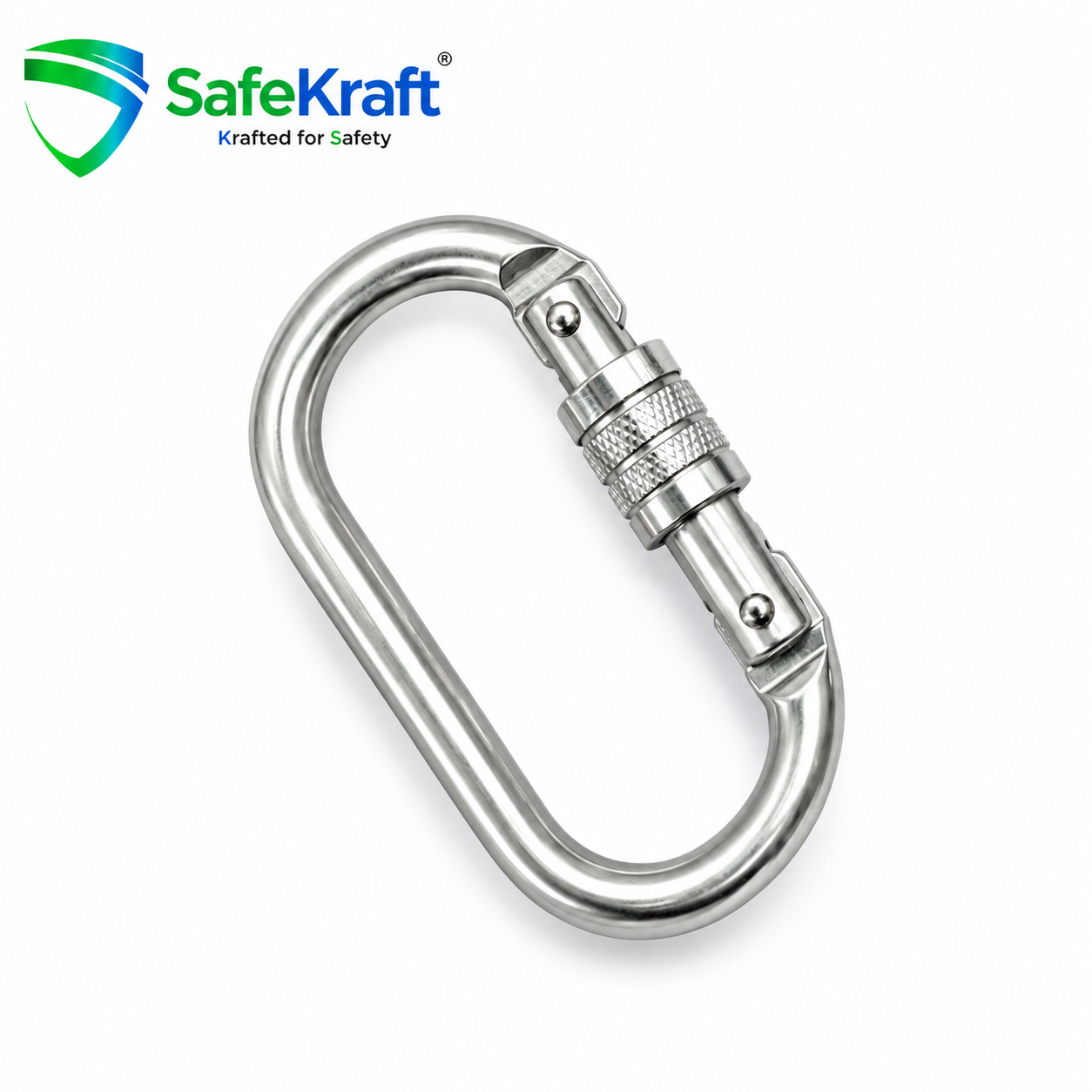
The SafeKraft SKSLK Screw Locking Karabiner provides a strong and practical connection for suitable work-at-height and fall-protection applications. Moreover, its alloy steel construction offers a durable solution for demanding industrial environments. In addition, the screw-locking mechanism helps keep the gate securely closed when users operate it correctly.
The karabiner provides a 23 kN minimum breaking strength and a 21 mm gate opening. Furthermore, its bulb-type design supports smooth handling and helps reduce snagging when users connect compatible ropes, webbing, or harness components. Therefore, the SKSLK can serve as a practical connection component for suitable height-safety systems.
Key Features of SafeKraft SKSLK
The SafeKraft SKSLK combines strength, functionality, and practical handling. First, the alloy steel body provides a robust construction. Next, the screw-locking mechanism helps secure the gate during correct use. Additionally, the bulb-type design provides a smooth profile for easier handling.
- Alloy steel construction provides a strong and durable body.
- Screw-locking mechanism helps secure the gate during use.
- 23 kN minimum breaking strength provides a clear strength specification.
- 21 mm gate opening allows connection with suitable compatible equipment.
- Bulb-type design supports smooth and practical handling.
- Natural silver and colour-anodized finish provides a professional appearance.
- Suitable connection component for compatible ropes, webbing, and harness equipment.
Strong Alloy Steel Construction
The SafeKraft SKSLK Screw Locking Karabiner uses alloy steel for its main construction. As a result, the karabiner offers a robust body for suitable industrial applications. Furthermore, the durable construction makes it suitable for professionals who require dependable connection hardware.
However, users must always operate the karabiner within its specified application. Therefore, always check the manufacturer’s instructions before connecting the product to other safety equipment.
Secure Screw-Locking Mechanism
The SKSLK features a screw-locking mechanism that helps secure the karabiner gate. First, connect the karabiner to compatible equipment. Then, close the gate completely and tighten the locking sleeve.
After that, check the gate and locking sleeve before starting work. As a result, users can confirm that the connector has closed and locked correctly.
Bulb-Type Design for Smooth Handling
The bulb-type design gives the SKSLK a smooth and practical profile. Therefore, users can handle the karabiner conveniently when making compatible rope, webbing, or harness connections.
In addition, the smooth profile can help reduce unnecessary snagging during suitable applications. However, users should always follow the correct connection procedure for the complete safety system.
23 kN Minimum Breaking Strength
The SafeKraft SKSLK has a stated 23 kN minimum breaking strength. This specification provides a clear indication of the connector’s stated breaking strength under relevant test conditions.
However, users should not consider this value a general working-load limit. Instead, always follow the manufacturer’s technical specifications and use the karabiner within a properly designed and compatible safety system.
Technical Specifications
| Specification | Details |
|---|---|
| Brand | SafeKraft |
| Model | SKSLK |
| Product Type | Screw Locking Karabiner |
| Material | Alloy Steel |
| Minimum Breaking Strength | 23 kN |
| Locking Type | Screw Locking |
| Design | Bulb Type |
| Finish | Natural Silver and Colour Anodized |
| Weight | 220 g |
| Gate Opening | 21 mm |
Applications of SafeKraft SKSLK Karabiner
The SafeKraft Screw Locking Karabiner can support suitable connection requirements in different work-at-height environments. For example, professionals can use compatible karabiners as connection components in suitable safety systems.
The SKSLK may suit:
- Work-at-height safety systems
- Fall-protection equipment
- Safety harness connections
- Rope and webbing connections
- Industrial maintenance
- Construction work
- Infrastructure maintenance
- Height-access applications
- Industrial safety systems
However, users must check compatibility before connecting the karabiner to a harness, rope, lanyard, anchor, or another safety component. In addition, users should follow the manufacturer’s instructions throughout the installation and use process.
Why Choose SafeKraft SKSLK?
The SafeKraft SKSLK Screw Locking Karabiner combines strength with practical handling. For example, its alloy steel construction provides a robust body, while the screw-locking mechanism helps secure the gate during correct use.
Moreover, the 23 kN minimum breaking strength gives users a clearly stated product specification. At the same time, the 21 mm gate opening provides a practical connection size for compatible equipment.
Therefore, the SKSLK can be a suitable choice for professionals who need a reliable connection component for compatible work-at-height and industrial safety systems.
Safety Inspection Before Use
Always inspect the karabiner before every use. First, check the body for cracks, deformation, corrosion, or unusual wear. Next, operate the gate and locking mechanism to confirm that both components work correctly.
Also, make sure the gate closes completely. Then, check that the screw-locking mechanism operates smoothly.
Do not use the karabiner if you notice:
- Cracks or visible damage
- Deformation or bending
- Excessive corrosion
- Damaged locking components
- A gate that does not close correctly
- A locking mechanism that does not work correctly
- Damage caused by a severe impact or fall
- An unknown inspection or service history
If you find any problem, remove the karabiner from service. Afterward, follow the manufacturer’s inspection and retirement procedure.
Maintenance and Storage
Proper maintenance helps keep safety equipment in good condition. Therefore, clean the karabiner regularly and keep it dry after use.
Furthermore, store the product in a suitable location away from excessive moisture, chemicals, extreme heat, and other harmful conditions. As a result, you can help protect the karabiner and its locking mechanism during storage.
Always follow the manufacturer’s maintenance and inspection instructions for the product.
Who Can Use a Screw Locking Karabiner?
Trained professionals can use a screw locking karabiner within a suitable and compatible safety system. However, users must understand the equipment, connection method, inspection requirements, and product limitations before use.
Therefore, employers should provide appropriate training. In addition, workers should understand how to inspect and correctly connect their fall-protection equipment before starting work.
Important Standard Information
The supplied product information states “As Per EN 353-2.” However, EN 353-2 covers guided-type fall arresters on flexible anchor lines.
Therefore, verify the manufacturer’s technical documentation and certification before publishing EN 353-2 as the specific product standard for this karabiner. This step is important because accurate certification information helps maintain a trustworthy and professional PPE product page.
Our Other Products
SafeKraft offers a complete range of industrial PPE products, including:
- Eye Protection Equipment
- Ear Protection Equipment
- Head Protection Equipment
- Hand Protection Equipment
- Foot Protection Equipment
- Respiratory Protection Equipment
- Hearing Protection Equipment
- Fall Protection Equipment
- Body Protection Equipment
- Road Safety Equipment
- Spill Containment Equipment
- Safety Nets
- Industrial Workwear & Uniforms
Frequently Asked Questions
What is the SafeKraft SKSLK?
The SafeKraft SKSLK is a screw locking karabiner made from alloy steel. It provides a connection point for suitable work-at-height and safety applications.
What is the minimum breaking strength of the SKSLK?
The SafeKraft SKSLK has a stated minimum breaking strength of 23 kN. Therefore, users should consider the manufacturer’s specifications when selecting the karabiner for an application.
What material does SafeKraft use for the SKSLK?
SafeKraft uses alloy steel for the SKSLK karabiner body. As a result, the product provides a robust construction for suitable industrial applications.
Does the SKSLK have a screw-locking mechanism?
Yes. In addition, the SKSLK uses a screw-locking mechanism that helps secure the gate when users close and lock it correctly.
What is the gate opening of the SKSLK?
The SafeKraft SKSLK has a stated 21 mm gate opening. Therefore, users should check equipment compatibility before making a connection.
How much does the SKSLK weigh?
The product weighs approximately 220 grams. Consequently, it provides a practical and compact connection component for suitable applications.
Can I connect the SKSLK to a safety harness?
Yes, provided that the karabiner and harness are compatible and the complete system allows that connection. However, always follow the manufacturer’s instructions before use.
Is the SKSLK suitable for work at height?
The SKSLK serves as a connection component for suitable work-at-height applications. However, users must select compatible equipment and operate the karabiner according to the manufacturer’s instructions.
How should I inspect the karabiner?
Inspect the karabiner before every use. First, check the body for damage. Next, test the gate and locking mechanism. Finally, confirm that the karabiner closes and locks correctly.
Can I use a damaged karabiner?
No. If you notice cracks, deformation, excessive corrosion, or locking problems, stop using the product immediately. Instead, remove it from service and follow the manufacturer’s inspection procedure.
What should I do after a severe impact?
Remove the karabiner from service after a severe impact or fall. Then, follow the manufacturer’s inspection and retirement procedure. Most importantly, do not continue using equipment when you cannot confirm its safe condition.
Reviews
There are no reviews yet.