
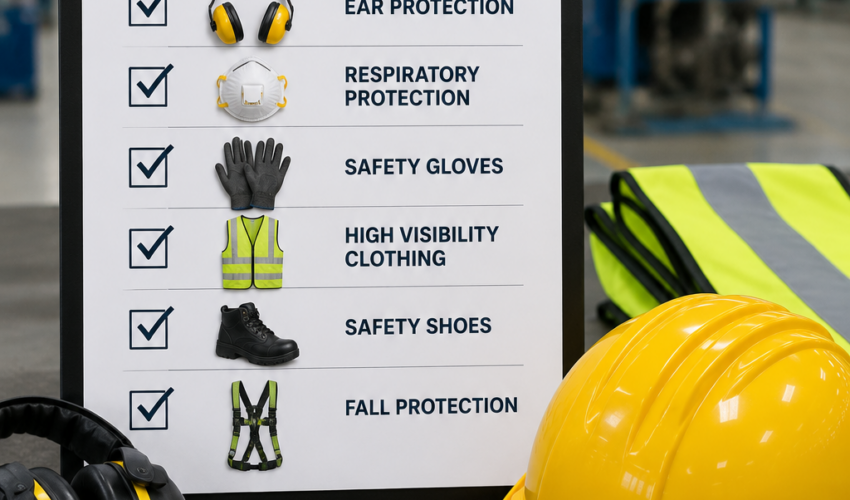
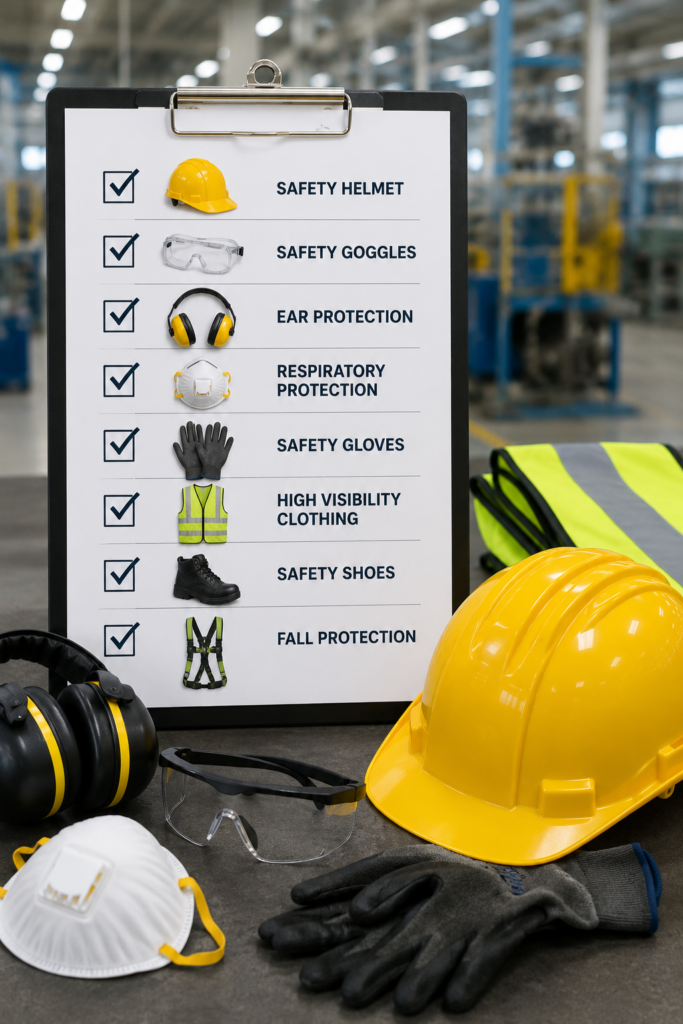
Manufacturing facilities are among the most demanding work environments. Employees often work around heavy machinery, moving equipment, electrical systems, chemicals, sharp materials, high temperatures, and noise-producing operations. Because of these hazards, implementing a proper PPE checklist for manufacturing industries is critical for protecting workers and maintaining a safe workplace.
Personal Protective Equipment (PPE) serves as the final layer of defense when engineering controls and administrative measures cannot completely eliminate workplace risks. A well-planned PPE program helps reduce accidents, improves compliance, and creates a stronger safety culture across the organization.
In this guide, we discuss the essential PPE checklist every manufacturing facility should follow and explain how the right safety equipment can help prevent workplace injuries.
Why PPE is Important in Manufacturing Industries
Manufacturing workers face multiple hazards daily. Without proper protection, even routine tasks can lead to serious injuries.
Effective PPE helps:
- Prevent workplace accidents
- Reduce injury-related downtime
- Improve employee confidence
- Support safety compliance
- Enhance productivity
- Protect workers from long-term health risks
A proactive approach to PPE management is one of the most effective ways to improve workplace safety.
PPE Checklist for Manufacturing Industries
1. Safety Helmets
Head injuries can occur from falling tools, overhead equipment, accidental impacts, or material handling activities.
Safety helmets help protect workers from:
- Falling objects
- Head impacts
- Workplace collisions
Employers should ensure helmets are inspected regularly and replaced when damaged.
2. Safety Shoes
Foot injuries are common in manufacturing environments. Heavy materials, sharp objects, slippery floors, and moving equipment can create serious risks.
Quality safety shoes should offer:
- Impact protection
- Slip resistance
- Puncture resistance
- Oil-resistant soles
- Comfortable support for long shifts
Reliable safety footwear is one of the most important items on any PPE checklist for manufacturing industries.
3. Safety Gloves
Hands are constantly exposed to workplace hazards.
Different glove types provide protection against:
- Cuts and abrasions
- Chemicals
- Heat
- Mechanical risks
- Sharp materials
Employers should select gloves based on specific job requirements.
4. Safety Goggles and Eye Protection
Eye injuries can occur from:
- Flying particles
- Dust
- Chemical splashes
- Sparks
- Metal fragments
Safety goggles help prevent vision-related injuries and should be mandatory in designated work areas.
5. Face Shields
Some manufacturing processes generate additional hazards that require full-face protection.
Face shields are commonly used for:
- Grinding operations
- Chemical handling
- Welding support tasks
- High-impact work activities
Face shields should be used alongside safety goggles when necessary.
6. Hearing Protection
Manufacturing facilities often expose workers to high noise levels.
Hearing protection equipment includes:
- Ear plugs
- Ear muffs
Long-term exposure to excessive noise can result in permanent hearing loss. Regular noise assessments help determine hearing protection requirements.
7. Respiratory Protection
Many manufacturing operations generate airborne contaminants.
Respiratory protection may be required for exposure to:
- Dust
- Fumes
- Smoke
- Chemical vapors
- Fine particles
Common respiratory PPE includes dust masks and industrial respirators.
8. Reflective Safety Jackets
Visibility is important in manufacturing facilities that use forklifts, vehicles, and material handling equipment.
Reflective safety jackets help:
- Improve worker visibility
- Reduce collision risks
- Enhance workplace awareness
High-visibility clothing is especially important in large industrial facilities.
9. Protective Workwear
Manufacturing workers often require specialized clothing that provides protection from workplace hazards.
Protective workwear may include:
- Industrial coveralls
- Flame-resistant clothing
- Chemical-resistant garments
- Protective jackets
Proper workwear helps reduce injury risks while improving comfort.
10. Fall Protection Equipment
Manufacturing facilities sometimes require maintenance work at height.
Fall protection equipment may include:
- Full body harnesses
- Shock-absorbing lanyards
- Lifelines
- Anchorage systems
Workers performing elevated tasks should always use approved fall protection systems.
How to Create an Effective PPE Program
A PPE checklist is most effective when combined with a structured safety program.
Conduct Hazard Assessments
Identify hazards in every work area and determine appropriate protective equipment requirements.
Train Employees
Workers should understand:
- When PPE is required
- How to wear PPE correctly
- Equipment limitations
- Inspection procedures
Inspect PPE Regularly
Routine inspections help identify damaged or worn equipment before it creates safety risks.
Replace PPE When Necessary
Protective equipment should be replaced immediately if signs of wear, damage, or reduced performance are detected.
Promote PPE Compliance
Supervisors should encourage consistent PPE usage and reinforce workplace safety practices.
Common PPE Mistakes in Manufacturing Industries
Many workplace incidents occur because PPE is not used correctly.
Common mistakes include:
- Wearing incorrect PPE
- Using damaged equipment
- Improper fit
- Inconsistent PPE usage
- Poor maintenance
- Lack of training
Addressing these issues can significantly improve workplace safety performance.
Why High-Quality PPE Matters
Not all safety equipment provides the same level of protection. Investing in quality PPE helps ensure reliability, durability, and worker confidence.
SafeKraft India Pvt Ltd offers a wide range of industrial safety products designed to support manufacturing operations, including:
- Safety Shoes
- Safety Helmets
- Safety Gloves
- Reflective Jackets
- Respiratory Protection
- Fall Protection Equipment
- Workplace Safety Solutions
Choosing dependable PPE helps organizations build safer workplaces while improving compliance and operational efficiency.
Benefits of Following a PPE Checklist
Organizations that implement a comprehensive PPE checklist for manufacturing industries can benefit from:
- Fewer workplace injuries
- Better employee protection
- Improved regulatory compliance
- Reduced downtime
- Lower compensation costs
- Enhanced safety culture
- Higher workforce productivity
Conclusion
A comprehensive PPE checklist for manufacturing industries is essential for protecting workers and reducing workplace hazards. From safety shoes and helmets to gloves, respiratory protection, and fall protection systems, each piece of PPE plays a vital role in workplace safety.
Employers who prioritize PPE selection, employee training, equipment inspection, and safety compliance create safer working environments and support long-term business success. Investing in high-quality protective equipment is not simply a regulatory requirement. It is a commitment to worker well-being and operational excellence.
Frequently Asked Questions (FAQs)
1. What is a PPE checklist for manufacturing industries?
A PPE checklist is a structured list of personal protective equipment required to protect workers from workplace hazards in manufacturing facilities.
2. Why is PPE important in manufacturing?
PPE helps reduce workplace injuries, protects employees from hazards, and supports safety compliance.
3. What PPE is commonly used in manufacturing plants?
Common PPE includes safety shoes, helmets, gloves, safety goggles, respirators, reflective jackets, hearing protection, and fall protection equipment.
4. How often should PPE be inspected?
PPE should be inspected before use and as part of regular workplace safety inspections.
5. What are the most important PPE items in manufacturing?
Safety shoes, helmets, gloves, eye protection, and respiratory protection are among the most commonly required PPE products.
6. How can employers improve PPE compliance?
Regular training, supervision, proper PPE selection, and safety awareness programs help improve compliance.
7. Why choose SafeKraft India Pvt Ltd for industrial PPE?
SafeKraft India Pvt Ltd offers reliable workplace safety products designed to help manufacturing industries improve worker protection and safety compliance.