
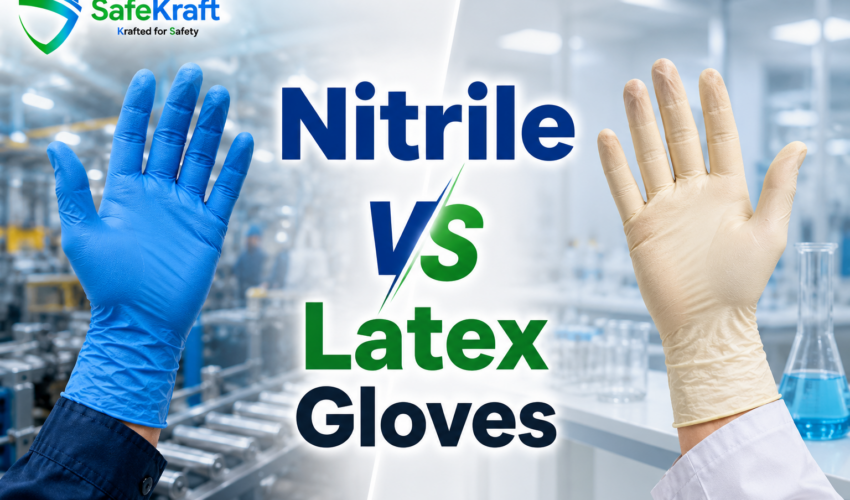
Hand protection is a critical part of workplace safety across industries such as manufacturing, healthcare, automotive, food processing, laboratories, and chemical handling. Selecting the right safety gloves can significantly reduce the risk of injuries, contamination, and chemical exposure.
Among the most commonly used disposable gloves are nitrile gloves and latex gloves. While both provide effective hand protection, they differ in material composition, durability, chemical resistance, comfort, and suitability for specific work environments.
This comprehensive Nitrile vs Latex Gloves Comparison will help employers and workers understand the key differences and choose the most suitable gloves for their applications.
Why Choosing the Right Gloves Matters
Hands are exposed to various workplace hazards, including:
- Chemicals
- Oils and solvents
- Sharp objects
- Biological contaminants
- Abrasive materials
- Cleaning agents
Using the correct protective gloves helps:
- Prevent injuries
- Improve workplace safety
- Increase worker confidence
- Support PPE compliance
- Reduce contamination risks
What Are Nitrile Gloves?
Nitrile gloves are made from synthetic rubber known as nitrile butadiene rubber (NBR).
They are widely used because of their:
- Chemical resistance
- Puncture resistance
- Durability
- Allergy-friendly properties
Nitrile gloves have become one of the most popular glove choices in industrial and medical environments.
What Are Latex Gloves?
Latex gloves are manufactured from natural rubber latex extracted from rubber trees.
They are known for:
- Excellent flexibility
- Comfortable fit
- High tactile sensitivity
- Natural elasticity
Latex gloves have traditionally been used in healthcare and laboratory environments where precision is important.
Nitrile vs Latex Gloves: Key Differences
Material Composition
Nitrile Gloves
- Synthetic rubber
- Latex-free
- Suitable for users with latex allergies
Latex Gloves
- Natural rubber
- Biodegradable
- May cause allergic reactions in sensitive individuals
Winner: Nitrile Gloves
Nitrile gloves provide broader workplace compatibility due to their latex-free composition.
Allergy Considerations
One of the biggest differences between nitrile and latex gloves is allergy risk.
Nitrile Gloves
✔ Hypoallergenic
✔ Suitable for most users
✔ No natural latex proteins
Latex Gloves
⚠ May trigger allergic reactions
⚠ Not suitable for workers with latex sensitivity
Winner: Nitrile Gloves
For workplaces with multiple users, nitrile gloves offer a safer solution.
Chemical Resistance
Nitrile Gloves
Excellent resistance to:
- Oils
- Grease
- Fuels
- Solvents
- Industrial chemicals
Latex Gloves
Provide limited resistance to certain chemicals.
Winner: Nitrile Gloves
Industries handling chemicals generally prefer nitrile gloves.
Puncture Resistance
Nitrile Gloves
Highly resistant to punctures and tears.
Latex Gloves
More flexible but easier to puncture.
Winner: Nitrile Gloves
Nitrile gloves provide stronger protection in demanding work environments.
Comfort and Flexibility
Latex Gloves
Offer excellent comfort and flexibility.
Workers often prefer latex gloves for tasks requiring dexterity.
Nitrile Gloves
Modern nitrile gloves have significantly improved flexibility and comfort.
Winner: Latex Gloves
Latex gloves still provide slightly better elasticity and tactile sensitivity.
Durability
Nitrile Gloves
More durable under tough working conditions.
Suitable for:
- Manufacturing
- Automotive work
- Maintenance
- Chemical handling
Latex Gloves
Can degrade more quickly when exposed to certain substances.
Winner: Nitrile Gloves
Nitrile gloves generally last longer in industrial environments.
Cost Comparison
Latex Gloves
Traditionally less expensive.
Nitrile Gloves
Often cost slightly more but provide greater durability and protection.
Winner: Depends on Application
For high-risk environments, nitrile gloves often deliver better value despite higher initial costs.
Nitrile vs Latex Gloves Comparison Table
| Feature | Nitrile Gloves | Latex Gloves |
|---|---|---|
| Material | Synthetic Rubber | Natural Rubber |
| Allergy Risk | Very Low | Moderate |
| Chemical Resistance | Excellent | Moderate |
| Puncture Resistance | Excellent | Good |
| Durability | Excellent | Good |
| Flexibility | Very Good | Excellent |
| Comfort | Very Good | Excellent |
| Industrial Use | Highly Recommended | Limited |
| Medical Use | Excellent | Excellent |
| Cost | Moderate | Lower |
Best Applications for Nitrile Gloves
Nitrile gloves are ideal for:
Manufacturing Industries
Protection against oils, grease, and industrial contaminants.
Automotive Workshops
Resistance to fuels and lubricants.
Chemical Handling
Excellent chemical protection.
Laboratories
Suitable for handling hazardous substances.
Cleaning and Maintenance
Provides strong barrier protection.
Food Processing
Available in food-grade options for hygiene applications.
Best Applications for Latex Gloves
Latex gloves are commonly used in:
Healthcare
Medical examinations and patient care.
Laboratories
Precision tasks requiring sensitivity.
Pharmaceutical Industries
Controlled environments with minimal chemical exposure.
Light-Duty Applications
Tasks requiring dexterity and comfort.
Which Gloves Are Better for Industrial Workplaces?
For most industrial environments, nitrile gloves are often the preferred choice because they offer:
✔ Superior puncture resistance
✔ Better chemical protection
✔ Improved durability
✔ Latex-free safety
✔ Longer service life
Industries increasingly choose nitrile gloves to improve worker protection and reduce allergy concerns.
How to Choose the Right Safety Gloves
Consider the following factors:
Workplace Hazards
Identify exposure to:
- Chemicals
- Oils
- Abrasion
- Sharp materials
User Comfort
Choose gloves workers can wear comfortably throughout their shifts.
Compliance Requirements
Ensure gloves meet workplace safety standards.
Industry Application
Different industries require different glove characteristics.
Why Quality Hand Protection Matters
Proper hand protection helps organizations:
- Reduce injuries
- Improve productivity
- Support PPE compliance
- Protect worker health
- Minimize downtime
Selecting quality gloves is a simple but effective step toward creating a safer workplace.
SafeKraft Hand Protection Solutions
SafeKraft India Pvt Ltd offers a wide range of hand protection products designed for industrial safety applications.
Applications include:
- Manufacturing
- Automotive
- Engineering
- Warehousing
- Construction
- Maintenance operations
SafeKraft safety gloves help organizations protect workers while maintaining comfort and productivity.
Conclusion
In this Nitrile vs Latex Gloves Comparison, both glove types offer valuable protection, but they serve different purposes. Latex gloves provide excellent flexibility and comfort, while nitrile gloves deliver superior durability, puncture resistance, and chemical protection.
For most industrial workplaces, nitrile gloves are often the preferred option due to their versatility and enhanced protection. However, the best choice depends on workplace hazards, application requirements, and user needs.
Investing in the right hand protection helps improve safety, compliance, and overall workplace performance.
Frequently Asked Questions (FAQs)
1. What is the main difference between nitrile and latex gloves?
Nitrile gloves are made from synthetic rubber, while latex gloves are made from natural rubber.
2. Which gloves are better for chemical handling?
Nitrile gloves generally provide better chemical resistance than latex gloves.
3. Are nitrile gloves latex-free?
Yes, nitrile gloves are completely latex-free.
4. Which gloves offer better puncture resistance?
Nitrile gloves provide higher puncture resistance.
5. Can latex gloves cause allergies?
Yes, some individuals may experience allergic reactions to natural latex proteins.
6. Which gloves are better for industrial use?
Nitrile gloves are widely preferred in industrial environments due to their durability and chemical resistance.
7. Why are nitrile gloves becoming more popular?
They offer excellent protection, reduced allergy risk, and strong performance across multiple industries.