
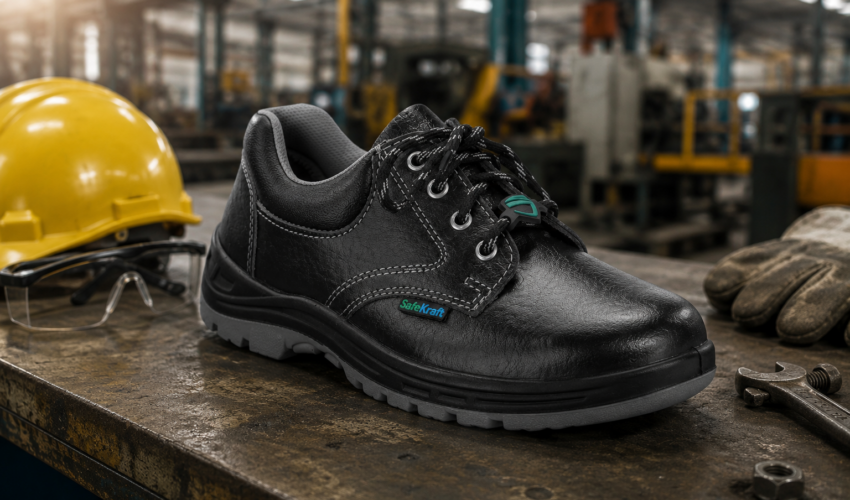
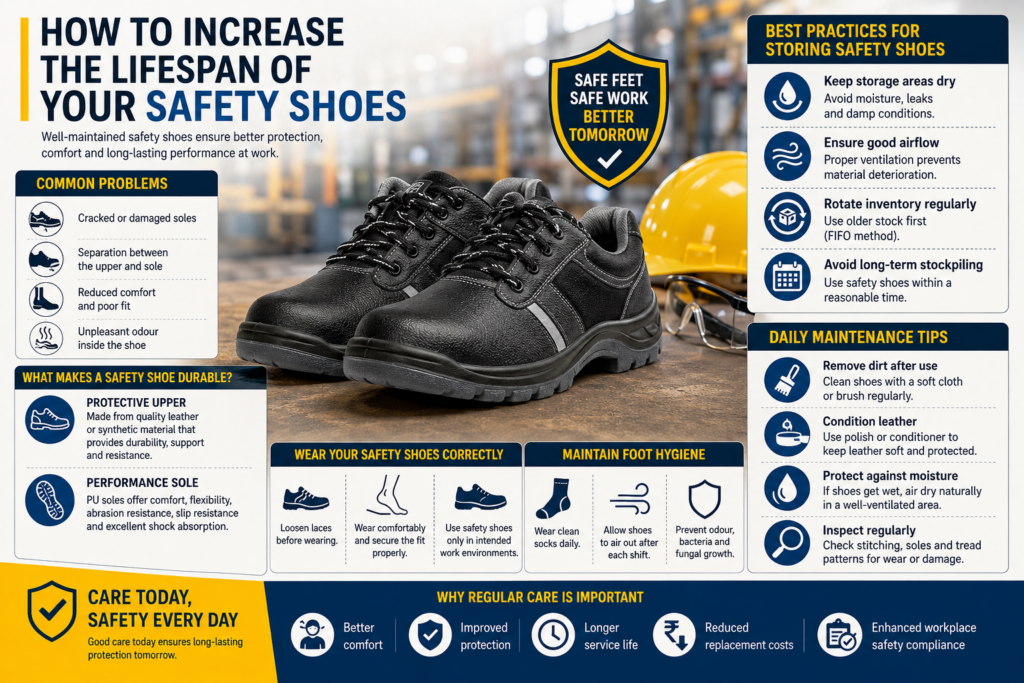
Safety shoes are one of the most important pieces of Personal Protective Equipment (PPE) used across industrial workplaces. They help protect workers from impacts, slips, punctures, electrical hazards, and other workplace risks. However, even the highest-quality safety footwear requires proper care and maintenance to deliver long-lasting protection.
At SafeKraft India Pvt. Ltd., we understand the importance of durable and reliable safety footwear. Based on industry best practices, here are some practical tips to extend the life of your safety shoes.
Common Problems Seen in Safety Shoes
Many workers experience the following issues after prolonged use:
- Cracking or crumbling of the sole
- Sole separation
- Loss of shape and poor fit
- Unpleasant odour inside the shoe
Understanding why these problems occur can help prevent them.
Understanding the Construction of Safety Shoes
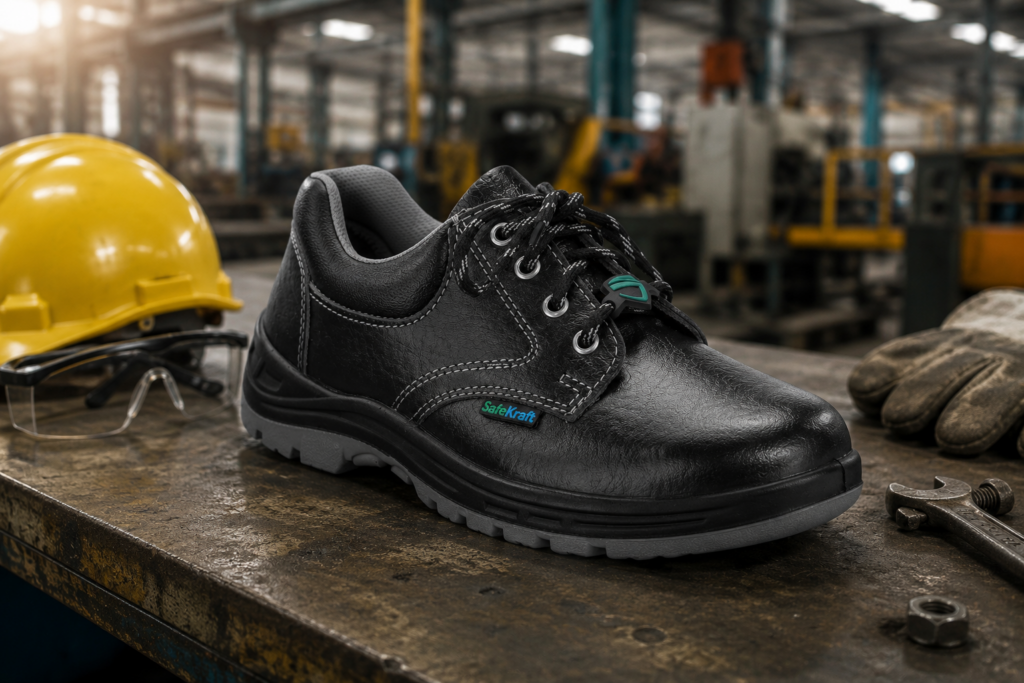
A typical safety shoe consists of two primary components:
1. Upper Material
The upper portion is generally made from high-quality leather or other durable materials that provide protection and comfort.
2. Sole
The sole is manufactured using natural or synthetic materials. Among these, Polyurethane (PU) soles are widely preferred because they are:
- Lightweight
- Flexible
- Shock-absorbing
- Abrasion-resistant
- Suitable for most industrial environments
Why Unused Safety Shoes Can Deteriorate
PU soles have a limited shelf life when stored for extended periods without use. Over time, a chemical process known as hydrolysis can occur.
During hydrolysis, moisture in the air reacts with the PU material, causing the sole to weaken, crack, or crumble. This process accelerates in warm, humid, and poorly ventilated storage areas.
How to Prevent Sole Damage During Storage
Follow these storage guidelines to maximize footwear life:
Maintain Proper Ventilation
Store footwear in a dry, well-ventilated area. Avoid damp storage rooms or areas affected by water seepage.
Allow Air Circulation
Keep shoe boxes properly spaced so that air can circulate around them.
Follow FIFO Inventory Management
Use the First In, First Out (FIFO) method to ensure older stock is issued before newer inventory.
Avoid Long-Term Storage
Unused safety shoes should ideally be put into service within six months of manufacture.
Safety Shoe Care Tips
Proper maintenance significantly improves the lifespan of safety footwear.
Clean Regularly
Wipe shoes with a soft, dry cotton cloth to remove dust, dirt, and contaminants that may damage the leather surface.
Apply Shoe Polish
Use a quality wax polish at least once a week. Polishing helps:
- Protect leather from moisture
- Maintain flexibility
- Improve appearance
- Extend service life
Dry Wet Shoes Correctly
Even water-resistant safety shoes are not completely waterproof.
If your shoes become wet:
- Remove excess moisture immediately.
- Stuff the inside with newspaper to absorb water.
- Allow them to air dry naturally.
- Avoid direct heat sources such as heaters or open flames.
The Right Way to Wear Safety Shoes
Many users unknowingly reduce shoe life through improper wearing habits.
Loosen the Laces First
Never force your feet into safety shoes without loosening the laces.
Open the Instep Area
Create sufficient space before inserting your foot to prevent damage to the heel counter and inner lining.
Adjust for Comfort
Once your foot is properly positioned, tighten the laces comfortably to achieve the correct fit and support.
Maintain Foot Hygiene
Foot hygiene plays an important role in footwear performance and comfort.
- Wear clean socks every day
- Allow shoes to air out after use
- Prevent bacterial and fungal growth
- Reduce unpleasant foot odour
Conclusion
Safety shoes are designed to protect workers from slips, falls, impacts, punctures, and workplace hazards. By following proper storage, cleaning, and wearing practices, you can significantly extend the lifespan of your footwear while maintaining optimal protection.
At SafeKraft India Pvt. Ltd., we believe that well-maintained safety shoes not only last longer but also provide better comfort, performance, and workplace safety.