
Choosing the correct glove size is an important part of workplace safety. A safety glove that is too tight can restrict hand movement and cause discomfort, while a glove that is too loose may reduce grip and control. Therefore, proper sizing should be considered when selecting industrial safety gloves, work gloves, protective gloves, and PPE hand protection.
The right fit allows workers to move their fingers comfortably while maintaining a secure grip. It can also make gloves easier to wear for extended periods during demanding industrial applications.
This guide explains how to measure your hand, understand glove sizing, and select the appropriate safety glove size.
Why Is the Correct Safety Glove Size Important?
Gloves are designed to provide protection while allowing workers to perform their tasks effectively. However, even a high-quality protective glove may not perform comfortably when the size is incorrect.
A properly fitted glove should:
- Fit comfortably around the hand
- Allow natural finger movement
- Provide adequate grip
- Avoid excessive looseness
- Avoid uncomfortable pressure points
- Allow the worker to perform normal tasks
- Support comfortable long-term use
For this reason, glove size selection should be part of the PPE selection process.
How to Measure Your Hand for Glove Size
There are two simple methods that can help you determine your glove size.
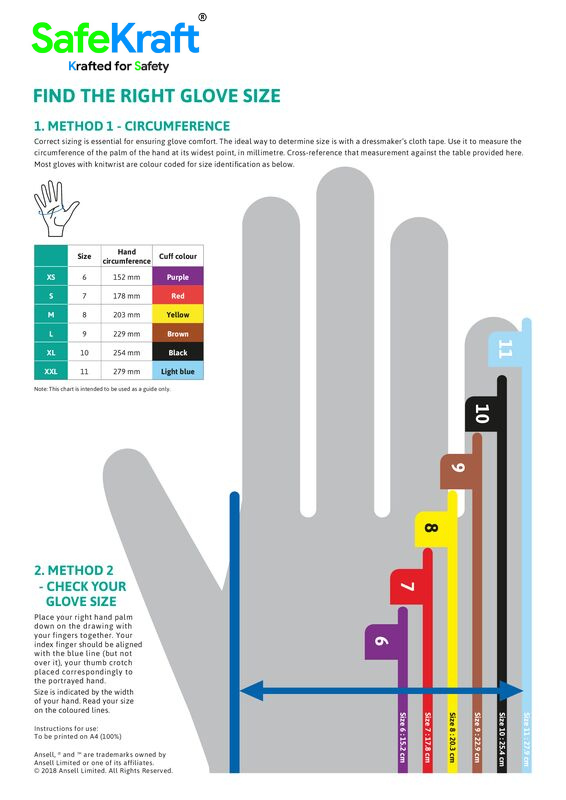
Method 1: Measure Hand Circumference
The first method is to measure the circumference of your palm.
Use a flexible dressmaker’s measuring tape and measure around the widest part of your hand. The measurement should be taken in millimetres (mm).
After taking the measurement, compare it with the glove size chart.
Safety Glove Size Chart
| Glove Size | Hand Size | Hand Circumference |
|---|---|---|
| XXS | 5 | 137 mm |
| XS | 6 | 152 mm |
| S | 7 | 178 mm |
| M | 8 | 203 mm |
| L | 9 | 229 mm |
| XL | 10 | 254 mm |
| XXL | 11 | 279 mm |
| XXXL | 12 | 295 mm |
Note: This glove size chart should be treated as a guide. Actual sizing can vary depending on the glove design, material, manufacturer, and application.
Method 2: Check Your Hand Against a Glove Size Guide
Another way to check your glove size is by using a printed hand-size guide.
Place your right hand palm down on the sizing guide with your fingers together. Align your index finger with the indicated reference line and position your thumb according to the guide.
The width of your hand can then be compared with the coloured size markings to identify the approximate glove size.
When using a printed sizing chart, make sure it has been printed at 100% / actual size. Incorrect printer scaling can affect the measurement.
Understanding Glove Sizes
Safety gloves commonly use sizes such as XXS, XS, S, M, L, XL, XXL, and XXXL.
However, glove sizing is not always identical between manufacturers. For example, an XL glove from one manufacturer may fit slightly differently from an XL glove from another manufacturer.
Therefore, workers and purchasing teams should always refer to the manufacturer’s specific glove size chart when available.
What Happens If Safety Gloves Are Too Tight?
Gloves that are too small can create several practical problems.
They may:
- Restrict finger movement
- Cause discomfort
- Create excessive pressure
- Make it difficult to grip tools
- Increase hand fatigue
- Reduce overall working comfort
For workers who wear gloves for several hours, proper sizing becomes particularly important.
What Happens If Gloves Are Too Loose?
Oversized gloves can also create problems.
Excess material around the fingers or palm can interfere with handling tools and equipment. Loose gloves may also make precise tasks more difficult.
For this reason, workers should avoid simply choosing a larger size for comfort. Instead, they should identify a size that provides both comfort and appropriate hand control.
Choosing Safety Gloves for Different Applications
Correct sizing is only one part of choosing protective gloves.
The glove should also be suitable for the workplace hazard.
Different applications may require different types of hand protection, including:
- Cut-resistant gloves
- Chemical-resistant gloves
- Heat-resistant gloves
- Leather safety gloves
- PVC gloves
- General-purpose work gloves
- Impact-resistant gloves
- Abrasion-resistant gloves
- Kevlar gloves
- Industrial protective gloves
For example, a glove designed for general handling may not provide the protection required for high-temperature applications or cut hazards.
Therefore, businesses should identify the workplace hazard before selecting the appropriate industrial safety gloves.
Check the Glove Material
Glove material can influence comfort, flexibility, grip, durability, and protection.
Common materials include:
- Leather
- PVC
- Nitrile
- Latex
- Polyamide
- Kevlar
- Para-aramid
- Cotton
- Synthetic fibres
The appropriate material depends on the intended application.
For example, leather gloves may be suitable for certain mechanical and general industrial applications, while specialised materials such as Kevlar and para-aramid may be selected where heat or cut protection is required.
Check Applicable Safety Standards
When purchasing PPE hand protection, businesses should also check the applicable product standards.
Depending on the glove type and market, relevant standards may include requirements relating to:
- Mechanical risks
- Cut resistance
- Tear resistance
- Puncture resistance
- Heat resistance
- Chemical protection
- Other specific hazards
The applicable standard should always be checked against the particular glove and intended application.
Why Proper Glove Fit Improves Workplace Comfort
Workers often wear protective gloves throughout their working shift. Therefore, comfort can have a significant effect on usability.
A correctly sized glove can allow the worker to:
- Move fingers naturally
- Grip tools more effectively
- Handle materials comfortably
- Perform repetitive tasks more easily
- Reduce unnecessary hand fatigue
However, comfort should never replace protection. The glove must first be appropriate for the hazard, and then the correct size should be selected.
Where to Find Workplace Safety Gloves
Businesses looking for different categories of workplace safety equipment and protective gear can explore SafeKraft’s range of workplace safety products.
The range includes different PPE categories, including hand protection and other workplace protection solutions.
Tips for Selecting the Right Glove Size
Before purchasing safety gloves, keep these points in mind:
- Measure the hand correctly.
- Measure the widest part of the palm.
- Use millimetres when following the sizing chart.
- Compare the measurement with the manufacturer’s size chart.
- Check both palm fit and finger length.
- Avoid gloves that are excessively tight.
- Avoid excessive looseness.
- Consider the work application.
- Check the relevant safety standards.
- Replace gloves when they become damaged or unsuitable.
Frequently Asked Questions About Safety Glove Sizes
What is the best way to measure glove size?
Measure the circumference around the widest part of your palm using a flexible measuring tape. Record the measurement in millimetres and compare it with the manufacturer’s glove size chart.
What size is a 203 mm hand circumference?
According to the sizing chart shown in the SafeKraft guide, a 203 mm hand circumference corresponds to size M (8).
What size is a 229 mm hand circumference?
A 229 mm hand circumference corresponds to size L (9) according to the provided glove sizing chart.
What size is a 254 mm hand circumference?
A 254 mm hand circumference corresponds to size XL (10) according to the provided chart.
What size is a 279 mm hand circumference?
A 279 mm hand circumference corresponds to size XXL (11).
Can glove sizes vary between manufacturers?
Yes. Glove sizing can vary depending on the manufacturer, glove design, material, and construction. Therefore, always check the manufacturer’s own sizing information.
Should safety gloves feel tight?
Safety gloves should provide a secure and comfortable fit without excessive pressure. They should allow natural finger movement and should not restrict normal hand movement.
Should I choose a larger glove for more comfort?
Not necessarily. A glove that is too large may affect grip and control. It is better to select the size that provides an appropriate balance between protection, comfort, and movement.
Why is glove sizing important for industrial workers?
Proper sizing can improve comfort, hand movement, grip, and usability. It is especially important when workers wear gloves for extended periods.
Conclusion
Choosing the correct safety glove size is a simple but important part of effective hand protection. Start by measuring the circumference of the palm and compare the result with the manufacturer’s sizing chart.
For example, the provided guide indicates sizes ranging from XXS to XXXL, with hand circumferences from 137 mm to 295 mm.
However, sizing is only one part of PPE selection. Businesses should also consider the workplace hazard, glove material, protection level, applicable standards, grip requirements, durability, and worker comfort.
By selecting the right industrial safety gloves and the correct size, organizations can provide workers with protective hand equipment that is more comfortable and practical for everyday workplace use.