
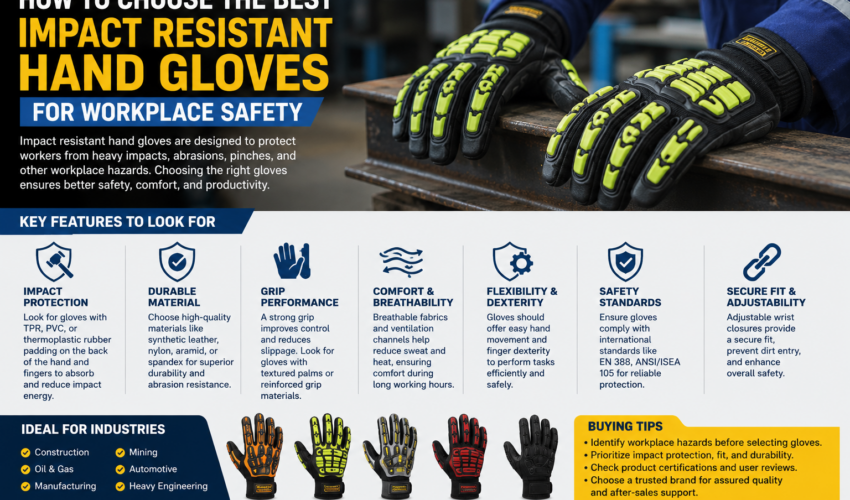
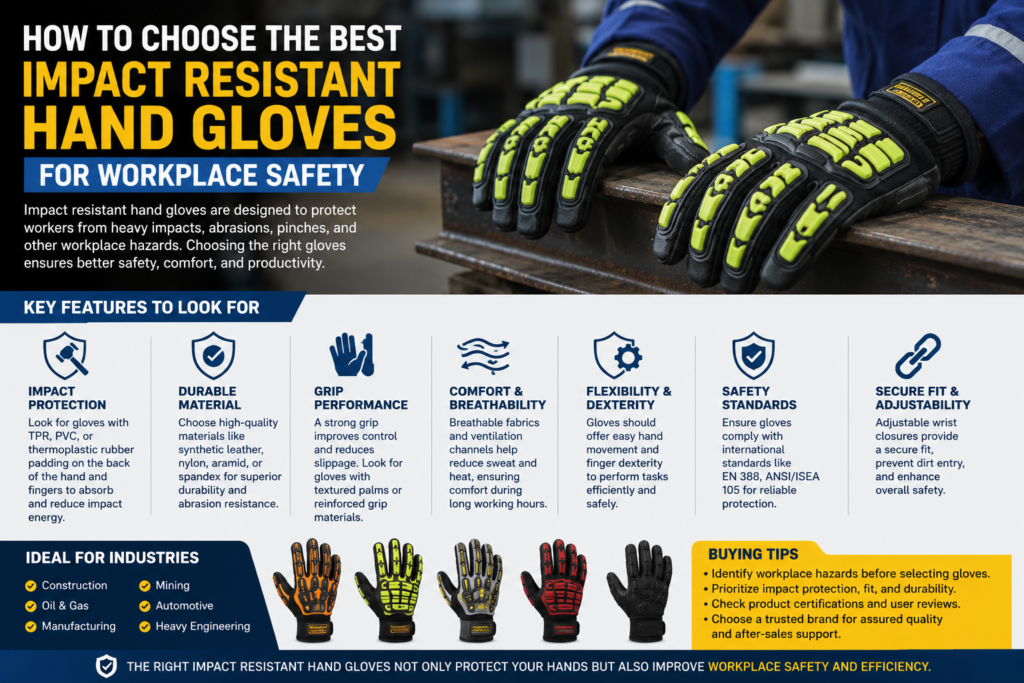
Hand injuries are among the most common workplace accidents across industries such as construction, manufacturing, oil and gas, mining, and material handling. Impact resistant hand gloves play a crucial role in protecting workers from crush injuries, pinching hazards, impacts, abrasions, and cuts. Choosing the right gloves can significantly improve workplace safety, productivity, and worker confidence.
This guide explains the key factors to consider when selecting the best impact resistant hand gloves for industrial applications.
Why Impact Resistant Hand Gloves Are Important
Industrial workers frequently handle heavy tools, machinery, metal components, and construction materials. Unexpected impacts can cause serious injuries to fingers, knuckles, and hands. Impact resistant gloves are specifically designed to absorb and disperse force, reducing the risk of workplace injuries.
Benefits of impact resistant gloves include:
- Protection against hand and finger injuries
- Enhanced grip and control
- Improved worker comfort
- Increased productivity
- Compliance with workplace safety standards
Key Features to Look for in Impact Resistant Hand Gloves
1. Impact Protection Technology
The primary purpose of impact resistant gloves is to protect hands from sudden impacts. Look for gloves featuring thermoplastic rubber (TPR) protection on the fingers, knuckles, and back of the hand.
High-quality impact protection helps absorb shock and reduce injury severity in hazardous work environments.
2. Durable Construction
Industrial gloves should withstand demanding working conditions. Materials such as synthetic leather, reinforced fabric, and abrasion-resistant coatings provide greater durability and longer service life.
Durable gloves help reduce replacement costs and maintain consistent protection.
3. Excellent Grip Performance
Workers often handle slippery tools, machinery, and materials. Gloves with textured palms or specialized grip coatings provide better control and reduce the risk of accidents.
A secure grip improves efficiency and workplace safety.
4. Comfort and Breathability
Comfort is essential for workers who wear gloves throughout long shifts. Breathable materials help reduce sweat buildup and improve overall comfort.
Features to consider include:
- Breathable back panels
- Moisture-wicking liners
- Flexible materials
- Ergonomic designs
5. Flexibility and Dexterity
Workers need protection without sacrificing movement. Quality impact resistant gloves should allow natural hand movement and finger flexibility.
Better dexterity enables workers to perform detailed tasks safely and efficiently.
6. Cut and Abrasion Resistance
Many industrial environments expose workers to sharp edges and rough surfaces. Choosing gloves that offer both impact and cut resistance provides comprehensive hand protection.
This combination is particularly beneficial in manufacturing, metalworking, and construction applications.
7. Proper Fit and Adjustability
Poorly fitted gloves can reduce comfort and performance. Adjustable wrist closures help ensure a secure fit while preventing dirt and debris from entering the gloves.
Always select the correct glove size for maximum protection and comfort.
Industries That Require Impact Resistant Gloves
Construction Industry
Construction workers face risks from falling tools, heavy materials, and equipment handling. Impact resistant gloves help protect against common hand injuries on job sites.
Oil and Gas Industry
Workers operating in harsh environments require gloves that provide impact protection, grip, and durability.
Manufacturing Facilities
Machine operators and assembly workers benefit from gloves that offer protection while maintaining dexterity.
Mining Operations
Mining environments expose workers to heavy equipment, sharp materials, and impact hazards that require advanced hand protection.
Warehousing and Logistics
Material handling tasks can result in crush injuries and impacts. Protective gloves help reduce injury risks while improving grip.
How to Maintain Impact Resistant Gloves
Proper maintenance extends glove lifespan and ensures consistent protection.
Best practices include:
- Inspect gloves regularly for damage
- Clean according to manufacturer guidelines
- Store in a dry and clean location
- Replace gloves showing excessive wear
- Avoid using damaged gloves in hazardous environments
Common Mistakes to Avoid
When purchasing impact resistant gloves, avoid these common errors:
- Choosing gloves based only on price
- Ignoring workplace hazards
- Selecting the wrong size
- Overlooking grip requirements
- Failing to check durability and certifications
Conclusion
Choosing the best impact resistant hand gloves is essential for creating a safer workplace. The right gloves provide protection against impacts, abrasions, cuts, and other common workplace hazards while maintaining comfort and flexibility. By considering factors such as impact protection, durability, grip, fit, and industry requirements, businesses can ensure workers receive reliable hand protection that supports both safety and productivity.
Frequently Asked Questions (FAQs)
1. What are impact resistant hand gloves?
Impact resistant gloves are protective gloves designed to reduce the risk of hand injuries caused by impacts, crush hazards, and heavy objects.
2. Which industries use impact resistant gloves?
Construction, manufacturing, mining, oil and gas, logistics, warehousing, and heavy engineering industries commonly use impact resistant gloves.
3. What is TPR protection in gloves?
TPR (Thermoplastic Rubber) is a protective material placed on the back of the hand and fingers to absorb and disperse impact forces.
4. Are impact resistant gloves cut resistant?
Some impact resistant gloves also include cut-resistant materials for enhanced protection against sharp objects and abrasions.
5. How should impact resistant gloves fit?
Gloves should fit snugly without restricting movement, ensuring comfort, flexibility, and maximum protection.
6. How often should impact resistant gloves be replaced?
Replace gloves when they show signs of wear, damage, tears, or reduced protective performance.
7. Why are impact resistant gloves important for workplace safety?
They help reduce hand injuries, improve grip, enhance productivity, and support compliance with workplace safety requirements.