
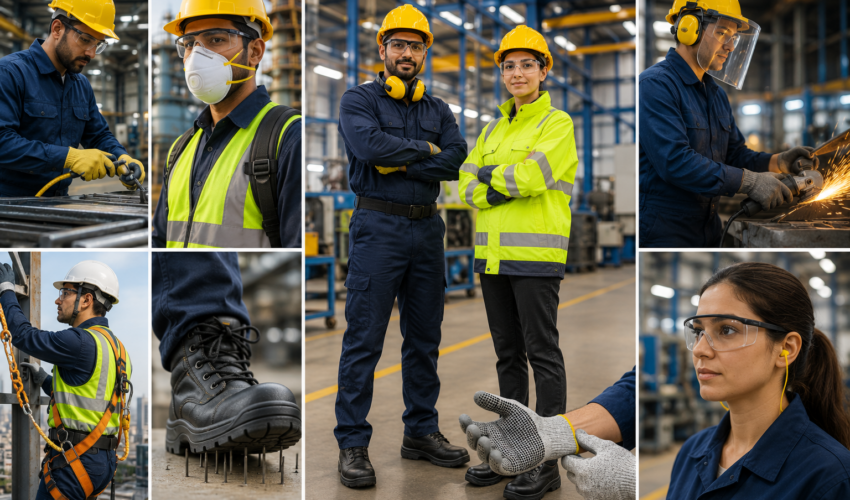
Workplace safety is a top priority for every organization, regardless of industry. From manufacturing plants and construction sites to warehouses and maintenance facilities, workers face various hazards that can lead to serious injuries if proper precautions are not taken.
One of the most effective ways to protect employees is through the use of Personal Protective Equipment (PPE). PPE serves as a critical barrier between workers and workplace hazards, helping reduce the risk of accidents and injuries.
Understanding how PPE reduces workplace injuries can help employers create safer work environments, improve compliance, and protect their most valuable asset—their workforce.
What Is PPE?
Personal Protective Equipment (PPE) refers to specialized equipment and clothing designed to protect workers from potential hazards encountered during their daily tasks.
Common PPE includes:
- Safety Helmets
- Safety Shoes
- Safety Gloves
- Safety Goggles
- Face Shields
- Respirators
- Ear Protection
- Reflective Safety Jackets
- Fall Protection Equipment
Each type of PPE is designed to protect specific parts of the body from workplace risks.
Why PPE Is Important in the Workplace
Despite advances in engineering controls and workplace safety systems, many hazards cannot be completely eliminated.
PPE provides the final layer of protection when workers are exposed to:
- Falling objects
- Flying particles
- Electrical hazards
- Chemical splashes
- Excessive noise
- Sharp materials
- Slip and fall hazards
- Work-at-height risks
When used correctly, PPE significantly reduces the likelihood and severity of workplace injuries.
How PPE Reduces Workplace Injuries
Protects the Head from Impact Injuries
Head injuries are among the most serious workplace accidents.
Safety helmets help protect workers from:
- Falling tools
- Overhead hazards
- Accidental impacts
- Moving equipment
In construction and industrial environments, head protection is often mandatory because of the potential for severe injuries.
Prevents Foot Injuries
Foot injuries can occur when heavy objects fall, sharp materials puncture footwear, or workers slip on hazardous surfaces.
Safety shoes provide:
- Impact protection
- Slip resistance
- Puncture resistance
- Improved stability
Quality safety footwear helps workers perform their tasks confidently while reducing injury risks.
Protects Hands from Workplace Hazards
Workers frequently use their hands when handling tools, machinery, chemicals, and materials.
Safety gloves help prevent:
- Cuts
- Abrasions
- Burns
- Chemical exposure
- Puncture injuries
Selecting the correct glove type is essential for effective hand protection.
Reduces Eye Injuries
Eye injuries can happen instantly and may have long-term consequences.
Safety goggles and face shields protect workers from:
- Flying debris
- Dust particles
- Chemical splashes
- Sparks
- Metal fragments
Proper eye protection helps preserve vision and reduce workplace accidents.
Protects Against Respiratory Hazards
Many industries expose workers to airborne contaminants.
Respiratory PPE helps reduce exposure to:
- Dust
- Smoke
- Fumes
- Chemical vapors
- Fine particles
Protecting respiratory health is especially important in manufacturing, construction, mining, and industrial operations.
Prevents Hearing Loss
Long-term exposure to excessive noise can cause permanent hearing damage.
Hearing protection devices such as earplugs and earmuffs help reduce harmful noise exposure and support worker well-being.
Improves Safety During Work at Height
Falls remain one of the leading causes of workplace injuries.
Fall protection equipment helps workers stay secure while performing tasks at elevated locations.
Common equipment includes:
- Full body harnesses
- Lifelines
- Shock-absorbing lanyards
- Anchorage systems
These systems significantly reduce the risk of fall-related injuries.
Additional Benefits of PPE
Builds Worker Confidence
Employees who feel protected are often more focused and productive.
Supports Safety Compliance
Many industries require PPE as part of workplace safety regulations and standards.
Reduces Downtime
Fewer injuries mean fewer disruptions, helping businesses maintain operational efficiency.
Strengthens Safety Culture
Consistent PPE usage encourages employees to prioritize safety and follow workplace procedures.
Common Reasons PPE Fails to Prevent Injuries
Although PPE is highly effective, injuries can still occur if equipment is not used correctly.
Common mistakes include:
- Wearing the wrong PPE
- Improper fit
- Using damaged equipment
- Lack of training
- Inconsistent usage
- Poor maintenance
Employers should provide regular training and inspections to ensure PPE remains effective.
How Employers Can Improve PPE Effectiveness
Conduct Workplace Hazard Assessments
Identify risks and select appropriate protective equipment for each task.
Provide Employee Training
Workers should understand:
- How to wear PPE correctly
- When PPE is required
- Equipment limitations
- Inspection procedures
Inspect PPE Regularly
Routine inspections help identify damaged or worn equipment before it becomes a safety risk.
Replace PPE When Necessary
Protective equipment should be replaced immediately if it shows signs of wear, damage, or reduced performance.
Why Quality PPE Matters
Not all protective equipment offers the same level of performance.
High-quality PPE provides:
- Better durability
- Improved comfort
- Reliable protection
- Enhanced worker acceptance
SafeKraft India Pvt Ltd offers a comprehensive range of industrial safety products designed to help organizations improve workplace safety and worker protection.
Products include:
- Safety Shoes
- Safety Helmets
- Safety Gloves
- Reflective Jackets
- Respiratory Protection
- Fall Protection Equipment
- Industrial Safety Solutions
Investing in quality PPE helps create a safer and more productive workplace.
Conclusion
Understanding how PPE reduces workplace injuries is essential for every employer and worker. PPE acts as a critical line of defense against workplace hazards and helps prevent injuries that can affect employee health, productivity, and business operations.
By selecting the right equipment, providing proper training, conducting regular inspections, and promoting consistent PPE usage, organizations can significantly improve workplace safety. A strong PPE program not only protects workers but also contributes to a culture of safety and operational excellence.
Frequently Asked Questions (FAQs)
1. What is PPE in workplace safety?
PPE stands for Personal Protective Equipment and includes safety gear designed to protect workers from workplace hazards.
2. How does PPE reduce workplace injuries?
PPE creates a protective barrier between workers and hazards such as impacts, chemicals, dust, noise, and falling objects.
3. What are the most common types of PPE?
Common PPE includes safety helmets, safety shoes, gloves, goggles, respirators, ear protection, and fall protection equipment.
4. Why is PPE important?
PPE helps reduce injuries, supports compliance, and improves worker safety in hazardous environments.
5. Can PPE completely eliminate workplace injuries?
No. PPE reduces risk but should be used alongside other safety measures such as training, hazard controls, and safe work practices.
6. How often should PPE be inspected?
PPE should be inspected before use and during routine workplace safety inspections.
7. Why choose SafeKraft India Pvt Ltd PPE products?
SafeKraft India Pvt Ltd offers reliable industrial safety products designed to support workplace protection, compliance, and worker safety.