
Safety helmets are among the most important pieces of Personal Protective Equipment (PPE) used in industrial workplaces. They protect workers from falling objects, impacts, electrical hazards, and other workplace risks. However, even the best safety helmet can lose its protective capability if it is damaged, worn out, or improperly maintained.
For this reason, regular helmet inspections are essential. A structured Helmet Inspection Checklist for Safety Officers helps identify defects before they become safety hazards and ensures workers receive reliable head protection.
This guide outlines the key inspection points every safety officer should follow during routine PPE inspections.
Why Safety Helmet Inspections Are Important
Regular inspections help:
- Identify damaged helmets
- Ensure PPE compliance
- Reduce workplace injuries
- Improve worker safety
- Extend equipment lifespan
- Support workplace safety audits
A damaged helmet may appear normal but could fail during an impact, putting workers at serious risk.
Daily Helmet Inspection Checklist
Before every shift, safety officers and workers should inspect the helmet for visible signs of damage.
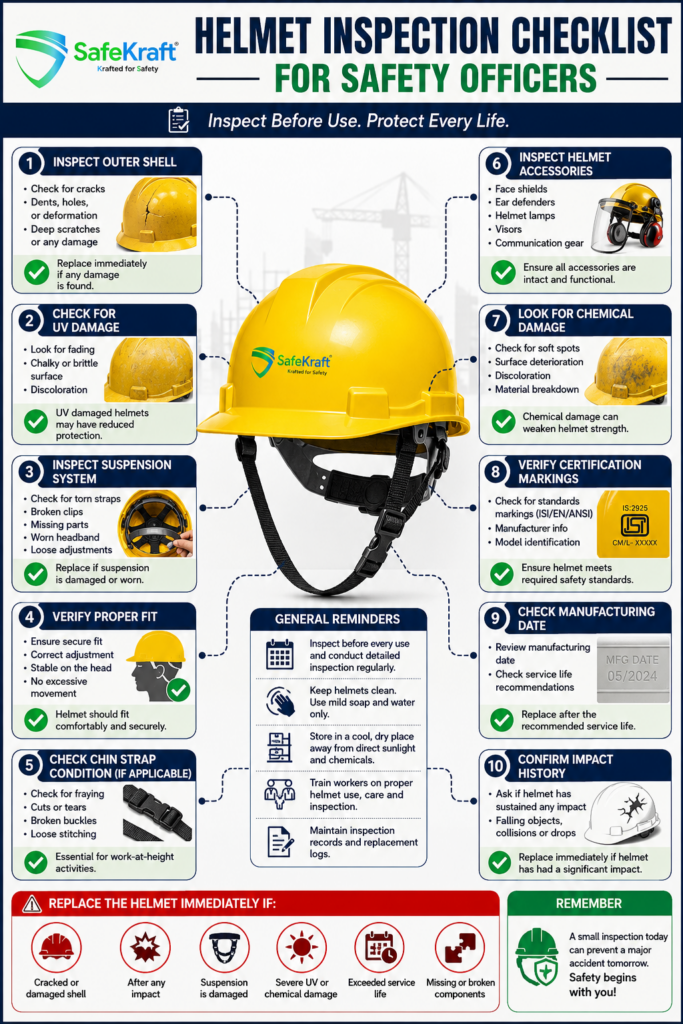
1. Inspect the Outer Shell
Check the helmet shell for:
✔ Cracks
✔ Dents
✔ Deep scratches
✔ Deformation
✔ Holes
✔ Surface damage
Replace Immediately If:
- Cracks are visible
- The shell is deformed
- Impact damage is present
The shell is the primary protective component and must remain structurally sound.
2. Check for UV Damage
Continuous sunlight exposure can weaken helmet materials.
Look for:
✔ Fading color
✔ Chalky appearance
✔ Brittle surface
✔ Discoloration
Warning Sign
A faded or brittle helmet may have reduced impact resistance and should be evaluated for replacement.
3. Inspect the Suspension System
The suspension system absorbs impact energy and keeps the helmet securely positioned.
Check for:
✔ Torn straps
✔ Broken clips
✔ Missing components
✔ Loose adjustments
✔ Worn headbands
Replace If:
- Suspension straps are damaged
- Adjustment mechanisms fail
- Components show excessive wear
4. Verify Proper Fit
A poorly fitted helmet may not provide adequate protection.
Confirm:
✔ Secure fit
✔ Correct adjustment
✔ Stable positioning
✔ No excessive movement
Workers should be able to move comfortably while maintaining secure head protection.
5. Check Chin Strap Condition (If Applicable)
For work-at-height activities, chin straps are critical.
Inspect for:
✔ Fraying
✔ Cuts
✔ Broken buckles
✔ Loose stitching
Common Applications
- Rope access work
- Tower climbing
- Scaffolding
- Construction projects
6. Inspect Helmet Accessories
Many industrial helmets include additional protective equipment.
Check:
✔ Face shields
✔ Ear defenders
✔ Helmet-mounted lamps
✔ Visors
✔ Communication systems
Damaged accessories should be repaired or replaced immediately.
7. Look for Chemical Damage
Chemical exposure can weaken helmet materials.
Inspect for:
✔ Soft spots
✔ Surface deterioration
✔ Discoloration
✔ Material breakdown
High-Risk Industries
- Chemical plants
- Manufacturing facilities
- Laboratories
- Industrial processing units
8. Verify Certification Markings
Safety officers should ensure helmets still display:
✔ Manufacturer information
✔ Safety standard markings
✔ Model identification
✔ Manufacturing date
Certification markings help verify compliance and equipment traceability.
9. Check Manufacturing Date
Every helmet has a recommended service life.
Review:
✔ Manufacturing date
✔ Service life recommendations
✔ Replacement schedule
Even helmets without visible damage may require replacement after their recommended usage period.
10. Confirm Impact History
Ask workers whether the helmet has experienced:
✔ Falling object impact
✔ Equipment collision
✔ Accidental drops from height
Important
A helmet that has sustained a significant impact should be removed from service immediately, even if no visible damage exists.
Monthly Helmet Inspection Checklist for Safety Officers
In addition to daily inspections, safety officers should conduct detailed monthly inspections.
Review:
✔ Helmet condition records
✔ Replacement schedules
✔ Worker compliance
✔ Storage practices
✔ Cleaning procedures
✔ PPE inventory status
Document all findings and corrective actions.
Proper Safety Helmet Storage Guidelines
To extend helmet lifespan:
✔ Store in a clean, dry area
✔ Avoid direct sunlight
✔ Keep away from chemicals
✔ Avoid excessive heat
✔ Store on designated PPE racks
Proper storage helps maintain protective performance.
Common Reasons Safety Helmets Fail Inspection
Safety officers frequently identify:
- Cracked shells
- UV degradation
- Damaged suspension systems
- Missing components
- Chemical damage
- Expired service life
- Improper modifications
These issues require immediate corrective action.
Safety Officer Best Practices
To improve helmet safety programs:
Conduct Regular PPE Audits
Routine inspections help identify problems early.
Train Workers
Employees should understand:
- Proper helmet use
- Inspection procedures
- Storage requirements
- Damage reporting processes
Maintain Inspection Records
Documentation supports compliance and workplace safety management.
Replace Damaged Equipment Promptly
Never allow damaged helmets to remain in service.
Why Quality Safety Helmets Matter
High-quality helmets provide reliable protection when properly maintained and inspected.
SafeKraft India Pvt Ltd supports workplace safety with industrial PPE solutions designed for:
- Manufacturing
- Construction
- Warehousing
- Engineering
- Logistics
- Industrial maintenance
A proactive inspection program combined with quality PPE helps reduce workplace injuries and improve compliance.
Conclusion
A comprehensive Helmet Inspection Checklist for Safety Officers is an essential part of any workplace safety program. Regular inspections help identify damage, improve PPE compliance, and ensure workers receive effective head protection.
By checking helmet shells, suspension systems, chin straps, accessories, manufacturing dates, and impact history, safety officers can significantly reduce risks and maintain safer working environments.
Preventive inspections today can help avoid serious accidents tomorrow.
Frequently Asked Questions (FAQs)
1. How often should safety helmets be inspected?
Safety helmets should be visually inspected before each use and undergo detailed inspections regularly.
2. What should safety officers look for during helmet inspections?
Inspectors should check for cracks, dents, UV damage, damaged suspension systems, and signs of wear.
3. Can a helmet be used after an impact?
No. Helmets that experience a significant impact should be replaced immediately.
4. Why is the suspension system important?
The suspension system absorbs impact energy and helps protect the wearer’s head during an accident.
5. How can UV exposure affect a safety helmet?
UV exposure can weaken helmet materials, causing fading, brittleness, and reduced protection.
6. What records should safety officers maintain?
Inspection records, replacement schedules, training logs, and PPE inventory records should be maintained.
7. Why is regular helmet inspection necessary?
Regular inspections help ensure helmets remain safe, compliant, and capable of providing adequate protection.