
Introduction
Construction sites involve several workplace hazards, including falling objects, sharp materials, dust, noise, electrical risks, and working at height. Providing the right PPE for construction workers is an important step towards reducing injuries and creating a safer working environment.
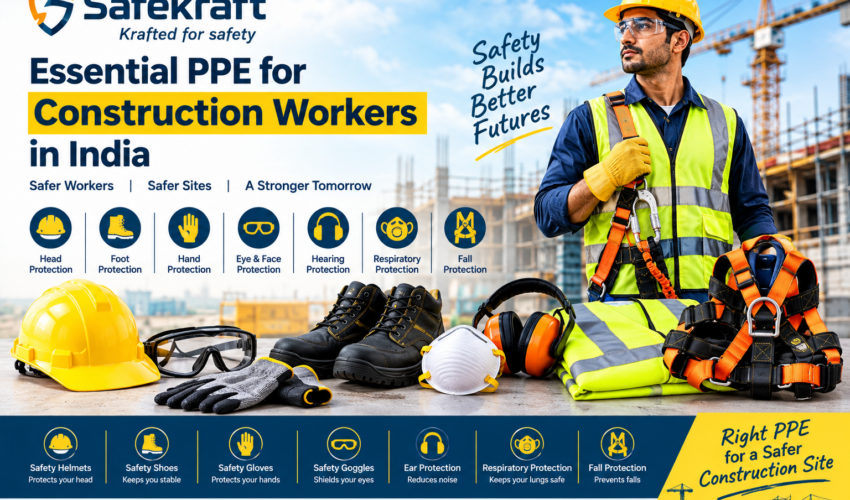
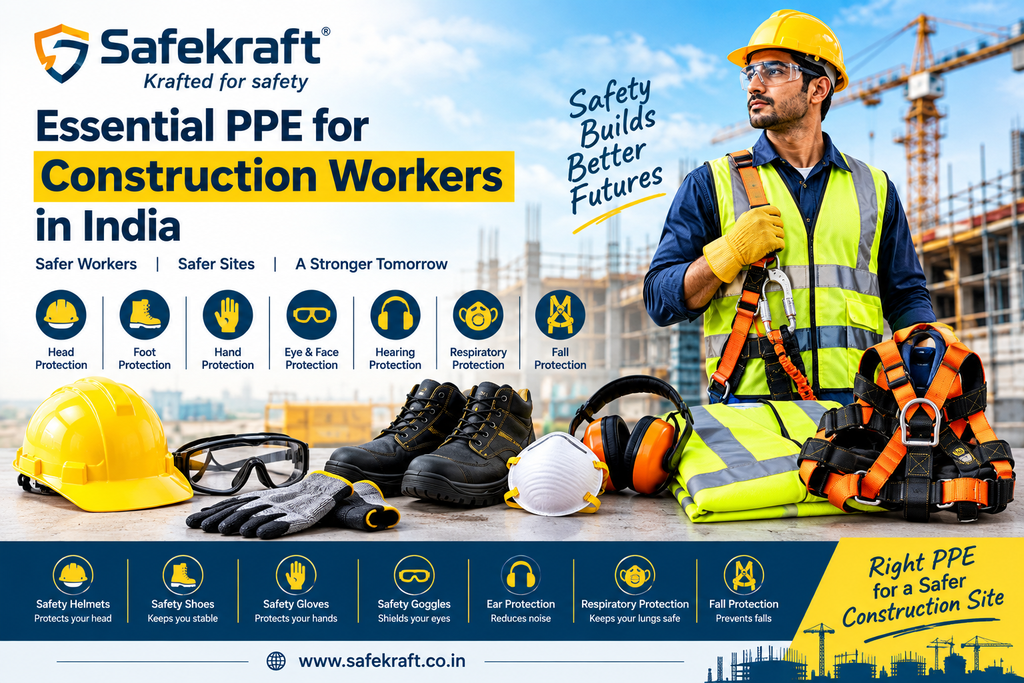
Personal protective equipment (PPE) helps protect workers when hazards cannot be completely eliminated through safer equipment, engineering controls, or work procedures. Depending on the job, construction workers may need safety helmets, protective footwear, gloves, safety goggles, high-visibility clothing, hearing protection, respiratory protection, and fall protection equipment.
In India, construction companies, contractors, builders, and infrastructure developers should select PPE according to the hazards present at each worksite, applicable safety requirements, and the manufacturer’s instructions.
This guide explains the essential construction PPE, how to choose suitable products, and what employers should consider when purchasing safety equipment.
What Is PPE for Construction Workers?
PPE for construction workers refers to protective equipment worn or used to reduce exposure to workplace hazards. The equipment required depends on the worker’s tasks, site conditions, materials handled, and potential risks.
For example, a mason may need a safety helmet, safety shoes, and gloves. A worker cutting concrete may also require suitable eye protection, hearing protection, and respiratory protection. A worker performing tasks at height may need a properly selected fall-arrest system.
However, PPE should not be the only safety measure. Employers should first assess hazards and use suitable controls, safe work practices, and training alongside the correct protective equipment.
1. Safety Helmets for Head Protection
Construction workers may face head injuries from falling tools, moving materials, overhead work, or accidental contact with structures. A suitable safety helmet helps protect against specified head-impact hazards.
Where safety helmets are useful:
- Building and infrastructure construction
- Road and bridge projects
- Masonry and concrete work
- Industrial construction and maintenance
- Material handling and site supervision where hazards exist
How to choose a safety helmet:
- Select a helmet suitable for the identified hazards.
- Check applicable Indian Standards and other relevant compliance requirements.
- Ensure the suspension and fit system are compatible with the helmet.
- Inspect the shell, suspension, and accessories before use.
- Replace damaged helmets and follow the manufacturer’s service-life guidance.
A helmet does not protect against every hazard. Electrical work, for example, may require a helmet specifically rated for the relevant electrical risks.
2. Safety Shoes for Construction Sites
Construction sites often contain nails, sharp scrap, uneven ground, heavy materials, wet surfaces, and falling-object hazards. Safety footwear helps protect workers’ feet when selected for the specific risks.
Important features to consider:
- Protective toe caps where impact or compression hazards exist
- Slip-resistant outsoles suitable for the working surface
- Puncture-resistant protection where sharp objects are a risk
- Suitable sole resistance to oils, chemicals, heat, or other site hazards where applicable
- Comfortable fit for long working hours
Safety shoes should match the task. Workers handling heavy materials may need different features from those working in wet areas or around chemicals. Check the footwear’s markings and manufacturer specifications rather than assuming every safety shoe offers the same protection.
3. Safety Gloves for Hand Protection
Construction workers handle cement, bricks, metal sheets, timber, tools, and rough materials. The right gloves can reduce the risk of cuts, abrasions, punctures, and certain chemical or heat exposures.
Different tasks require different glove materials and designs.
- General handling gloves: For suitable light-duty material handling.
- Cut-resistant gloves: For tasks involving sharp edges and materials.
- Chemical-resistant gloves: For handling specified chemicals, based on compatibility information.
- Heat-resistant gloves: For tasks involving hot materials or heat exposure.
- Grip gloves: For handling tools or materials where improved grip is needed.
Gloves should fit properly and allow the worker to perform the task safely. They are not suitable for every activity. Around rotating machinery, gloves can create an entanglement risk, so the machine-specific safety procedure must determine whether gloves should be worn.
4. Safety Goggles and Face Shields
Dust, flying particles, concrete fragments, metal chips, and splashes can injure workers’ eyes and faces. Suitable eye and face protection helps reduce exposure to these hazards.
Common applications include:
- Drilling and cutting
- Grinding and metal fabrication
- Concrete breaking
- Mixing or handling substances that can splash
- Welding and related hot-work activities
Choose impact-rated eye protection for flying particles. Use suitable goggles when a closer seal is needed against dust or splashes. Face shields can provide additional facial protection but generally should not replace the required safety goggles or other primary eye protection.
For welding, select a suitable welding helmet, filter shade, and additional PPE based on the welding process and risk assessment.
5. High-Visibility Safety Jackets
Construction workers may work near vehicles, cranes, loaders, road traffic, and moving equipment. High-visibility clothing helps workers stand out against their surroundings.
High-visibility vests or jackets can be useful for:
- Road construction and maintenance
- Highway projects
- Night or low-light operations
- Loading and unloading areas
- Sites with moving vehicles and machinery
Choose clothing suitable for the lighting, background, weather, and traffic conditions. Reflective elements can improve visibility when illuminated, but they do not replace traffic management, barriers, safe routes, or other site controls.
6. Safety Harnesses and Fall Protection Equipment
Falls from roofs, scaffolds, ladders, platforms, and unfinished building edges can cause severe injuries. Workers exposed to fall hazards need a properly planned fall-protection system.
Depending on the task and site assessment, the system may include:
- Full-body safety harnesses
- Suitable lanyards
- Energy-absorbing components
- Compatible connectors and anchorage points
- Lifelines and other approved fall-protection components
Important safety considerations:
- Prefer eliminating the need to work at height or using collective protection, such as guardrails and suitable platforms, where practicable.
- Select a fall-arrest system designed for the specific application.
- Verify that the anchorage and all components are compatible and suitable for the expected loads.
- Inspect equipment before use and follow the manufacturer’s inspection and retirement instructions.
- Train workers in fitting, connection, safe use, and emergency rescue procedures.
A harness alone does not make work at height safe. A complete system, suitable anchorage, adequate clearance, and a rescue plan are essential when fall arrest is used.
7. Respiratory Protection for Dust and Airborne Hazards
Construction activities such as cutting concrete, drilling, demolition, sanding, and handling certain powders can generate airborne dust. Some activities may expose workers to silica-containing dust, fumes, vapours, or other hazardous substances.
Respiratory protection should be selected after assessing the substance, concentration, exposure conditions, and required protection level.
Possible controls and equipment include:
- Dust suppression and suitable local exhaust ventilation
- Suitable particulate-filtering respirators for identified particulate hazards
- Respirators selected for specific gases or vapours where necessary
- Fit testing and training where required for tight-fitting respirators
A simple dust mask is not suitable for every construction hazard. Respirators also require correct selection, fitting, maintenance, and replacement of filters according to the manufacturer’s instructions.
8. Hearing Protection for Noisy Work
Concrete breakers, drilling machines, grinders, compressors, and other equipment can produce hazardous noise. Repeated exposure may contribute to permanent hearing loss.
Depending on noise measurements and the work environment, workers may require:
- Earplugs
- Earmuffs
- Other suitable hearing protection
Employers should assess noise exposure and reduce it through quieter equipment, maintenance, isolation, or other controls where possible. Hearing protection should be suitable for the noise level and compatible with other PPE.
9. Protective Clothing and Additional PPE
Some construction tasks require protection beyond the basic equipment.
Examples include:
- Coveralls: For dust, dirt, or specified workplace contamination.
- Welding PPE: Appropriate welding helmet, gloves, and protective clothing for hot work.
- Chemical-resistant clothing: Where assessment identifies splash or contact hazards.
- Knee protection: For suitable tasks involving prolonged kneeling.
- Suitable footwear and weather protection: For wet, hot, or outdoor conditions.
Do not select protective clothing based only on appearance. Verify the protection it offers, the conditions for which it is designed, and its compatibility with other PPE.
How to Choose the Right PPE for Construction Workers
Selecting construction PPE should begin with a site-specific hazard assessment. A product that works well for one task may not provide adequate protection for another.
Step 1: Identify the workplace hazards
Review the work being performed, materials used, machinery, environmental conditions, and potential accident scenarios. Consult workers and supervisors who understand the daily tasks.
Step 2: Select PPE for each task
Prepare a task-wise PPE matrix for activities such as masonry, welding, cutting, demolition, electrical work, material handling, and working at height. Specify the protection required for each activity.
Step 3: Check standards and product documentation
Verify the relevant Indian Standards, certification or conformity documentation where applicable, product markings, and manufacturer instructions. Do not rely on a general claim that a product is “industrial grade.”
Step 4: Check fit, comfort, and compatibility
PPE must fit the worker and work together as a system. For example, helmets, goggles, respirators, hearing protection, and face shields should not interfere with one another.
Step 5: Inspect and maintain the equipment
Set procedures for pre-use inspection, cleaning, storage, maintenance, and replacement. Remove damaged or unsuitable PPE from service.
Step 6: Train workers
Explain when and how to use each item, its limitations, how to inspect it, and when to report damage. Workers should understand that PPE does not eliminate the underlying hazard.
Step 7: Review the selection regularly
Reassess PPE when tasks, materials, equipment, or site conditions change, or when inspections and incident reviews identify gaps in protection.
Construction PPE Checklist
Use this checklist as a starting point. The final selection must reflect the actual work and hazards.
| PPE item | Main purpose |
|---|---|
| Safety helmet | Protection against specified head-impact hazards |
| Safety shoes | Foot protection against identified site hazards |
| Safety gloves | Hand protection matched to the task |
| Safety goggles | Eye protection from particles, dust, or splashes as specified |
| Face shield | Additional face protection for suitable tasks |
| High-visibility vest or jacket | Improved visibility around vehicles and equipment |
| Safety harness and compatible system | Fall protection where required |
| Suitable respirator | Protection against identified airborne hazards |
| Earplugs or earmuffs | Hearing protection where exposure requires it |
| Protective clothing | Protection against task-specific contamination, heat, or other hazards |
Common Mistakes to Avoid When Buying Construction PPE
Choosing PPE solely on price can lead to poor fit, unsuitable protection, and frequent replacement. Other common mistakes include:
- Buying one type of glove for every task.
- Selecting safety shoes without considering the site surface and hazards.
- Assuming all helmets provide electrical protection.
- Using a harness without a compatible fall-protection system or rescue plan.
- Choosing a respirator without identifying the airborne hazard.
- Ignoring fit, comfort, inspection, and replacement requirements.
- Purchasing products without checking specifications and documentation.
- Treating PPE as a substitute for training, safe systems of work, or hazard controls.
A good purchasing process considers the product’s suitability, durability, documentation, fit, and total cost of use.
Where to Buy PPE for Construction Workers in India
Construction companies, contractors, builders, infrastructure developers, and procurement teams should source PPE from suppliers who can provide clear product specifications, relevant compliance documentation, and guidance on selecting equipment for different tasks.
SafeKraft India supplies industrial safety products and PPE for workplace applications. Buyers can explore the available product range and contact the company to discuss their requirements.
Before ordering, share the intended application, quantity, preferred specifications, and any relevant compliance requirements. This helps the supplier identify suitable options for the site.
Explore SafeKraft: https://safekraft.co.in/
Browse the relevant safety product categories, compare specifications, and request a quotation for your construction site’s PPE requirements.
Conclusion
Choosing the right PPE for construction workers is an important part of workplace risk management. Safety helmets, protective footwear, gloves, eye protection, high-visibility clothing, respiratory protection, hearing protection, and fall-protection systems each serve different purposes.
The most effective approach is to assess the hazards, select suitable products, verify their specifications, train workers, and maintain a consistent inspection and replacement process. Construction companies should also prioritise hazard elimination and other effective safety controls rather than relying on PPE alone.
By following these practices, construction businesses in India can make more informed purchasing decisions and support safer working conditions across their sites.
Frequently Asked Questions
1. What PPE is required for construction workers in India?
The required PPE depends on the work and hazards. Common items include safety helmets, safety shoes, gloves, eye protection, and high-visibility clothing. Respiratory, hearing, and fall protection may also be necessary for specific tasks.
2. Which safety shoes are best for construction workers?
Choose footwear based on the identified risks, such as falling objects, sharp materials, slippery surfaces, or exposure to particular substances. Check the product specifications and fit before purchasing.
3. Why is a safety harness important on construction sites?
A properly selected and used fall-protection system helps protect workers exposed to fall hazards. The system must include compatible components, suitable anchorage, training, inspection, and a rescue plan where fall arrest is used.
4. Are safety helmets mandatory on construction sites?
Applicable requirements depend on the worksite, hazards, and relevant Indian laws and standards. Employers should assess head hazards and follow the requirements that apply to their project.
5. What gloves should construction workers use?
Glove selection depends on the task. Cut-resistant, general handling, chemical-resistant, and heat-resistant gloves serve different purposes. Confirm the glove’s suitability for the specific hazard.
6. How often should construction PPE be replaced?
Replacement depends on the product, its condition, exposure, and manufacturer instructions. Inspect PPE before use and remove damaged or unsuitable equipment from service. Follow product-specific service-life and retirement guidance.
7. Where can I buy industrial safety equipment in India?
Buy from a supplier that provides suitable product specifications, relevant documentation, and options matched to your workplace hazards. Visit SafeKraft at https://safekraft.co.in/ to explore available industrial safety products.
8. Is PPE enough to make a construction site safe?
No. PPE is one part of a wider safety programme. Hazard elimination, engineering controls, safe work procedures, training, supervision, and emergency planning are also important.