
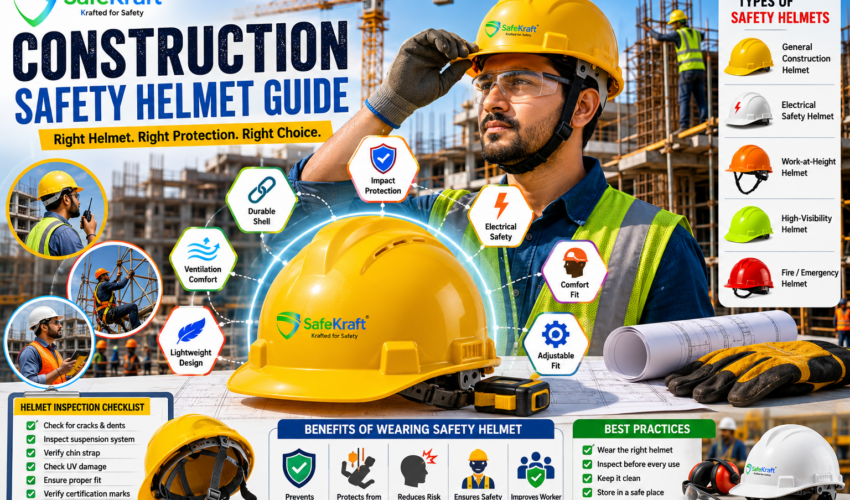
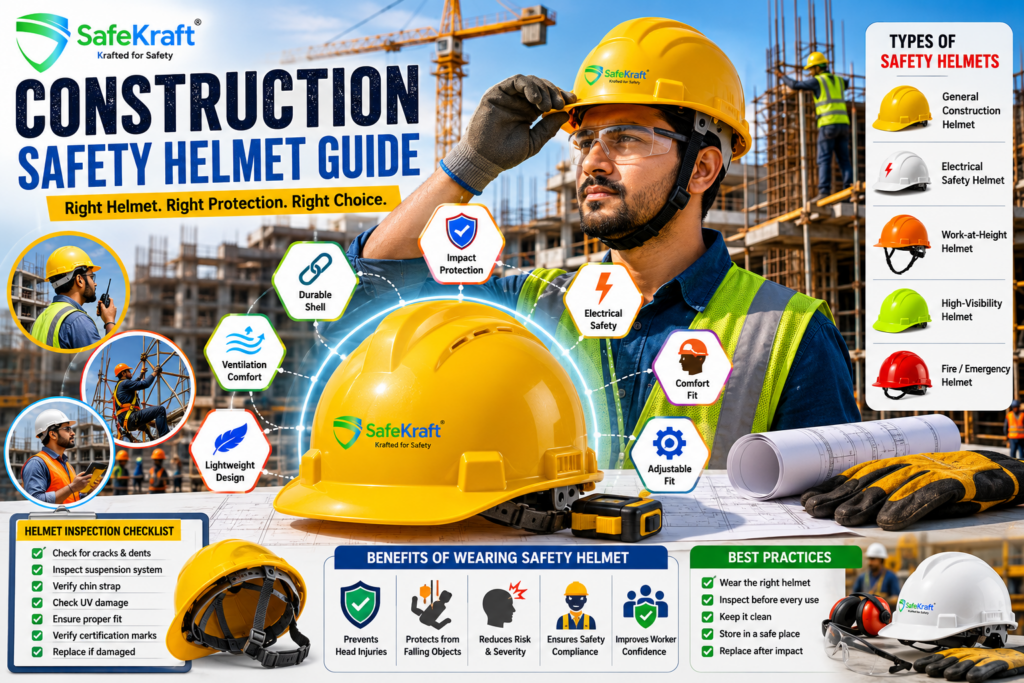
Construction sites are among the most hazardous work environments. Workers face risks from falling tools, overhead materials, moving equipment, slips, trips, and work-at-height activities. Among all Personal Protective Equipment (PPE), the safety helmet is one of the most critical items for protecting workers from serious head injuries.
A quality construction safety helmet can significantly reduce the risk of injury and improve workplace safety compliance. However, choosing the right helmet requires understanding its features, classifications, maintenance requirements, and proper usage.
This Construction Safety Helmet Guide explains everything construction professionals need to know about selecting, inspecting, and maintaining safety helmets.
Why Safety Helmets Are Essential on Construction Sites
Head injuries can occur unexpectedly and often have severe consequences.
Construction safety helmets help protect workers from:
- Falling objects
- Flying debris
- Accidental impacts
- Electrical hazards
- Head bumps against structures
- Work-at-height risks
A properly fitted helmet can absorb impact energy and reduce injury severity.
Common Hazards on Construction Sites
Construction workers encounter numerous hazards daily, including:
Falling Materials
Tools, bricks, steel components, and construction materials can fall from elevated work areas.
Moving Machinery
Excavators, cranes, forklifts, and other equipment increase impact risks.
Electrical Exposure
Workers operating near power lines or electrical installations require additional protection.
Work at Height
Scaffolding, ladders, and elevated platforms create risks from falling objects and worker movement.
These hazards make head protection a mandatory requirement on most construction sites.
Types of Construction Safety Helmets
General Construction Helmets
These helmets are designed for protection against falling objects and impact hazards.
Common Uses
- Building construction
- Infrastructure projects
- Civil engineering work
- Industrial construction
Electrical Safety Helmets
Electrical safety helmets are manufactured using non-conductive materials.
Suitable For
- Electricians
- Utility workers
- Electrical maintenance teams
- Power distribution projects
These helmets help reduce electrical risk when working near energized equipment.
Work-at-Height Helmets
These helmets typically include:
- Chin straps
- Enhanced retention systems
- Improved side-impact protection
Applications
- Scaffolding work
- Rope access
- Tower construction
- Structural steel installation
The chin strap helps keep the helmet secure during movement and climbing.
High-Visibility Safety Helmets
High-visibility helmets improve worker visibility in busy construction environments.
Common Colors
- Yellow
- Orange
- Lime Green
These helmets help improve safety in high-traffic work areas.
Safety Helmet Components
Understanding helmet components helps workers inspect equipment properly.
Outer Shell
The shell protects against impact and penetration hazards.
Functions
- Impact absorption
- Protection from falling objects
- Weather resistance
Suspension System
The suspension creates space between the worker’s head and the shell.
Benefits
- Distributes impact forces
- Improves comfort
- Enhances protection
Chin Strap
Often used for work-at-height applications.
Advantages
- Prevents helmet displacement
- Improves helmet stability
- Enhances worker safety
Sweatband
Provides comfort during long work shifts and hot weather conditions.
Construction Safety Helmet Color Codes
Many construction companies use color coding to identify personnel.
White Helmet
Typically worn by:
- Site Engineers
- Project Managers
- Supervisors
- Inspectors
Yellow Helmet
Commonly assigned to:
- Construction Workers
- Laborers
- Equipment Operators
Blue Helmet
Typically worn by:
- Electricians
- Skilled Technicians
- Maintenance Personnel
Green Helmet
Often used by:
- Safety Officers
- HSE Managers
Red Helmet
Usually designated for:
- Emergency Response Teams
- Fire Safety Personnel
Color assignments may vary by organization.
How to Choose the Right Construction Safety Helmet
Consider Workplace Hazards
Evaluate exposure to:
- Falling objects
- Electrical hazards
- Work-at-height risks
- Environmental conditions
Check Safety Certifications
Choose helmets that comply with recognized safety standards and project requirements.
Ensure Proper Fit
A helmet should:
- Fit securely
- Remain stable during movement
- Provide comfort throughout the workday
Improper fit can reduce protective performance.
Verify Compatibility
Construction helmets should accommodate:
- Face shields
- Ear defenders
- Safety goggles
- Communication systems
Construction Safety Helmet Inspection Checklist
Before each use, inspect for:
✔ Cracks
✔ Dents
✔ Deep scratches
✔ UV damage
✔ Suspension wear
✔ Broken chin straps
✔ Missing components
✔ Certification markings
Any damaged helmet should be removed from service immediately.
When Should a Construction Helmet Be Replaced?
Replace a helmet if:
- It has sustained an impact
- Cracks are visible
- The suspension is damaged
- UV degradation is present
- The manufacturer’s recommended service life has expired
Using damaged helmets can compromise worker safety.
Common Mistakes Construction Workers Make
Avoid these unsafe practices:
Wearing Damaged Helmets
Even small cracks can weaken protection.
Storing Helmets in Direct Sunlight
UV exposure accelerates material degradation.
Modifying Helmets
Drilling holes or applying unauthorized modifications can reduce safety performance.
Ignoring Inspection Procedures
Regular inspections help identify hidden damage before accidents occur.
Benefits of High-Quality Construction Safety Helmets
Quality helmets help organizations:
- Reduce workplace injuries
- Improve PPE compliance
- Increase worker confidence
- Support safety audits
- Enhance overall site safety
A reliable helmet is an essential investment in workforce protection.
Why SafeKraft Construction Safety Helmets Support Workplace Safety
SafeKraft India Pvt Ltd provides workplace safety solutions designed for demanding industrial and construction environments.
SafeKraft safety helmets help support:
- Construction projects
- Manufacturing facilities
- Infrastructure development
- Warehousing operations
- Industrial maintenance
By combining durability, comfort, and protection, SafeKraft helps organizations build stronger safety cultures.
Conclusion
A construction safety helmet is one of the most important protective devices used on any job site. Selecting the correct helmet, conducting regular inspections, and replacing damaged equipment are essential steps in preventing workplace injuries.
By following this Construction Safety Helmet Guide, employers and workers can improve head protection, strengthen safety compliance, and create safer construction environments for everyone involved.
Frequently Asked Questions (FAQs)
1. Why are safety helmets mandatory on construction sites?
They protect workers from falling objects, impacts, and other head injury hazards.
2. How often should construction helmets be inspected?
Helmets should be inspected before every use and during regular safety audits.
3. What is the purpose of a helmet suspension system?
The suspension system absorbs and distributes impact forces to help protect the wearer.
4. When should a safety helmet be replaced?
Replace it after a significant impact, visible damage, or when it reaches its recommended service life.
5. Are chin straps necessary?
Chin straps are especially important for work-at-height applications to keep the helmet secure.
6. What color helmet do safety officers wear?
Many organizations use green helmets for safety officers, although color codes may vary.
7. Why choose a certified construction safety helmet?
Certified helmets provide assurance that they meet recognized safety performance requirements.