
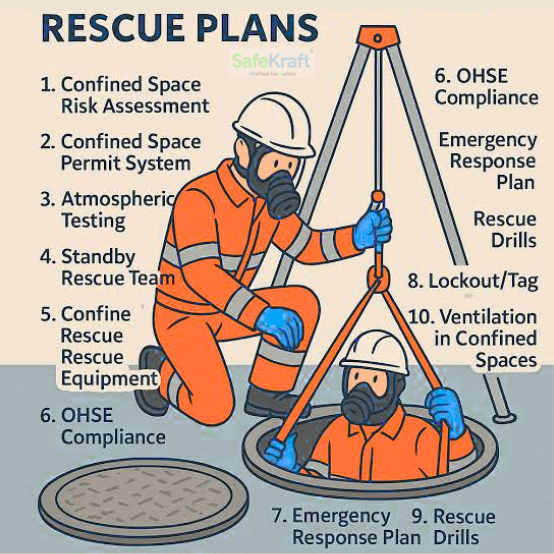
Confined spaces can present serious workplace hazards because workers may have limited access, restricted movement, poor ventilation, hazardous atmospheres, and difficult rescue conditions. Therefore, organizations that carry out confined space work need proper planning, trained personnel, suitable confined space safety equipment, and an effective rescue procedure.
A confined space entry kit brings together important equipment that can support controlled entry, worker protection, retrieval, and emergency response. The right equipment should always be selected according to the specific confined space, hazards, entry procedure, and applicable safety requirements.
SafeKraft offers the SKCSK Confined Space Entry Kit, shown in the supplied catalogue with a tripod-based entry and retrieval arrangement.
What Is a Confined Space Entry Kit?
A confined space entry kit is a combination of equipment used to support workers entering and working in confined spaces.
Depending on the application, a confined space system may include:
- Tripod systems
- Retrieval or lifting equipment
- Full body harnesses
- Self-retracting or retrieval devices
- Connecting equipment
- Lifelines
- Lanyards
- Carrying or storage bags
The equipment should work together as part of a properly planned confined space entry and rescue system.
Why Is Confined Space Safety Important?
Confined spaces can create hazards that are not always immediately visible. Depending on the workplace, workers may encounter:
- Oxygen deficiency
- Toxic gases
- Flammable atmospheres
- Limited entry and exit
- Falling hazards
- Engulfment hazards
- Mechanical hazards
- Restricted movement
- Difficult emergency access
Because of these risks, confined space work should be planned before workers enter the space.
A rescue plan is equally important. Emergency arrangements should not depend solely on emergency services arriving after an incident. The employer should establish appropriate procedures, equipment, trained personnel, and communication methods for the specific workplace.
SafeKraft Confined Space Entry Kit – SKCSK
The SafeKraft catalogue image identifies the kit as the SafeKraft Confined Space Entry Kit – SKCSK.
The pictured system shows workers using a tripod arrangement together with retrieval and personal fall-protection equipment.
The components shown in the catalogue include:
- SKT
- SKW
- SKRBGS
- SKFBH-56
- SKTL
- SKKB
The exact application and technical specifications of each component should be confirmed from the manufacturer’s current product documentation before use.
Tripod System for Confined Space Entry
The SKT shown in the catalogue is the tripod component of the system.
A tripod can provide an overhead support point for suitable confined-space entry and retrieval equipment. Its arrangement can be particularly useful where workers need to enter spaces such as tanks, chambers, pits, shafts, or other areas with restricted access.
However, the tripod must be installed on a suitable surface and used according to its manufacturer’s instructions. Stability, anchorage, setup, load requirements, and compatibility with the retrieval equipment should be considered before use.
Retrieval and Winch Equipment
The catalogue also shows SKW and SKRBGS as part of the SKCSK configuration.
Retrieval equipment can support controlled raising or lowering of a worker when used as part of an appropriate system.
A retrieval system should be selected according to:
- Entry depth
- Rescue requirements
- Equipment capacity
- Anchorage arrangement
- Worker weight and equipment
- Vertical or other access configuration
- Manufacturer’s instructions
Workers should never improvise a rescue system using equipment that has not been designed or approved for that purpose.
Full Body Harness for Confined Space Work
The SKFBH-56 full body harness is shown as one of the components in the SafeKraft confined space entry kit.
A suitable harness can provide the connection point between the worker and compatible fall-protection or retrieval equipment.
Correct fitting is essential. Before entering a confined space, the harness should be checked for:
- Damaged webbing
- Broken or damaged stitching
- Damaged buckles
- Damaged attachment points
- Cuts or abrasion
- Contamination
- Signs of excessive wear
Workers should also be trained in the correct use and adjustment of the harness.
Lanyard and Connecting Equipment
The image also identifies SKTL as part of the kit.
Connecting equipment should only be used for its intended application. Compatibility between the harness, connecting device, retrieval system, and other components is essential.
A confined-space system should be designed as a complete system rather than selecting individual components without considering how they work together.
Carrying and Storage Bag
The catalogue also shows SKKB, which is used as the carrying/storage bag shown with the kit.
Proper storage can help keep equipment organized and protected between uses. However, storage does not replace inspection.
Equipment should be inspected before use and maintained according to the manufacturer’s recommendations.
How Does a Confined Space Entry System Work?
A typical confined-space entry arrangement may involve several stages.
1. Assess the Confined Space
Before entry, identify the space and assess the potential hazards.
2. Establish the Entry Procedure
Determine who is authorized to enter, what work will be performed, what equipment is required, and how communication will be maintained.
3. Prepare the Equipment
Inspect the tripod, retrieval equipment, harness, connecting equipment, and other components before use.
4. Set Up the Tripod
Position the tripod correctly above the entry point and ensure that it is stable and suitable for the application.
5. Connect the Retrieval System
Connect the appropriate retrieval equipment according to the manufacturer’s instructions.
6. Fit the Worker With the Harness
The worker should wear and adjust the full body harness correctly before entering the confined space.
7. Maintain Communication
A suitable communication method should be established between the entrant and the personnel responsible for monitoring and rescue.
8. Follow the Rescue Plan
If an emergency occurs, trained personnel should follow the established rescue procedure using the appropriate equipment.
Confined Space Entry vs Confined Space Rescue
It is important to understand that entry equipment and rescue equipment are related but not necessarily identical.
Confined space entry involves safely allowing an authorized worker to enter and perform a task.
Confined space rescue involves removing or assisting a worker who is unable to exit safely because of an emergency.
A good confined-space safety program should consider both activities before work begins.
Why Is a Rescue Plan Necessary?
An emergency can develop quickly inside a confined space. A worker may become incapacitated, trapped, injured, or unable to exit without assistance.
A rescue plan should consider:
- Who will perform the rescue
- What equipment will be used
- How the entrant will be retrieved
- How communication will be maintained
- How emergency services will be contacted
- Whether the rescue team is trained
- Whether the equipment is suitable for the space
- How the equipment will be accessed during an emergency
A written plan alone is not enough. Workers responsible for rescue should understand the procedure and receive appropriate training.
Confined Space PPE and Safety Equipment
The equipment required for confined space work depends on the hazards identified during the risk assessment.
Depending on the workplace, PPE and safety equipment may include:
- Full body harness
- Retrieval equipment
- Tripod
- Lifeline
- Respiratory protection
- Safety helmet
- Safety gloves
- Safety footwear
- Eye protection
- Protective clothing
- Gas detection equipment
- Communication equipment
It is important to remember that PPE is only one part of confined-space safety. Engineering controls, atmospheric monitoring, isolation procedures, ventilation, safe access, trained personnel, and emergency planning may also be necessary.
How to Choose a Confined Space Entry Kit
Before purchasing a confined space rescue kit, consider the following:
Understand the Space
Identify the size, depth, entry point, access limitations, and internal configuration.
Identify the Hazards
Assess atmospheric, mechanical, physical, engulfment, fall, and other hazards associated with the space.
Determine the Rescue Method
Decide how an incapacitated worker could be safely removed from the space.
Check Equipment Compatibility
Make sure the tripod, harness, retrieval equipment, connectors, and other components are compatible.
Consider Worker Training
Equipment should be used by personnel who have received appropriate training for the application.
Inspect Before Use
Check equipment for damage, wear, contamination, deformation, and other defects before entry.
Maintaining Confined Space Safety Equipment
Regular inspection and proper maintenance are essential for confined space equipment.
Inspect equipment for:
- Cuts
- Fraying
- Abrasion
- Broken stitching
- Damaged connectors
- Deformed metal components
- Damaged harness webbing
- Corrosion
- Contamination
- Missing or damaged components
Any equipment that appears damaged or has been involved in an incident should be removed from service and evaluated according to the manufacturer’s procedures.
Workplace Safety Equipment From SafeKraft
Confined-space protection is one part of a broader workplace safety program. Companies may also require appropriate protection for the head, eyes, hands, feet, hearing, respiratory system, and body.
Businesses looking for a broader range of workplace safety equipment and protective gear can explore SafeKraft’s safety equipment range.
Workplace Safety Equipment & Protective Gear – SafeKraft
This is the most relevant internal link for this article because it connects the confined-space topic with SafeKraft’s broader range of workplace PPE and protective equipment.
Frequently Asked Questions
What is a confined space entry kit?
A confined space entry kit is a combination of equipment designed to support controlled entry, worker protection, retrieval, and rescue operations in confined-space environments.
What is the SafeKraft SKCSK?
The SKCSK is identified in the supplied SafeKraft catalogue as a Confined Space Entry Kit.
What equipment is shown in the SKCSK?
The catalogue image shows SKT, SKW, SKRBGS, SKFBH-56, SKTL, and SKKB as components of the kit.
Why is a tripod used in confined space entry?
A tripod can provide an overhead support structure for compatible retrieval and entry equipment, particularly where access is vertical.
Is a full body harness necessary for confined space work?
The required equipment depends on the risk assessment and work system. Where a harness is part of the planned entry or retrieval system, it must be correctly fitted and compatible with the other components.
Why is rescue planning important?
A worker inside a confined space may not be able to exit independently during an emergency. A planned rescue procedure helps organizations prepare appropriate equipment, personnel, communication, and emergency actions.
Should confined space equipment be inspected?
Yes. Equipment should be inspected before use and maintained according to the manufacturer’s instructions and applicable requirements.
Can anyone perform a confined space rescue?
No. Rescue should be carried out by appropriately trained and competent personnel using equipment suitable for the specific rescue situation.
Conclusion
A confined space entry kit can provide important equipment for organizations carrying out work in restricted or hazardous spaces. The SafeKraft SKCSK Confined Space Entry Kit shown in the catalogue combines a tripod, retrieval-related equipment, full body harness, connecting equipment, and storage components.
However, equipment alone does not make confined-space work safe. A complete approach should include hazard assessment, appropriate entry procedures, atmospheric monitoring where required, trained personnel, suitable PPE, equipment inspection, communication, and a practical emergency rescue plan.
For organizations looking for additional confined space safety equipment, fall protection equipment, and workplace PPE, explore: