
Safety shoes are an essential part of personal protective equipment (PPE) in industrial workplaces. Whether you work in construction, manufacturing, warehousing, logistics, electrical maintenance, or oil and gas industries, choosing the right safety footwear can significantly improve protection, comfort, and productivity.
Two of the most popular options are Composite Toe Safety Shoes and Steel Toe Safety Shoes. While both provide toe protection against impact and compression hazards, they differ in material, weight, comfort, and workplace suitability.
This guide explains the key differences, advantages, and best applications of composite toe and steel toe safety shoes to help you make an informed decision.
What Are Steel Toe Safety Shoes?
Steel toe safety shoes feature a protective steel cap inside the toe area designed to protect workers from falling objects, crushing injuries, and heavy impacts.
Steel toe footwear has been the industry standard for decades due to its exceptional strength and durability.
Advantages of Steel Toe Safety Shoes
- Maximum impact and compression protection
- Highly durable for demanding work environments
- Cost-effective compared to composite toe footwear
- Suitable for heavy industrial applications
- Long-lasting performance under harsh conditions
Best Uses for Steel Toe Safety Shoes
- Construction sites
- Heavy manufacturing plants
- Mining operations
- Warehouses handling heavy materials
- Metal fabrication industries
- Oil and gas facilities
What Are Composite Toe Safety Shoes?
Composite toe safety shoes use non-metallic materials such as fiberglass, carbon fiber, Kevlar, or plastic composites to provide toe protection.
They are engineered to meet safety standards while offering a lighter and more comfortable alternative to steel toe footwear.
Advantages of Composite Toe Safety Shoes
- Lightweight construction reduces foot fatigue
- Metal-free design for security-sensitive workplaces
- Better insulation against heat and cold
- Comfortable for long working hours
- Does not conduct electricity
- Suitable for electrical hazard environments
Best Uses for Composite Toe Safety Shoes
- Electrical work
- Airport and security facilities
- Logistics and transportation
- Light manufacturing
- Indoor industrial operations
- Workers who spend long hours on their feet
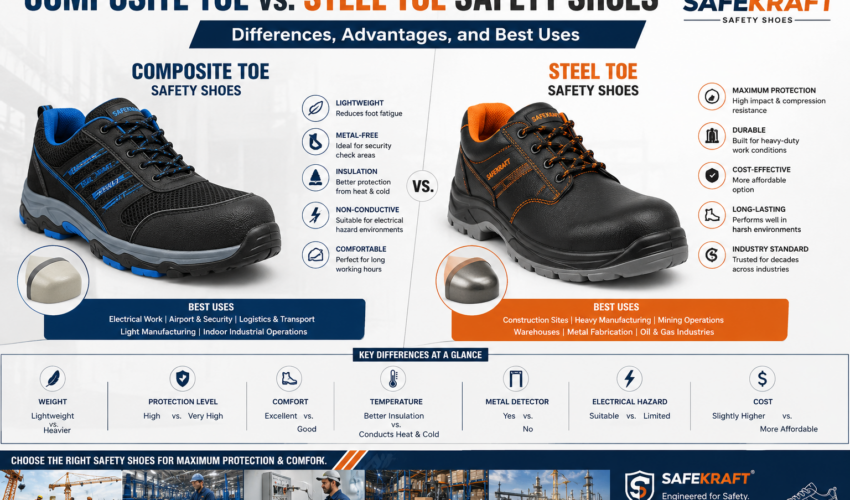
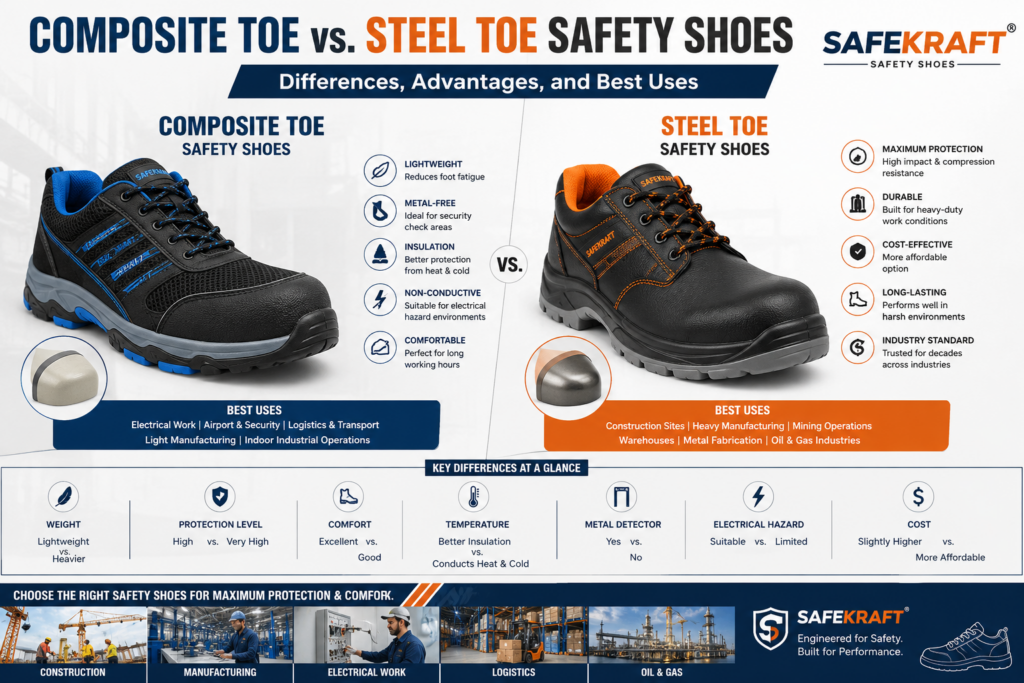
Composite Toe vs. Steel Toe Safety Shoes: Key Differences
| Feature | Composite Toe Safety Shoes | Steel Toe Safety Shoes |
|---|---|---|
| Weight | Lightweight | Heavier |
| Protection Level | High | Very High |
| Comfort | Excellent | Good |
| Temperature Resistance | Better insulation | Conducts heat and cold |
| Metal Detector Friendly | Yes | No |
| Electrical Hazard Applications | Suitable | Limited |
| Durability | High | Very High |
| Cost | Slightly Higher | More Affordable |
Which Safety Shoe Offers Better Protection?
Both composite toe and steel toe safety shoes comply with international safety standards when certified correctly.
Steel toe shoes generally provide superior impact resistance for extremely demanding environments. However, composite toe shoes offer excellent protection while improving comfort, flexibility, and insulation.
The best choice depends on your specific workplace hazards and daily work conditions.
How to Choose the Right Safety Shoes
Consider the following factors before purchasing safety footwear:
Choose Steel Toe Safety Shoes If:
- You work in heavy industrial environments.
- Heavy objects are frequently handled.
- Maximum impact resistance is required.
- Durability is the top priority.
Choose Composite Toe Safety Shoes If:
- You walk long distances during shifts.
- Comfort is important for daily use.
- You work around electrical hazards.
- Metal-free footwear is required.
Why Quality Safety Footwear Matters
Investing in certified safety shoes helps reduce workplace injuries, improve employee comfort, and ensure compliance with occupational safety regulations.
Modern safety footwear combines protection, comfort, slip resistance, durability, and ergonomic design to support workers across industries.
Conclusion
When comparing composite toe vs. steel toe safety shoes, there is no universal winner. Steel toe footwear provides maximum durability and protection for heavy-duty industries, while composite toe footwear offers lightweight comfort, insulation, and flexibility for modern workplaces.
The right safety shoe depends on your job role, workplace risks, and comfort requirements. Always choose certified safety footwear that meets industry safety standards and provides reliable protection throughout the workday.
About SafeKraft
SafeKraft manufactures high-quality industrial safety shoes designed for protection, durability, and all-day comfort. Our range includes steel toe safety shoes, composite toe safety shoes, electrical hazard footwear, and industry-specific protective footwear solutions for workplaces across India.