
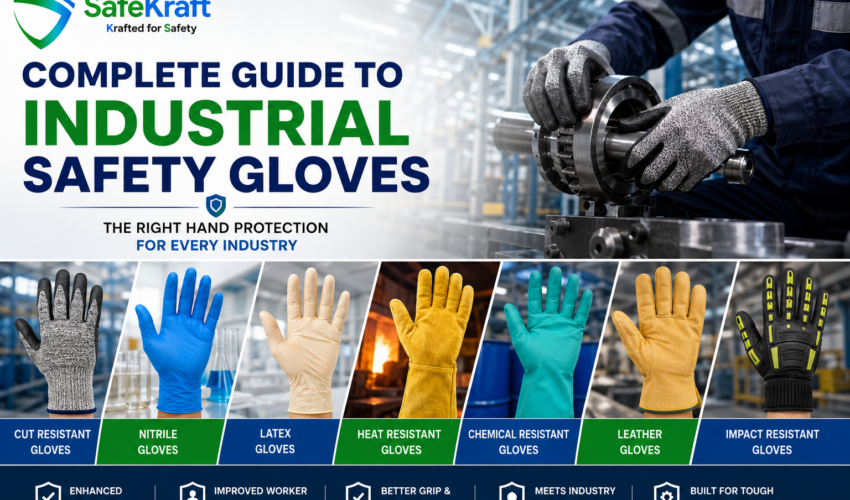
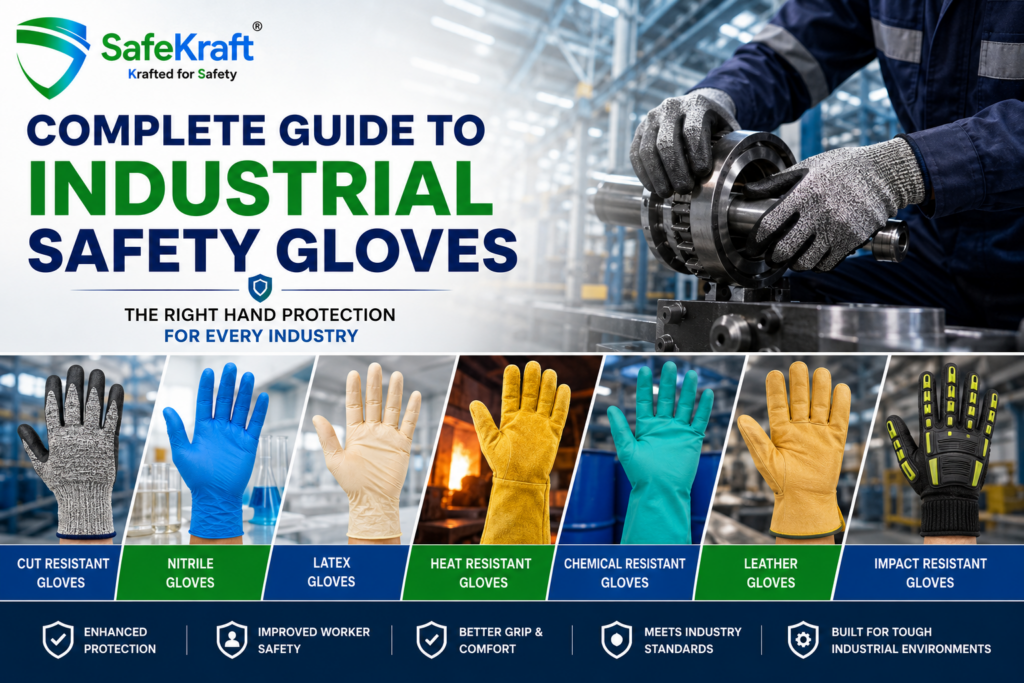
Hands are among the most frequently used and most vulnerable parts of the human body in industrial workplaces. From handling machinery and chemicals to working with sharp materials and extreme temperatures, workers face numerous hazards that can lead to serious hand injuries.
Industrial safety gloves serve as the first line of defense against these risks. Choosing the right gloves not only protects workers but also improves productivity, compliance, and workplace safety.
This complete guide explains the different types of industrial safety gloves, their applications, benefits, and how to select the best hand protection for your work environment.
Why Industrial Safety Gloves Are Important
According to workplace safety reports worldwide, hand injuries remain one of the most common occupational injuries.
Common workplace hand hazards include:
- Cuts and lacerations
- Abrasions
- Chemical exposure
- Burns
- Punctures
- Electrical hazards
- Impact injuries
Wearing appropriate safety gloves significantly reduces the risk of these injuries.
What Are Industrial Safety Gloves?
Industrial safety gloves are Personal Protective Equipment (PPE) designed to protect workers’ hands from workplace hazards.
They are manufactured using specialized materials to provide protection against:
- Mechanical risks
- Chemical hazards
- Thermal hazards
- Electrical hazards
- Biological contaminants
Different tasks require different glove types, making proper selection essential.
Types of Industrial Safety Gloves
1. Cut-Resistant Gloves
Cut-resistant gloves protect workers from sharp objects and cutting hazards.
Common Applications
- Metal fabrication
- Glass handling
- Automotive manufacturing
- Sheet metal work
- Construction
Benefits
✔ Reduces cut injuries
✔ Improves worker confidence
✔ Enhances productivity
2. Nitrile Gloves
Nitrile gloves are made from synthetic rubber and offer excellent chemical resistance.
Suitable For
- Chemical handling
- Laboratories
- Automotive workshops
- Manufacturing facilities
Advantages
✔ Chemical resistant
✔ Puncture resistant
✔ Latex-free
3. Latex Gloves
Latex gloves provide flexibility and comfort for precision tasks.
Common Uses
- Healthcare
- Laboratories
- Pharmaceutical industries
Benefits
✔ Excellent dexterity
✔ Comfortable fit
✔ Good tactile sensitivity
4. Heat-Resistant Gloves
Heat-resistant gloves protect workers from high temperatures.
Applications
- Welding
- Foundries
- Furnace operations
- Glass manufacturing
Features
✔ Heat protection
✔ Thermal insulation
✔ Durable construction
5. Chemical-Resistant Gloves
These gloves protect against hazardous chemicals and corrosive substances.
Common Industries
- Chemical processing
- Laboratories
- Industrial cleaning
- Manufacturing
Protection Against
- Acids
- Solvents
- Oils
- Chemicals
6. Electrical Safety Gloves
Electrical gloves help protect workers from electrical shock hazards.
Suitable For
- Electricians
- Utility workers
- Maintenance technicians
Benefits
✔ Electrical insulation
✔ Enhanced worker protection
✔ Compliance support
7. Leather Safety Gloves
Leather gloves provide protection against abrasion, sparks, and rough materials.
Common Uses
- Construction
- Welding
- Material handling
Advantages
✔ Durable
✔ Comfortable
✔ Long-lasting
8. Impact-Resistant Gloves
Impact gloves feature reinforced protection for knuckles and fingers.
Applications
- Oil and gas industry
- Mining
- Heavy equipment operation
Benefits
✔ Impact protection
✔ Improved grip
✔ Enhanced durability
Key Features to Consider When Choosing Safety Gloves
Hazard Assessment
Identify workplace risks before selecting gloves.
Consider exposure to:
- Sharp objects
- Chemicals
- Heat
- Electricity
- Abrasion
Material Selection
Choose glove materials based on application requirements.
Examples:
- Nitrile for chemical resistance
- Kevlar® for cut and heat protection
- Leather for abrasion resistance
Comfort and Fit
Poorly fitting gloves may:
- Reduce productivity
- Increase worker fatigue
- Affect safety performance
Comfortable gloves encourage consistent PPE use.
Grip Performance
Workers handling tools or machinery require gloves with reliable grip characteristics.
Durability
Industrial gloves should withstand demanding work conditions while maintaining protection.
Industries That Require Industrial Safety Gloves
Manufacturing
Protection from machinery, sharp edges, and industrial materials.
Construction
Protection from cuts, abrasions, and handling hazards.
Automotive
Protection from oils, chemicals, and mechanical risks.
Warehousing and Logistics
Protection during lifting, loading, and material handling.
Chemical Processing
Protection from hazardous substances.
Electrical Maintenance
Protection from electrical hazards.
Benefits of Industrial Safety Gloves
Reduce Workplace Injuries
Proper hand protection lowers the risk of accidents.
Improve Productivity
Workers can perform tasks confidently and efficiently.
Enhance Compliance
Supports workplace PPE requirements and safety regulations.
Increase Worker Confidence
Employees feel safer when properly protected.
Lower Operational Costs
Reducing injuries helps minimize downtime and medical expenses.
Safety Glove Inspection Checklist
Before use, inspect gloves for:
✔ Tears
✔ Holes
✔ Cuts
✔ Punctures
✔ Chemical damage
✔ Excessive wear
Damaged gloves should be replaced immediately.
Safety Glove Maintenance Tips
To maximize glove lifespan:
✔ Clean according to manufacturer recommendations
✔ Store in a dry location
✔ Avoid direct sunlight
✔ Replace worn gloves promptly
✔ Conduct regular inspections
Proper maintenance helps ensure consistent protection.
Common Mistakes When Using Safety Gloves
Choosing the Wrong Glove Type
Not all gloves provide the same level of protection.
Wearing Damaged Gloves
Compromised gloves may fail during use.
Ignoring Inspections
Regular checks help identify hidden damage.
Poor Fit
Oversized or undersized gloves can reduce effectiveness.
Why Quality Industrial Safety Gloves Matter
High-quality gloves provide:
- Better protection
- Greater durability
- Improved comfort
- Enhanced worker compliance
Investing in reliable hand protection helps create a safer and more productive workplace.
SafeKraft Industrial Safety Gloves
SafeKraft India Pvt Ltd offers a comprehensive range of industrial safety gloves designed to support workplace safety across multiple industries.
Applications include:
- Manufacturing
- Construction
- Engineering
- Automotive
- Warehousing
- Industrial maintenance
SafeKraft safety gloves are designed to help organizations improve hand protection while maintaining comfort and productivity.
Conclusion
Industrial safety gloves are an essential part of workplace safety programs. By selecting the right glove type for specific hazards, employers can significantly reduce hand injuries and improve operational efficiency.
Whether protecting against cuts, chemicals, heat, impacts, or electrical hazards, proper hand protection helps create safer workplaces and supports long-term business success.
Frequently Asked Questions (FAQs)
1. Why are industrial safety gloves important?
They protect workers from cuts, chemicals, heat, abrasions, and other workplace hazards.
2. Which gloves are best for chemical handling?
Chemical-resistant gloves such as nitrile gloves are commonly used for chemical protection.
3. What are cut-resistant gloves used for?
They help protect workers from sharp objects and cutting hazards.
4. How often should safety gloves be inspected?
Gloves should be inspected before each use and replaced if damaged.
5. Are nitrile gloves better than latex gloves?
Nitrile gloves generally offer better chemical resistance and are latex-free.
6. What industries use industrial safety gloves?
Manufacturing, construction, automotive, chemical processing, warehousing, and maintenance industries commonly use safety gloves.
7. Why should workers wear properly fitted gloves?
Properly fitted gloves improve comfort, dexterity, productivity, and safety.