
Personal Protective Equipment (PPE) is one of the most important components of workplace safety. From safety shoes and helmets to gloves, safety goggles, and fall protection equipment, PPE serves as the last line of defense against workplace hazards.
However, simply providing PPE is not enough. Many workplace injuries occur because workers wear PPE incorrectly, use damaged equipment, or choose the wrong protective gear for the job. Understanding common PPE mistakes and how to avoid them can significantly improve workplace safety and reduce accident rates.
What is PPE?
Personal Protective Equipment (PPE) refers to specialized clothing and equipment designed to protect workers from hazards that can cause injuries or illnesses.
Common PPE includes:
- Safety Shoes
- Safety Helmets
- Safety Gloves
- Safety Goggles
- Face Shields
- Respirators
- Reflective Safety Jackets
- Ear Protection
- Fall Protection Equipment
Proper use of PPE helps protect workers from physical, chemical, electrical, biological, and environmental hazards.
Common PPE Mistakes and How to Avoid Them
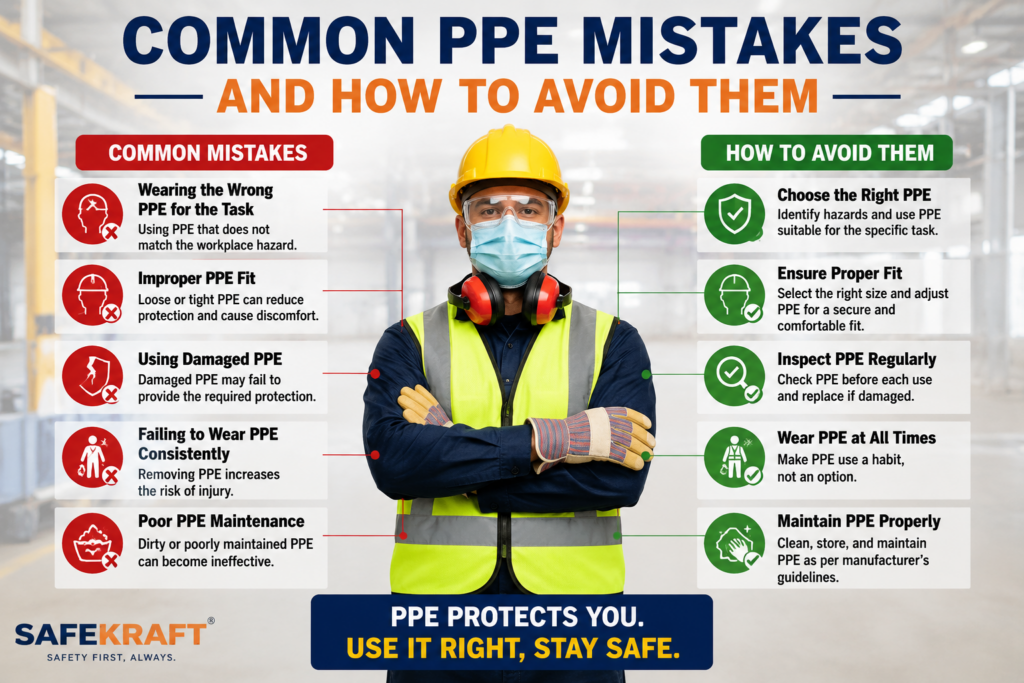
1. Wearing the Wrong PPE for the Task
One of the most common PPE mistakes is using equipment that does not match the workplace hazard.
For example, general-purpose gloves may not provide protection against chemicals, while standard safety shoes may not be suitable for electrical work.
How to Avoid It:
- Conduct workplace hazard assessments.
- Match PPE to specific job requirements.
- Follow safety guidelines and industry standards.
- Consult safety professionals when selecting PPE.
2. Improper PPE Fit
PPE that is too loose or too tight can reduce protection and create additional safety risks.
Examples include:
- Loose safety helmets slipping during work.
- Oversized gloves reducing grip and control.
- Poorly fitted respirators allowing contaminants to enter.
How to Avoid It:
- Provide PPE in multiple sizes.
- Conduct fit testing where required.
- Train workers on proper fitting procedures.
3. Using Damaged PPE
Many workers continue using damaged equipment without realizing that its protective capabilities may be compromised.
Common examples include:
- Cracked safety helmets
- Torn gloves
- Scratched safety goggles
- Worn-out safety shoes
How to Avoid It:
- Inspect PPE before every use.
- Replace damaged equipment immediately.
- Maintain an equipment inspection schedule.
4. Failing to Wear PPE Consistently
Some workers remove PPE because of discomfort, heat, or convenience, especially during short tasks.
Unfortunately, accidents can occur within seconds.
How to Avoid It:
- Enforce PPE policies consistently.
- Promote a strong safety culture.
- Provide comfortable, high-quality PPE.
- Conduct regular safety awareness programs.
5. Poor PPE Maintenance
Even high-quality PPE can become ineffective if not properly maintained.
Dirty respirators, damaged straps, and contaminated gloves can reduce protection levels.
How to Avoid It:
- Follow manufacturer maintenance guidelines.
- Clean reusable PPE regularly.
- Store equipment in designated locations.
- Keep maintenance records.
6. Ignoring PPE Expiration Dates
Certain PPE products have a limited service life.
Examples include:
- Respirator filters
- Safety harnesses
- Chemical protective equipment
Using expired PPE may expose workers to serious hazards.
How to Avoid It:
- Track expiration dates.
- Maintain PPE inventory records.
- Replace expired products promptly.
7. Lack of PPE Training
Providing PPE without proper training is a major workplace safety mistake.
Workers should understand:
- When PPE is required
- How to wear it correctly
- Equipment limitations
- Inspection procedures
- Maintenance requirements
How to Avoid It:
- Conduct regular PPE training sessions.
- Include PPE education during employee onboarding.
- Provide refresher training annually.
8. Not Replacing Worn-Out Safety Shoes
Safety shoes are among the most commonly used PPE products. Over time, soles wear down and protective features may become less effective.
Signs of replacement include:
- Damaged toe caps
- Worn soles
- Reduced grip
- Visible cracks
How to Avoid It:
- Perform regular footwear inspections.
- Replace safety shoes according to manufacturer recommendations.
9. Incorrect Use of Fall Protection Equipment
Workers operating at height sometimes fail to use harnesses correctly or connect lanyards to unsuitable anchor points.
This can lead to severe injuries or fatalities.
How to Avoid It:
- Inspect fall protection equipment regularly.
- Train workers on proper harness usage.
- Verify anchor points before beginning work.
10. Assuming PPE Eliminates All Risks
PPE reduces risk but does not eliminate workplace hazards completely.
Organizations should prioritize:
- Hazard elimination
- Engineering controls
- Administrative controls
- PPE as the final layer of protection
How to Avoid It:
- Implement a comprehensive workplace safety program.
- Combine PPE with other risk-control measures.
Benefits of Proper PPE Usage
When PPE is selected and used correctly, organizations can achieve:
- Reduced workplace injuries
- Improved employee confidence
- Better regulatory compliance
- Lower compensation costs
- Increased productivity
- Enhanced workplace safety culture
Conclusion
Understanding common PPE mistakes and how to avoid them is essential for maintaining a safe work environment. From selecting the right equipment to ensuring proper fit, maintenance, and training, every step plays a critical role in protecting workers from workplace hazards.
Employers should regularly review PPE practices, conduct inspections, and provide ongoing training to ensure that safety equipment performs effectively. A proactive approach to PPE management helps create safer workplaces, reduces accidents, and supports long-term business success.