
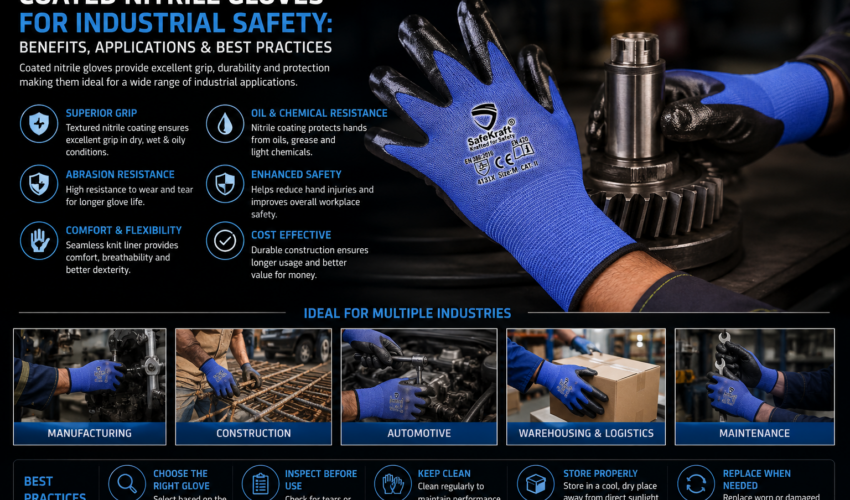
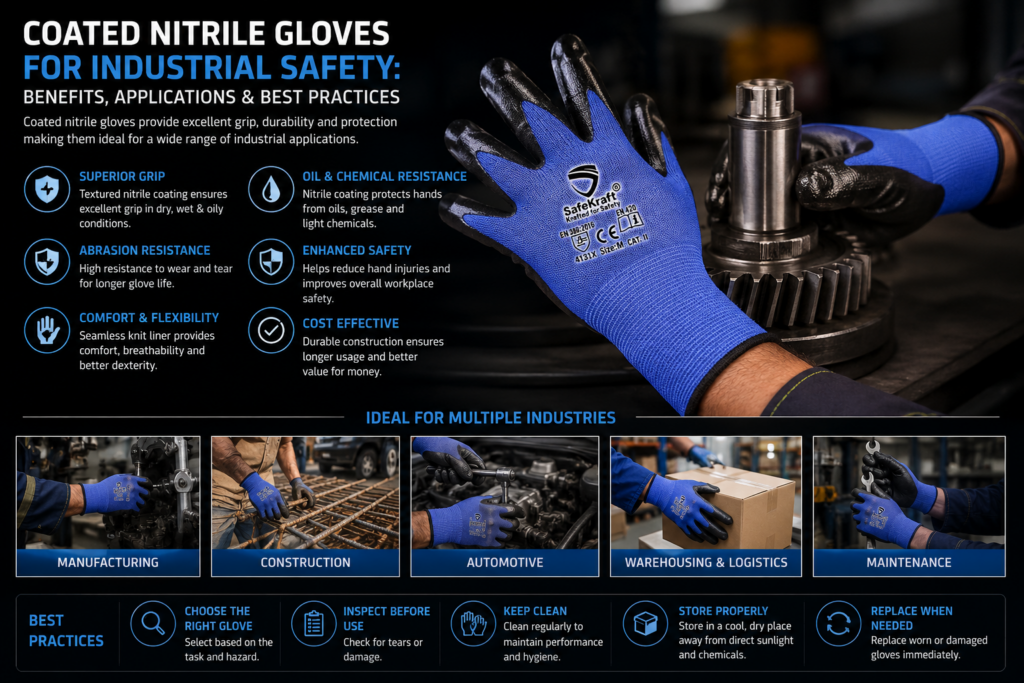
In industrial workplaces, hand injuries remain one of the most common occupational hazards. From handling sharp materials and machinery to working with oils, chemicals, and abrasive surfaces, workers face daily risks that require reliable hand protection. This is where coated nitrile gloves play a vital role.
Known for their excellent grip, durability, and resistance to oils and abrasions, coated nitrile gloves have become a preferred choice across manufacturing, construction, automotive, logistics, warehousing, and engineering industries.
This guide explores the benefits, applications, and best practices for using coated nitrile gloves to improve workplace safety and productivity.
What Are Coated Nitrile Gloves?
Coated nitrile gloves are protective work gloves featuring a fabric liner, typically made from polyester, nylon, or blended materials, coated with nitrile rubber on the palm or entire glove surface.
The nitrile coating provides enhanced grip, abrasion resistance, and protection against oils and light chemicals while maintaining flexibility and comfort for extended wear.
These gloves are designed to help workers perform precision tasks while safeguarding their hands from common workplace hazards.
Benefits of Coated Nitrile Gloves
1. Superior Grip in Dry and Oily Conditions
One of the biggest advantages of coated nitrile gloves is their excellent grip performance.
The textured nitrile coating helps workers securely handle:
- Tools and equipment
- Metal components
- Machine parts
- Construction materials
- Packaging products
This improved grip reduces the risk of slips and accidental drops.
2. Excellent Abrasion Resistance
Industrial tasks often involve rough surfaces that can quickly wear out standard gloves.
Coated nitrile gloves offer:
- High abrasion resistance
- Longer glove lifespan
- Better protection against wear and tear
This durability makes them a cost-effective solution for demanding work environments.
3. Enhanced Worker Comfort
Modern coated nitrile gloves are designed with ergonomic liners that provide:
- Flexibility
- Breathability
- Reduced hand fatigue
- Improved dexterity
Workers can comfortably wear them for extended shifts without compromising performance.
4. Resistance to Oils and Grease
Unlike some traditional glove materials, nitrile coatings provide excellent resistance to:
- Industrial oils
- Lubricants
- Grease
- Mild chemicals
This makes them ideal for automotive, maintenance, and manufacturing applications.
5. Improved Workplace Safety
By providing reliable hand protection, coated nitrile gloves help reduce workplace injuries caused by:
- Cuts and abrasions
- Surface friction
- Material handling hazards
- Tool-related accidents
Proper glove selection contributes to a safer and more productive work environment.
Common Industrial Applications of Coated Nitrile Gloves
Manufacturing Industry
Workers use coated nitrile gloves for:
- Assembly operations
- Machine handling
- Component inspection
- Material movement
The gloves provide grip and protection without sacrificing dexterity.
Construction Sites
Construction professionals benefit from nitrile-coated gloves when handling:
- Steel bars
- Concrete materials
- Tools and equipment
- Building supplies
The gloves help improve grip and reduce hand injuries.
Automotive Industry
Mechanics and technicians frequently use coated nitrile gloves because they offer protection against:
- Oils
- Grease
- Mechanical abrasion
- Dirty working environments
Warehousing and Logistics
Workers involved in packaging, sorting, and material handling require gloves that provide:
- Secure grip
- Comfort
- Durability
Coated nitrile gloves help improve efficiency during repetitive tasks.
Engineering and Maintenance
Maintenance teams often work with machinery and equipment where hand protection and precision handling are equally important.
Nitrile-coated gloves provide both safety and control.
Best Practices for Using Coated Nitrile Gloves
Choose the Right Glove for the Task
Different applications require different levels of protection.
Consider:
- Grip requirements
- Abrasion resistance
- Chemical exposure
- Comfort and fit
- Workplace hazards
Selecting the appropriate glove improves safety and performance.
Inspect Gloves Before Use
Before each shift:
- Check for tears
- Look for worn coating areas
- Inspect seams and stitching
- Replace damaged gloves immediately
Compromised gloves may not provide adequate protection.
Maintain Proper Fit
Gloves that are too loose can reduce grip and control, while gloves that are too tight may cause discomfort and fatigue.
Properly fitted gloves help maximize productivity and safety.
Keep Gloves Clean
Regular cleaning helps maintain glove performance and hygiene.
Follow manufacturer recommendations for cleaning and storage to extend glove lifespan.
Replace Gloves When Necessary
Even durable nitrile-coated gloves have a service life.
Replace gloves if you notice:
- Excessive wear
- Coating damage
- Reduced grip performance
- Structural deterioration
Using worn-out gloves may increase workplace risks.
How to Select High-Quality Coated Nitrile Gloves
When choosing industrial safety gloves, look for:
- High abrasion resistance ratings
- Comfortable liner construction
- Reliable grip technology
- Durable nitrile coating
- Industry-compliant safety standards
- Consistent quality from trusted manufacturers
Investing in quality hand protection can help reduce injuries and improve operational efficiency.
Conclusion
Coated nitrile gloves have become an essential component of industrial hand protection due to their durability, grip performance, comfort, and resistance to oils and abrasions. Whether used in manufacturing, construction, automotive, logistics, or maintenance environments, these gloves help workers perform their tasks safely and efficiently.
By selecting the right gloves, conducting regular inspections, and following best practices, businesses can enhance workplace safety while improving productivity and reducing injury-related downtime.
Protecting workers’ hands is not just a safety requirement—it’s an investment in operational excellence.
FAQs
1. What are coated nitrile gloves used for?
Coated nitrile gloves are used for industrial tasks that require grip, abrasion resistance, and protection from oils, grease, and mechanical hazards.
2. Are coated nitrile gloves oil resistant?
Yes, nitrile-coated gloves provide excellent resistance to oils, lubricants, and grease, making them suitable for automotive and manufacturing environments.
3. Which industries commonly use coated nitrile gloves?
Manufacturing, construction, automotive, warehousing, logistics, engineering, and maintenance industries commonly use coated nitrile gloves.
4. How long do coated nitrile gloves last?
Their lifespan depends on usage conditions, but they generally last longer than many standard work gloves due to their high abrasion resistance.
5. Can coated nitrile gloves improve workplace safety?
Yes, they help reduce hand injuries by providing better grip, durability, and protection during material handling and industrial operations.
6. How should coated nitrile gloves be stored?
Store gloves in a clean, dry place away from direct sunlight, excessive heat, and chemicals to maintain their performance and durability.
7. How do I choose the right coated nitrile gloves?
Consider factors such as grip requirements, abrasion resistance, comfort, fit, workplace hazards, and compliance with relevant safety standards.