
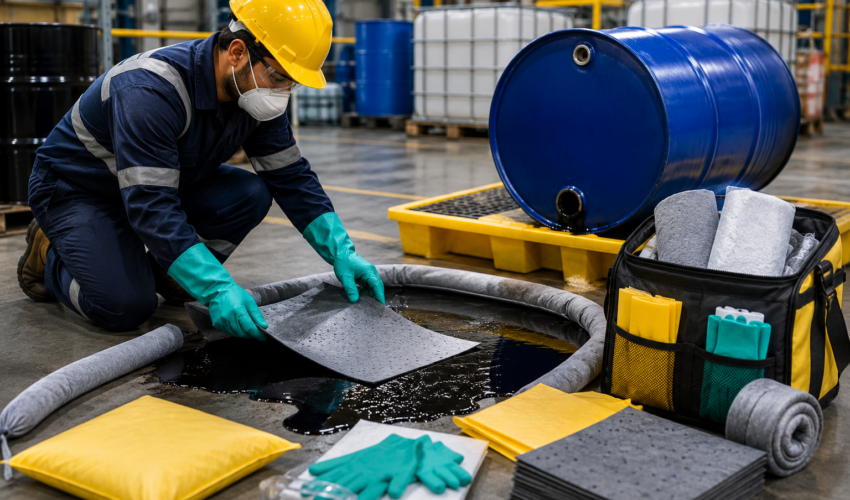
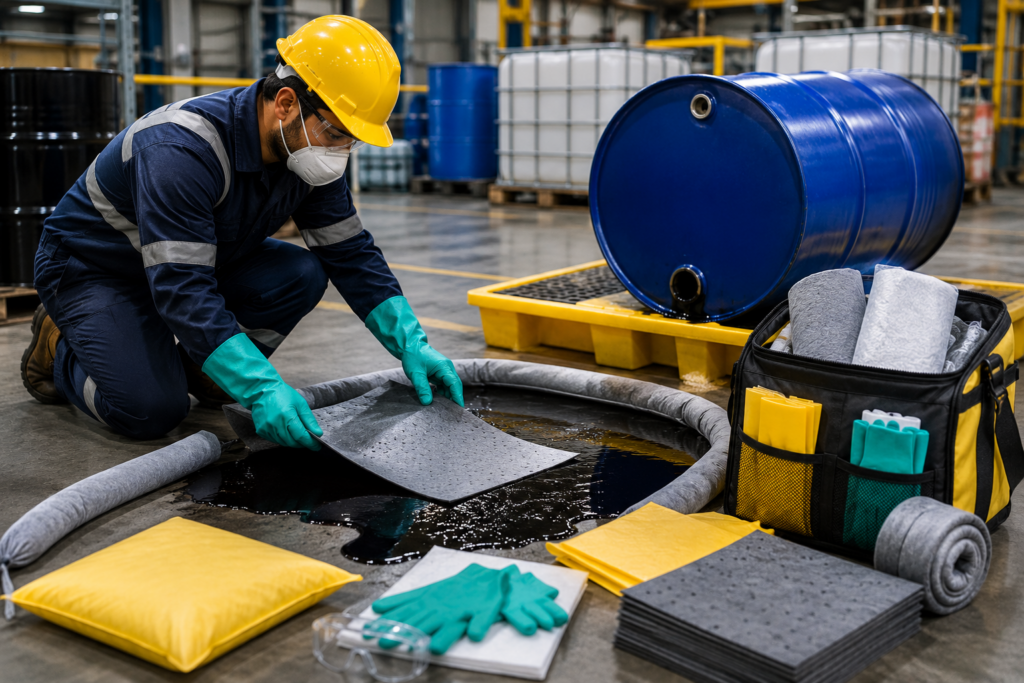
Industrial spills can occur unexpectedly in manufacturing facilities, warehouses, workshops, oil storage areas, chemical plants, and transportation operations. Even a small spill can create serious safety hazards, damage equipment, contaminate the environment, and result in costly cleanup operations.
This is why selecting the right spill containment solution is essential for every business that handles liquids, chemicals, fuels, lubricants, or hazardous materials. A well-planned spill response strategy helps organizations reduce risks, maintain compliance, and protect workers.
In this guide, we explain how to choose the right spill containment solution for your workplace and why proper spill management is a critical part of industrial safety.
What Is Spill Containment?
Spill containment refers to equipment and systems designed to control, absorb, and prevent the spread of liquids after a spill occurs.
The primary objectives are:
- Protect workers
- Prevent slips and falls
- Minimize environmental damage
- Protect machinery and assets
- Support regulatory compliance
- Reduce cleanup costs
An effective spill containment system ensures quick response and efficient spill management.
Why Spill Containment Is Important
Uncontrolled spills can cause:
Workplace Injuries
Oil, fuel, and chemical spills create slippery surfaces that increase the risk of slips, trips, and falls.
Environmental Contamination
Hazardous liquids can contaminate soil, drains, groundwater, and nearby ecosystems.
Equipment Damage
Spilled chemicals and oils can damage machinery, electrical systems, and infrastructure.
Regulatory Penalties
Improper spill management may result in compliance issues and financial penalties.
Proper containment helps prevent these problems before they escalate.
Factors to Consider When Choosing a Spill Containment Solution
1. Identify the Type of Liquid
The first step is understanding what type of liquid may be spilled.
Oil-Based Liquids
Examples:
- Lubricants
- Hydraulic oil
- Diesel
- Engine oil
- Fuel
Oil-specific absorbents are often the most effective solution.
Chemical Spills
Examples:
- Acids
- Solvents
- Industrial chemicals
- Cleaning agents
Chemical-resistant containment products are required.
General Industrial Liquids
Examples:
- Water
- Coolants
- Non-hazardous fluids
Universal absorbents may be suitable.
2. Assess Spill Volume
The size of a potential spill determines the type of containment equipment required.
Small Spills
Suitable solutions include:
- Absorbent pads
- Spill kits
- Absorbent socks
Medium Spills
May require:
- Larger spill kits
- Spill berms
- Absorbent rolls
Large Spills
Often require:
- Secondary containment systems
- Containment pallets
- Portable berms
- Emergency spill response equipment
Understanding potential spill volume helps ensure adequate preparedness.
3. Evaluate Workplace Hazards
Different industries face different spill risks.
Manufacturing Facilities
Common hazards:
- Machine oils
- Lubricants
- Coolants
Automotive Workshops
Frequent exposure to:
- Fuel
- Engine oil
- Hydraulic fluids
Chemical Plants
Require specialized chemical containment systems.
Warehouses
Often need drum spill containment and storage solutions.
A workplace risk assessment helps identify the most appropriate containment strategy.
4. Consider Storage Requirements
Many spills originate from improper storage practices.
Evaluate:
- Drum storage areas
- Chemical storage rooms
- Fuel storage zones
- Transfer stations
Secondary containment systems help prevent leaks from spreading.
5. Ensure Quick Accessibility
Spill response equipment should be readily available.
Best practices include:
- Strategic placement
- Clear identification
- Easy access
- Employee training
Quick response reduces spill impact and cleanup costs.
Common Spill Containment Solutions
Spill Kits
Spill kits provide a complete emergency response solution.
Typical contents include:
- Absorbent pads
- Absorbent socks
- Gloves
- Goggles
- Disposal bags
Spill kits are among the most versatile containment tools available.
Absorbent Pads
Absorbent pads quickly absorb liquids while helping keep work areas safe.
Benefits
- Easy to use
- Fast absorption
- Portable
- Suitable for routine maintenance
Absorbent Socks and Booms
These products help contain spills and prevent liquid spread.
Commonly used around:
- Machinery
- Storage areas
- Drums
- Equipment
Spill Containment Pallets
Designed to contain leaks from drums and containers.
Advantages
- Secondary containment
- Improved storage safety
- Regulatory compliance support
Spill Berms
Portable barriers used to contain larger spills.
Ideal for:
- Outdoor operations
- Fuel storage
- Equipment maintenance areas
Oil Spill Kits
Specifically designed for oil and hydrocarbon spills.
Common applications include:
- Manufacturing facilities
- Automotive workshops
- Fuel storage areas
- Power plants
Oil absorbents repel water while absorbing petroleum-based liquids.
Choosing the Right Spill Kit
When selecting a spill kit, consider:
Spill Type
- Oil Spill Kit
- Chemical Spill Kit
- Universal Spill Kit
Capacity
Choose a kit capable of handling expected spill volumes.
Mobility
Portable kits improve emergency response times.
Workplace Environment
Indoor and outdoor applications may require different containment solutions.
Best Practices for Spill Management
Train Employees
Workers should understand:
- Spill reporting procedures
- Emergency response actions
- Spill kit usage
- PPE requirements
Conduct Regular Inspections
Inspect:
- Spill kits
- Absorbent materials
- Storage areas
- Secondary containment systems
Maintain Emergency Readiness
Ensure containment equipment remains:
- Stocked
- Accessible
- Clearly marked
- Ready for use
Develop a Spill Response Plan
Every facility should have documented procedures for managing spills effectively.
Why Quality Spill Containment Solutions Matter
Investing in quality spill containment products helps organizations:
- Reduce workplace accidents
- Protect the environment
- Improve compliance
- Minimize downtime
- Lower cleanup costs
A proactive approach to spill management protects both people and assets.
SafeKraft Spill Containment Solutions
SafeKraft India Pvt Ltd provides industrial spill containment products designed to support workplace safety and environmental protection.
Solutions include:
- Oil Spill Kits
- Chemical Spill Kits
- Universal Spill Kits
- Absorbent Pads
- Absorbent Socks
- Spill Containment Products
These solutions help industries respond quickly and effectively to spill incidents.
Conclusion
Choosing the right spill containment solution is essential for maintaining a safe, compliant, and efficient workplace. By understanding spill types, workplace hazards, storage requirements, and response needs, organizations can select the most effective containment equipment for their operations.
Whether managing oil, chemical, or general industrial spills, having the right spill containment products readily available can significantly reduce risks and improve workplace safety.
Frequently Asked Questions (FAQs)
1. What is a spill containment solution?
A spill containment solution is equipment designed to control, absorb, and prevent the spread of spilled liquids.
2. Why is spill containment important?
It helps protect workers, equipment, and the environment while supporting regulatory compliance.
3. What types of spill kits are available?
Common options include oil spill kits, chemical spill kits, and universal spill kits.
4. How do I choose the right spill kit?
Consider spill type, spill volume, workplace hazards, and response requirements.
5. What are absorbent pads used for?
Absorbent pads are used to quickly absorb and contain spilled liquids.
6. Where should spill kits be located?
Spill kits should be placed near areas where spills are most likely to occur and remain easily accessible.
7. Why are spill containment pallets important?
They provide secondary containment for drums and containers, helping prevent leaks from spreading.