
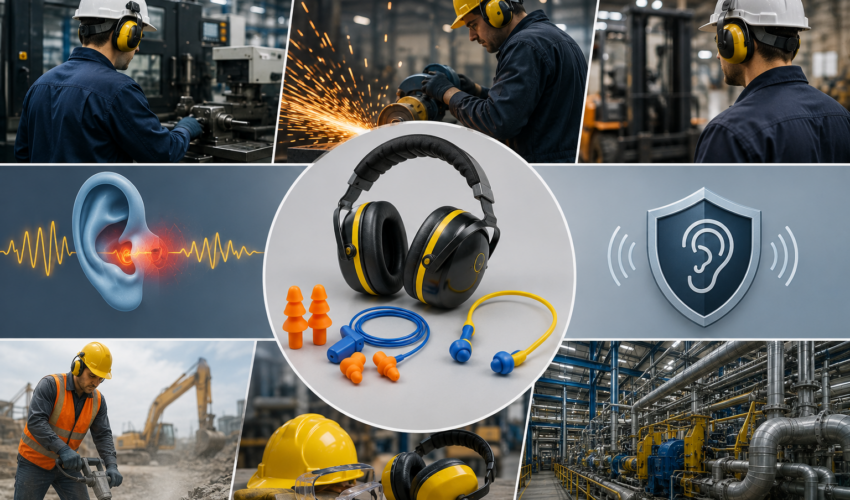
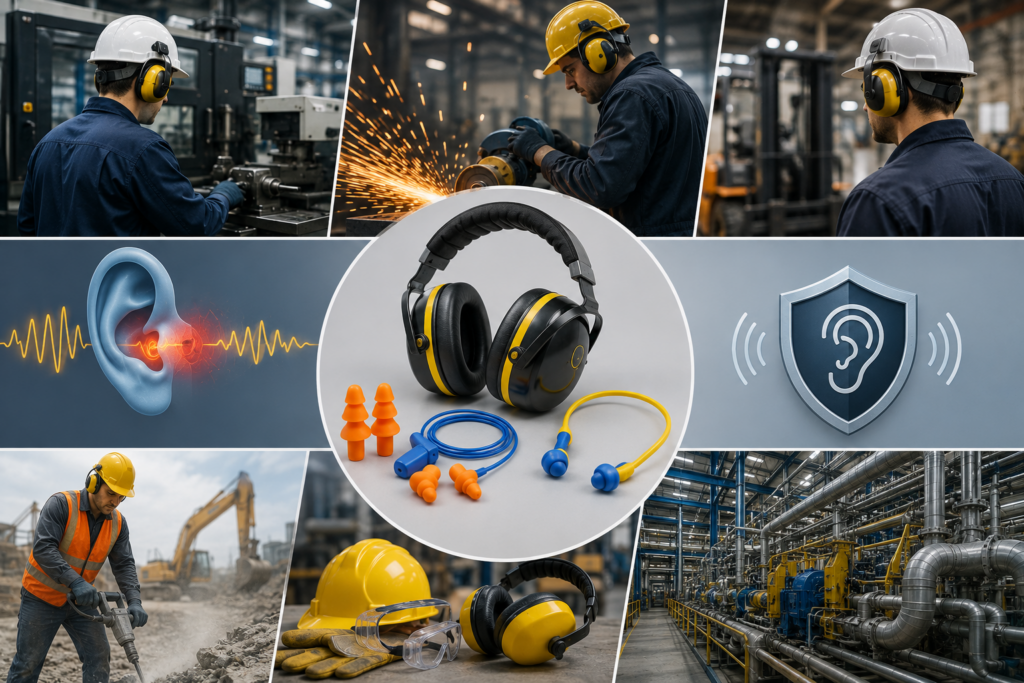
Noise is one of the most common workplace hazards in industries such as manufacturing, construction, mining, power generation, metal fabrication, and transportation. Prolonged exposure to high noise levels can lead to permanent hearing damage, reduced productivity, communication difficulties, and workplace accidents.
Selecting the right ear protection equipment is essential for protecting workers and maintaining a safe work environment. However, with multiple options available, choosing the most suitable hearing protection can be challenging.
This guide explains everything employers and safety professionals need to know about selecting the right ear protection equipment for industrial workplaces.
Why Hearing Protection Is Important
The human ear is sensitive to excessive noise exposure. Continuous exposure to loud sounds can gradually damage hearing without noticeable symptoms in the early stages.
Common consequences of workplace noise exposure include:
- Noise-Induced Hearing Loss (NIHL)
- Ringing in the ears (Tinnitus)
- Reduced communication ability
- Increased accident risk
- Worker fatigue and stress
According to workplace safety guidelines, hearing protection should be used whenever noise levels exceed safe exposure limits.
For official workplace noise guidance, refer to the Occupational Safety and Health Administration (OSHA).
What Is Ear Protection Equipment?
Ear protection equipment is Personal Protective Equipment (PPE) designed to reduce the amount of harmful noise reaching the ear.
The primary objectives are:
- Prevent hearing loss
- Improve worker safety
- Support regulatory compliance
- Reduce workplace distractions
- Improve concentration and productivity
Proper hearing protection is a critical component of an effective workplace safety program.
Common Sources of Workplace Noise
Many industries expose workers to hazardous noise levels.
Examples include:
Manufacturing Plants
- CNC machines
- Press machines
- Compressors
- Generators
Construction Sites
- Jackhammers
- Concrete cutters
- Excavators
- Power tools
Mining Operations
- Drilling equipment
- Crushers
- Heavy machinery
Power Plants
- Turbines
- Compressors
- Industrial pumps
Metal Fabrication Facilities
- Grinding operations
- Cutting machines
- Welding activities
Types of Ear Protection Equipment
1. Earplugs
Earplugs fit directly inside the ear canal and help reduce noise exposure.
Advantages
✔ Lightweight
✔ Comfortable
✔ Easy to carry
✔ Suitable for extended use
Best Applications
- Manufacturing facilities
- Warehouses
- Workshops
- General industrial environments
2. Earmuffs
Earmuffs cover the entire outer ear and provide consistent hearing protection.
Advantages
✔ Easy to wear
✔ Reusable
✔ Effective noise reduction
✔ Suitable for intermittent exposure
Best Applications
- Construction sites
- Airports
- Mining operations
- Heavy industries
3. Electronic Hearing Protection
Electronic earmuffs combine hearing protection with communication capabilities.
Benefits
✔ Noise reduction
✔ Improved communication
✔ Enhanced situational awareness
Common Uses
- Security operations
- Industrial maintenance
- Specialized work environments
4. Canal Caps
Canal caps feature soft earplugs connected by a flexible band.
Benefits
✔ Quick application
✔ Convenient for short-duration tasks
✔ Reusable design
Best Applications
- Visitors
- Temporary workers
- Maintenance personnel
How to Choose the Right Ear Protection Equipment
Assess Workplace Noise Levels
The first step is identifying workplace noise exposure.
Consider:
- Noise source
- Exposure duration
- Peak noise levels
- Number of exposed workers
A professional noise assessment helps determine hearing protection requirements.
Evaluate Noise Reduction Rating (NRR)
NRR indicates how much noise reduction a hearing protection device can provide.
Higher NRR values generally offer greater protection.
Examples:
- Low Noise Environment: 15-20 dB NRR
- Medium Noise Environment: 20-25 dB NRR
- High Noise Environment: 25-33 dB NRR
Choose equipment appropriate for actual workplace conditions.
Consider Worker Comfort
Uncomfortable PPE is less likely to be used consistently.
Look for:
- Lightweight design
- Soft materials
- Adjustable fit
- Breathable construction
Comfort improves compliance and long-term protection.
Compatibility with Other PPE
Ear protection should work effectively with:
- Safety helmets
- Face shields
- Safety goggles
- Respiratory protection
Integrated PPE systems help maintain worker comfort and safety.
Environmental Conditions
Workplace conditions can influence hearing protection selection.
Consider:
- Temperature
- Humidity
- Dust exposure
- Chemical exposure
Certain environments may require specialized hearing protection solutions.
Earplugs vs Earmuffs
| Feature | Earplugs | Earmuffs |
|---|---|---|
| Portability | Excellent | Moderate |
| Comfort in Hot Conditions | Excellent | Good |
| Ease of Use | Moderate | Excellent |
| Reusability | Depends on Type | Excellent |
| Noise Reduction | Good | Excellent |
| Compatibility with Helmets | Excellent | Good |
Both options can provide effective hearing protection when selected and used correctly.
Common Mistakes When Using Hearing Protection
Incorrect Fit
Poorly fitted earplugs reduce effectiveness significantly.
Inconsistent Use
Removing hearing protection even briefly can reduce overall protection.
Damaged Equipment
Worn-out hearing protection should be replaced immediately.
Wrong NRR Selection
Using insufficient protection may expose workers to harmful noise levels.
Benefits of Proper Hearing Protection
Prevents Hearing Loss
Protects workers from permanent hearing damage.
Improves Workplace Safety
Workers remain focused and aware of hazards.
Enhances Productivity
Reduced noise distractions support better performance.
Supports Compliance
Helps organizations meet workplace safety requirements.
Reduces Long-Term Costs
Prevention is significantly less expensive than managing occupational hearing loss.
Ear Protection Inspection Checklist
Before use, inspect hearing protection for:
✔ Cracks
✔ Damage
✔ Missing components
✔ Poor fit
✔ Hygiene concerns
Regular inspections help maintain reliable protection.
Why Quality Ear Protection Matters
Investing in quality hearing protection equipment provides:
- Better worker safety
- Improved comfort
- Greater durability
- Enhanced compliance
- Long-term hearing preservation
Hearing damage is often permanent, making prevention essential.
SafeKraft Hearing Protection Solutions
SafeKraft India Pvt Ltd offers industrial hearing protection solutions designed to help organizations reduce noise exposure and improve workplace safety.
Applications include:
- Manufacturing
- Construction
- Engineering
- Mining
- Warehousing
- Industrial maintenance
SafeKraft PPE solutions help employers create safer and more compliant workplaces.
Related Safety Resources
You may also find these topics useful:
- Safety Helmets for Industrial Workers
- Industrial Safety Gloves Guide
- PPE Checklist for Manufacturing Industries
- How PPE Reduces Workplace Injuries
- Best Safety Shoes for Factory Workers
For workplace safety standards and hearing conservation information, visit the National Safety Council (NSC) and International Organization for Standardization (ISO).
Conclusion
Choosing the right ear protection equipment is essential for protecting workers from harmful noise exposure. By evaluating workplace noise levels, selecting appropriate hearing protection devices, and ensuring proper fit and usage, organizations can significantly reduce the risk of occupational hearing loss.
Whether using earplugs, earmuffs, or advanced hearing protection systems, investing in quality PPE helps create a safer, healthier, and more productive workplace.
Looking for reliable hearing protection and industrial PPE solutions?
SafeKraft India Pvt Ltd offers a wide range of workplace safety products, including hearing protection equipment, safety helmets, safety gloves, safety shoes, respiratory protection, and fall protection systems designed for industrial environments.
Visit our website and explore our safety solutions. You can also view customer reviews and company updates through your Google Business Profile listing.
Frequently Asked Questions (FAQs)
1. What is ear protection equipment?
Ear protection equipment is PPE designed to reduce noise exposure and protect workers from hearing damage.
2. When should hearing protection be used?
Hearing protection should be used whenever workplace noise exceeds safe exposure limits.
3. Which is better, earplugs or earmuffs?
Both are effective. The best choice depends on workplace conditions, comfort requirements, and noise levels.
4. What is NRR in hearing protection?
NRR stands for Noise Reduction Rating and indicates how much noise a hearing protection device can reduce.
5. Can hearing loss from workplace noise be reversed?
Most noise-induced hearing loss is permanent, making prevention extremely important.
6. How often should ear protection be inspected?
Hearing protection should be inspected before every use.
7. Can ear protection be used with safety helmets?
Yes. Many hearing protection products are designed to be compatible with industrial safety helmets.