
Introduction
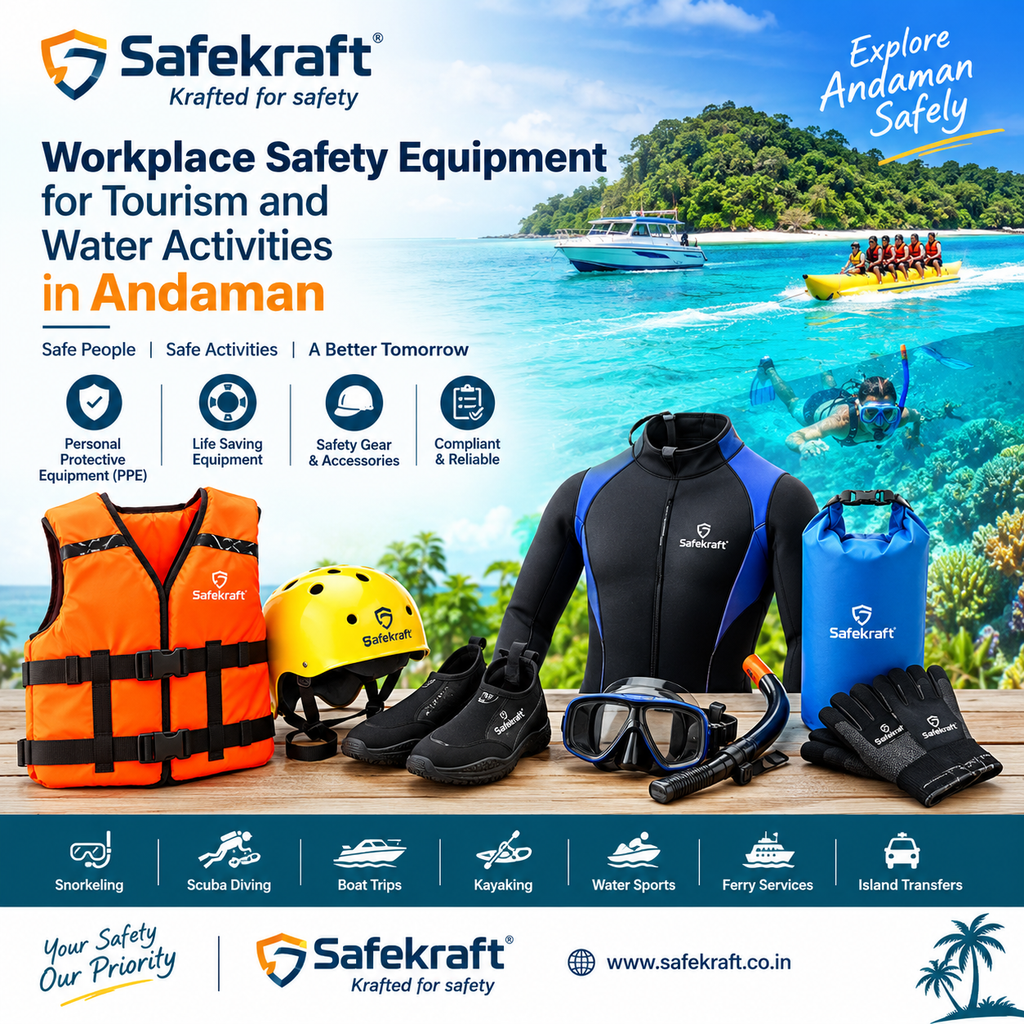
The Andaman and Nicobar Islands are known for their beautiful beaches, water sports, tourism, and marine activities. Every year, visitors enjoy scuba diving, snorkelling, sea walking, boating, and other outdoor experiences. However, safety should always come first.
Tourism operators, hotels, resorts, water sports businesses, and construction companies need suitable safety equipment to protect their employees and support safer operations. Therefore, choosing the right safety equipment in Andaman is important for businesses working in tourism, hospitality, marine activities, and industrial environments.
From protective footwear and safety gloves to helmets, high-visibility clothing, and workplace protection products, the right equipment helps reduce workplace risks. In addition, regular equipment inspections and proper employee training can improve safety practices.
In this guide, we explain the essential workplace safety equipment for tourism and water activities in Andaman and Nicobar Islands.
Why Is Safety Equipment Important in Andaman?
The island environment creates different safety challenges. For example, wet surfaces can increase the risk of slips and falls. Meanwhile, outdoor workers may face strong sunlight, rain, rough surfaces, and changing weather conditions.
Similarly, hotel maintenance teams, construction workers, boat crews, and water sports operators have different safety requirements.
Here are some important reasons to use suitable safety equipment:
- Reduce workplace risks: Appropriate protective equipment helps reduce exposure to common workplace hazards.
- Protect employees: PPE helps protect workers from specific risks such as cuts, impacts, and foot injuries.
- Support safer tourism: Suitable equipment and safety procedures help tourism businesses manage operational risks.
- Improve workplace practices: Regular inspections and employee training encourage responsible safety habits.
- Support compliance: Selecting appropriate equipment helps businesses meet applicable workplace safety requirements.
However, PPE alone cannot prevent every accident. Businesses should also assess hazards, maintain equipment, train employees, and follow applicable safety regulations.
Essential Safety Equipment for Tourism and Water Activities
Different activities require different types of protection. Therefore, businesses should select equipment according to the work being performed and the hazards involved.
1. Life Jackets and Personal Flotation Devices
Life jackets and personal flotation devices are essential safety items for many boating and water-based activities. They help support a person in the water when the device is suitable and correctly worn.
Boat operators, water sports providers, and tour organisers should select appropriate flotation devices based on the activity, user size, operating conditions, and applicable requirements.
In addition, staff should inspect each device before use. Damaged straps, faulty buckles, or other defects should be addressed before the equipment is used.
2. Non-Slip Safety Footwear
Wet floors, boat decks, resort pathways, and maintenance areas can create slipping hazards. As a result, suitable footwear is important for employees working in these environments.
Depending on the task, businesses may require:
- Slip-resistant footwear for wet work areas
- Safety shoes with protective toe caps for maintenance and construction
- Waterproof footwear for suitable outdoor tasks
- Footwear designed for the specific working environment
When choosing safety footwear, consider grip, comfort, fit, durability, and the hazards present. Standard industrial safety shoes are not automatically suitable for swimming, diving, or every marine activity.
3. Safety Gloves
Safety gloves help protect workers’ hands from hazards such as abrasion, sharp edges, dirt, and certain chemicals.
For example, maintenance staff may need general-purpose protective gloves, while construction workers may require gloves designed for handling rough materials. Cleaning teams may need chemical-resistant gloves appropriate for the substances they use.
However, no single glove is suitable for every task. Businesses should check the glove material, protection rating, and manufacturer instructions before selecting a product.
4. Safety Helmets
Safety helmets are important for construction sites, repair work, and other areas where falling objects or head impacts may be a hazard.
Hotels, resorts, and tourism facilities may also need helmets for maintenance activities in designated work areas.
When selecting a helmet, consider the applicable safety standard, fit, compatibility with other PPE, and the working conditions. Inspect helmets regularly and replace damaged equipment according to the manufacturer’s instructions.
5. High-Visibility Safety Clothing
Workers operating near vehicles, loading areas, service roads, and construction equipment may need high-visibility clothing.
This equipment helps make workers more visible to nearby drivers and machine operators. Depending on the risk assessment, businesses may select reflective vests, jackets, or other suitable high-visibility garments.
Moreover, clothing should remain visible in the expected lighting and weather conditions. Torn, dirty, or damaged reflective materials may reduce visibility.
6. Eye and Face Protection
Maintenance, fabrication, grinding, and repair activities can expose workers to flying particles, dust, or chemical splashes.
Safety glasses, goggles, and face shields provide different levels of protection. Therefore, the equipment should match the hazard rather than being selected only for appearance or price.
For example, workers handling chemicals may require goggles designed for splash protection, while grinding operations may require suitable impact-rated eye protection and a face shield.
7. Safety Harnesses and Fall Protection
Hotels, resorts, commercial buildings, and construction sites may involve elevated maintenance tasks.
Where workers face a fall hazard, appropriate fall protection may be necessary. Depending on the task, this can include a full-body harness, compatible connectors, an approved anchorage system, and a suitable rescue plan.
Importantly, a harness by itself does not provide a complete fall protection system. Equipment selection, inspection, worker training, and proper system design are also essential.
8. First Aid and Emergency Equipment
Tourism operators and workplaces should prepare for foreseeable emergencies.
Depending on the activity and applicable requirements, emergency provisions may include first-aid kits, communication devices, rescue equipment, and clearly defined emergency procedures.
For water activities, trained personnel, appropriate rescue arrangements, and suitable flotation equipment are particularly important. Businesses should establish procedures for contacting emergency services and responding to incidents.
Safety Equipment for Different Businesses in Andaman
The right PPE depends on the business, the work environment, and the hazards identified.
| Business type | Safety equipment to consider |
|---|---|
| Water sports operators | Suitable life jackets, rescue equipment, first-aid supplies |
| Boat operators | Appropriate flotation devices, non-slip footwear, communication equipment |
| Hotels and resorts | Safety shoes, gloves, helmets, eye protection for relevant maintenance tasks |
| Construction companies | Safety helmets, safety footwear, gloves, high-visibility clothing, fall protection |
| Housekeeping and cleaning teams | Task-appropriate gloves, slip-resistant footwear, eye protection where required |
| Warehouses and logistics | Safety shoes, high-visibility clothing, handling gloves |
| Electrical maintenance teams | Task-specific electrical PPE selected by qualified personnel |
| Marine maintenance teams | PPE selected for the actual hazards, including wet surfaces, sharp edges, and maintenance work |
This table is a starting point, not a complete PPE specification. Each business should carry out a risk assessment before purchasing equipment.
How to Choose the Right Safety Equipment in Andaman
Choosing safety products based only on price can create problems. Instead, businesses should consider the following factors before placing an order.
Identify the workplace hazards
First, review the tasks employees perform every day. Identify risks such as slips, falling objects, sharp materials, chemicals, electrical hazards, and working at height.
Check product quality and applicable standards
Next, check the manufacturer’s specifications, product markings, certification documents, and relevant Indian or international standards where applicable.
Also, confirm that the equipment is suitable for the intended task. A product designed for general industrial use may not be appropriate for a specialised marine activity.
Consider weather and working conditions
Andaman’s tropical climate makes comfort and durability important considerations for outdoor work.
Therefore, evaluate ventilation, fit, material suitability, corrosion resistance where relevant, and the manufacturer’s guidance on storage and maintenance.
Select the correct size and fit
Poorly fitting PPE may reduce comfort and protection. For this reason, check sizing, adjustment options, and compatibility with other equipment.
Compare suppliers and product documentation
Before purchasing, compare specifications, availability, delivery arrangements, and after-sales support.
For larger orders, businesses should request product datasheets and relevant certificates before confirming the purchase.
Where to Buy Industrial Safety Equipment in Andaman and Nicobar Islands
Businesses searching for an industrial safety equipment supplier in Andaman and Nicobar Islands should look for suppliers that understand their workplace requirements.
A suitable supplier should help buyers identify the correct products for construction, hospitality, maintenance, warehousing, and other industrial applications.
Before choosing a supplier, consider:
- Range of available PPE and workplace safety products
- Product specifications and applicable certification documents
- Bulk order and quotation support
- Delivery arrangements to the islands
- Product availability and replacement requirements
- Technical information to help select suitable equipment
Businesses should also confirm shipping costs, delivery timelines, and stock availability before placing an order.
Explore SafeKraft Safety Products
SafeKraft India Private Limited supplies workplace safety products for industrial and commercial applications. Businesses looking for protective equipment can explore the available products and contact the company to discuss their requirements.
Visit the official website: https://safekraft.co.in/
For buyers in Andaman and Nicobar Islands, product suitability, current availability, and delivery arrangements should be confirmed directly with the supplier.
Workplace Safety Tips for Tourism Businesses
Buying suitable PPE is only one part of an effective safety programme. Tourism businesses should also develop clear procedures for employees and visitors.
Here are some practical steps:
- Inspect safety equipment before use.
- Check life jackets and other flotation devices according to the manufacturer’s instructions.
- Keep walkways and work areas clean to reduce slipping hazards.
- Train employees to use PPE correctly.
- Store protective equipment in suitable conditions.
- Replace damaged or expired equipment as required.
- Maintain emergency contacts and response procedures.
- Review workplace hazards regularly and update safety measures when conditions change.
By following these practices, businesses can build safer working environments for employees and support more responsible tourism operations.
Conclusion
Tourism, water sports, hospitality, construction, and maintenance activities all have different safety requirements. Consequently, businesses in the Andaman and Nicobar Islands should select workplace safety equipment according to their specific hazards.
From safety gloves and protective footwear to helmets, high-visibility clothing, fall protection, and appropriate water safety equipment, every product should serve a clear purpose.
Furthermore, regular inspections, proper training, and effective emergency procedures are essential for maintaining workplace safety.
If your business is looking for safety equipment in Andaman, explore the products available at SafeKraft India and confirm the specifications and delivery options for your requirements.
Visit https://safekraft.co.in/ to learn more about workplace safety products.
Frequently Asked Questions
1. Where can I buy safety equipment in Andaman?
Businesses can contact PPE and industrial safety equipment suppliers that serve the Andaman and Nicobar Islands. Before ordering, confirm product availability, specifications, shipping costs, and delivery timelines.
2. What safety equipment is required for water sports in Andaman?
Depending on the activity, equipment may include suitable life jackets, rescue equipment, first-aid supplies, communication devices, and task-specific protective gear. Requirements vary according to the activity and applicable regulations.
3. Which PPE is suitable for hotels and resorts?
Hotel and resort employees may need safety footwear, gloves, helmets, eye protection, or fall protection for specific maintenance and housekeeping tasks. Selection should depend on the hazards associated with each job.
4. How do I choose an industrial safety equipment supplier in Andaman and Nicobar Islands?
Check the supplier’s product range, technical specifications, relevant certifications, quotation support, delivery arrangements, and ability to meet your business requirements.
5. Does SafeKraft supply industrial safety products?
SafeKraft India Private Limited supplies workplace safety products for industrial and commercial applications. Contact the company directly to confirm the products available for your requirements and delivery to Andaman and Nicobar Islands.
6. Why is PPE important for tourism businesses?
PPE helps reduce exposure to specific workplace hazards. However, businesses should combine suitable protective equipment with employee training, equipment inspections, risk assessments, and emergency procedures.
7. How often should workplace safety equipment be inspected?
Inspection frequency depends on the product, frequency of use, operating conditions, and manufacturer instructions. Equipment should also be checked before use where required, and damaged items should be removed from service.