
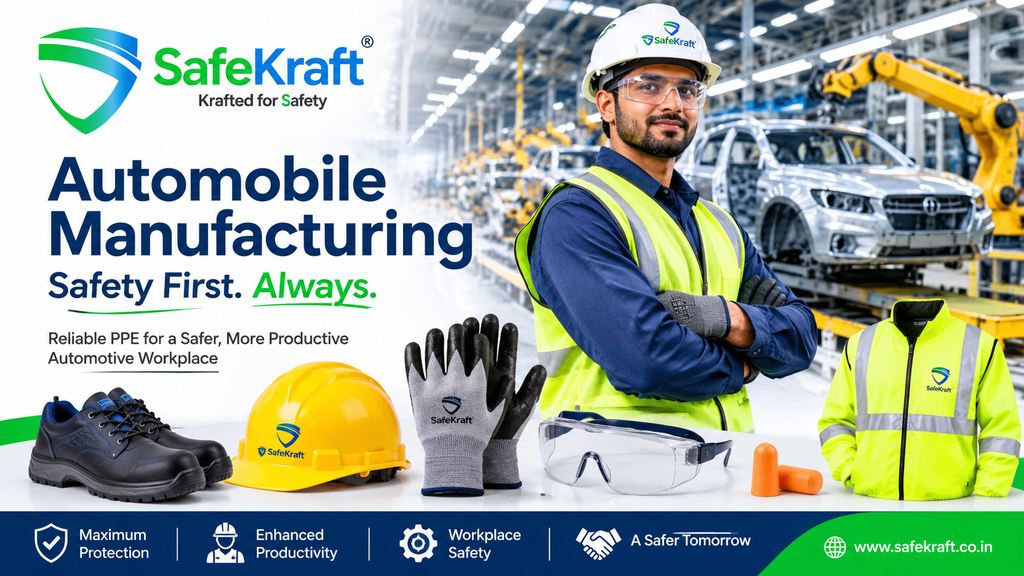
Automobile manufacturing is one of the fastest-paced and most complex industrial sectors in the world. From heavy metal stamping and robotic welding to chemical paint booths and high-speed assembly lines, automotive plants expose workers to numerous physical, chemical, and mechanical hazards every day.
Maintaining a zero-accident workplace isn’t just a regulatory requirement—it is vital for protecting workers and keeping production running smoothly. Whether you are a plant manager, an Environmental Health and Safety (EHS) officer, or an industrial supplier, here is a complete breakdown of the essential safety equipment required in an automobile manufacturing facility.
1. Personal Protective Equipment (PPE)
Personal Protective Equipment serves as the last line of defense for workers on the factory floor. Because different zones carry distinct risks, PPE must be tailored to each department:
- Head and Eye Protection: Falling parts, flying metal shards, and chemical splashes are constant risks. Workers need ANSI-rated hard hats, wrap-around impact-resistant safety glasses, and chemical splash goggles. In welding zones, auto-darkening welding helmets protect against arc flash and sparks.
- Hearing Protection: Stamping presses, pneumatic tools, and heavy machinery routinely exceed safe decibel limits. High-NRR (Noise Reduction Rating) earmuffs and disposable foam earplugs prevent long-term noise-induced hearing loss.
- Respiratory Protection: Paint shops, battery assembly areas, and welding bays release harmful fumes, volatile organic compounds (VOCs), and fine particulates. Workers require NIOSH-approved N95/P100 masks, half-face respirators with organic vapor cartridges, or supplied-air respirators (SAR) in enclosed spray booths.
- Hand and Arm Protection: Handling sharp sheet metal and hot components requires specialized gloves. Cut-resistant Kevlar or HPPE gloves prevent lacerations, heat-resistant leather gauntlets protect welders, and chemical-resistant nitrile gloves keep hands safe during fluid and paint handling.
- Foot and Body Protection: Steel-toe or composite-toe boots with slip-resistant and puncture-resistant soles—often paired with metatarsal guards—protect against dropped heavy parts. Flame-resistant (FR) coveralls and high-visibility vests ensure workers remain safe and seen near moving vehicles and sparks.
2. Machine Guarding and Robotics Safety
Modern automotive plants rely heavily on automated robotic arms, conveyor belts, and hydraulic presses. Without proper barriers, workers face severe crushing or entanglement hazards.
- Light Curtains and Laser Scanners: Optical safety sensors immediately halt machinery if a worker’s hand or body crosses into a hazardous zone.
- Physical Safety Fencing and Interlocks: Heavy-duty mesh cages enclose robotic welding cells. Interlock switches on access gates automatically cut power to the robots the moment a door is opened.
- Two-Hand Control Stations: Used on stamping and pressing machines to ensure both of the operator’s hands are safely away from the point of operation before the machine cycles.
3. Lockout/Tagout (LOTO) Systems
Maintenance and repair workers face extreme danger if a machine unexpectedly starts up while being serviced. Every automotive facility must enforce strict Lockout/Tagout procedures using dedicated LOTO stations equipped with:
- Color-coded safety padlocks (assigned to individual technicians)
- Group lockout hasps for multi-worker maintenance tasks
- Circuit breaker, valve, and plug lockouts
- Durable, high-visibility warning tags detailing who locked the equipment and why
4. Ergonomic and Material Handling Gear
Repetitive motions and heavy lifting are leading causes of musculoskeletal injuries on assembly lines. Integrating ergonomic safety equipment reduces fatigue and boosts productivity:
- Anti-Fatigue Mats: Cushioned flooring placed along standing assembly stations to reduce strain on workers’ feet, knees, and lower backs.
- Lift-Assist Devices and Tool Balancers: Overhead spring balancers suspend heavy torque wrenches and welding guns, making them virtually weightless for the operator.
- Fall Protection Harnesses: Full-body harnesses, shock-absorbing lanyards, and self-retracting lifelines for technicians working on elevated mezzanines, overhead cranes, or tall vehicle frames.
5. Facility Hazard Control and Emergency Gear
Beyond individual gear and machines, the broader plant environment requires built-in safety infrastructure:
- Spill Containment and Eyewash Stations: Secondary spill pallets for oils, coolants, and battery acids, alongside emergency eyewash and drench showers placed within 10 seconds of chemical handling zones.
- Fire Suppression Systems: Spark detection systems, specialized Class B/C/D fire extinguishers (especially critical for EV lithium-ion battery manufacturing), and flame-resistant welding curtains.
- High-Visibility Floor Markings: Clear, color-coded floor tape and LED safety projectors that separate forklift traffic lanes from pedestrian walkways.
Building a Culture of Safety
Providing top-tier safety equipment is only effective when paired with consistent training, routine equipment inspections, and clear signage. By equipping every zone of the automobile manufacturing process with the right protective gear and engineering controls, companies can safeguard their workforce while achieving peak operational efficiency.